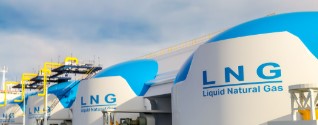
Africa’s growing energy needs are pushing governments and investors to look for faster and safer ways to develop natural gas, and a new report has identified Floating Liquefied Natural Gas (FLNG) as a key solution for the continent’s future. According to the State of African Energy 2026 Outlook released by the African Energy Chamber (AEC), Africa’s natural gas demand is projected to rise by as much as 60 per cent by the year 2050, creating strong pressure on producers to bring new gas supplies to the market efficiently and at lower risk.
The report explained that FLNG technology is becoming central to Africa’s gas development strategy as the continent prepares for rising population, industrial growth and increasing electricity demand. Unlike traditional liquefied natural gas projects that require massive onshore facilities, FLNG allows gas to be processed and liquefied directly offshore. This reduces dependence on pipelines, land acquisition, and large onshore infrastructure, which have delayed or stalled several gas projects across Africa due to security challenges, community issues and high costs.
Africa already hosts the highest concentration of FLNG facilities in the world, placing the continent at the centre of global floating gas development. One of the most notable projects highlighted in the report is Nigeria’s offshore Yoho field, where UTM Offshore is progressing toward a final investment decision on a $5 billion FLNG facility. The project is expected to strengthen Nigeria’s position in the global gas market while supporting the country’s push to monetise its vast natural gas reserves and reduce gas flaring.
The report also referenced Cameroon’s Hilli Episeyo, Africa’s first operational FLNG facility, which is widely regarded as a global success story. The project achieved production in record time and demonstrated that FLNG can be used to monetise relatively small gas reserves quickly. Since coming on stream, Hilli Episeyo has helped Cameroon earn export revenue and attract further investment into its energy sector, while setting a benchmark for similar projects across Africa and beyond.
In West Africa, another major milestone has been recorded with the Gimi FLNG vessel, which commenced commercial operations at the bp-led Greater Tortue Ahmeyim gas project located on the maritime border between Senegal and Mauritania. Operated by Golar LNG, the facility is the first FLNG unit in the Mauritania-Senegal-Guinea-Bissau-Conakry (MSGBC) basin. It is expected to monetise up to 15 trillion cubic feet of gas over a 20-year lease period, boosting exports and supporting economic growth in both countries.
Further south, Gabon is also moving forward with its FLNG ambitions. Energy company Perenco is developing the Cap Lopez FLNG project, which is designed to produce about 700,000 tonnes of LNG per year. According to the report, the project is scheduled to commence operations in 2026 and will help Gabon increase gas utilisation while reducing emissions from flaring.
The African Energy Chamber noted that one of the biggest advantages of FLNG is its modular and scalable design, which significantly reduces upfront capital costs and shortens project timelines. This has been clearly demonstrated by the Congo LNG project, operated by Italian energy firm Eni. Phase two of the project was brought online just 35 months after construction began, ahead of schedule, with first exports expected in 2026. This speed is rarely seen in conventional LNG developments.
FLNG projects have also shown resilience in high-risk environments. In Mozambique, security challenges in the Cabo Delgado region delayed several large onshore LNG projects. However, offshore FLNG developments such as Coral Sul, which began operations in 2022, continued largely without disruption. Building on this success, a final investment decision for the Coral Norte FLNG project was reached in 2025, further strengthening Mozambique’s gas export capacity.
Beyond exports, the report said FLNG could play a wider role in Africa’s development by supporting gas-to-power projects, petrochemical industries and regional energy security. By increasing gas availability, countries can improve electricity supply, reduce reliance on expensive fuel imports and support industrialisation, job creation and economic diversification.
However, the African Energy Chamber cautioned that the success of FLNG projects depends heavily on clear regulatory frameworks, stable fiscal policies and alignment with national development plans. Without these, even the most promising projects could face delays or fail to attract investment.
“These discussions will be central at African Energy Week 2026, where governments and industry leaders will explore how floating solutions can unlock Africa’s gas potential while managing risk and accelerating timelines,” the chamber said in the report.
Speaking on the findings, the Executive Chairman of the African Energy Chamber, Mr. NJ Ayuk, said FLNG offers African producers a practical pathway to faster gas monetisation and sustainable development. He noted that with the right policies and partnerships, floating gas solutions can help Africa meet its energy needs while maximising economic benefits for local communities and governments.
