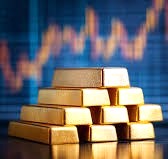
Global financial markets opened the new year on a mixed but largely positive note, with investors across Asia turning to safe-haven assets such as gold and silver, while equities in several countries recorded strong gains. The movement reflects continued caution among investors as global economic uncertainty, geopolitical tensions, and shifting monetary policies shape market decisions in early 2026.
In Asian trading, gold prices rose sharply by about 1.8 per cent to trade around $4,408 per ounce, while silver climbed close to 3.5 per cent to about $3,282 an ounce. Market analysts said investors moved funds into precious metals as a safety measure, a common trend whenever there are concerns about global instability or policy uncertainty. Gold and silver are traditionally seen as safe-haven assets because they tend to hold value during periods of economic stress.
Although both metals lost some ground in the final days of 2025, they still closed the year on a very strong note. Gold, in particular, recorded its best annual performance since 1979 after gaining more than 60 per cent over the year. The yellow metal reached an all-time high of $4,549.71 on December 26, 2025, driven by a combination of factors such as expectations of further interest rate cuts by major central banks, large-scale purchases of bullion by central banks, and growing investor worries about global political tensions and economic uncertainty.
Silver followed a similar path, benefiting from both its role as a store of value and its use in industrial applications, especially in clean energy and technology sectors. Analysts noted that the renewed interest in precious metals at the start of 2026 suggests that many investors are still cautious about the global outlook, despite signs of recovery in some economies.
Meanwhile, crude oil prices were relatively stable in early Asian trading, with only slight movements recorded by mid-morning. Oil prices dipped marginally as investors assessed the potential impact of recent developments involving Venezuela on global crude supply. The situation drew attention after United States President Donald Trump made comments about tapping into Venezuela’s vast oil reserves following political developments in the country.
President Trump reportedly stated that the United States would “run the country until such time as we can do a safe, proper and judicious transition,” a comment that raised questions about future oil supply dynamics. However, industry experts were quick to point out that the immediate effect on global energy prices is likely to be limited.
Vasu Menon, an investment strategist at OCBC Bank, said Venezuela’s oil production has remained weak for many years and currently accounts for only about one per cent of global crude output. According to him, even major political changes in the country may not translate into a quick increase in oil supply, meaning consumers and businesses should not expect sharp changes in fuel prices in the short term.
While oil prices remained calm, stock markets across the Asia-Pacific region recorded notable gains, as investors focused more on positive economic data and global market trends rather than geopolitical issues. In Japan, the Nikkei 225 index jumped by about 2.6 per cent on the first trading day of the year. The rise followed new data showing that Japan’s manufacturing activity stabilised in December, offering hope that the sector may be finding its footing after months of pressure.
Share markets in South Korea and China also closed higher, reflecting improved investor confidence across the region. Market participants said the gains suggest that investors believe any negative fallout from events in Venezuela will remain limited and unlikely to disrupt Asian economies directly.
Zavier Wong, an analyst at investment firm eToro, said the positive performance in Asian equities shows confidence that global markets can absorb geopolitical shocks without major disruption. He added that investors are increasingly selective, focusing on sectors and markets with strong fundamentals rather than reacting to every political headline.
Shigeto Nagai, an economist at Oxford Economics, explained that the strong gains seen in Japan and South Korea were largely influenced by developments in the United States. According to him, the recent rally in US stocks, driven mainly by artificial intelligence-related companies, spilled over into Asian markets. He said this trend continues to support global equity markets, even as investors remain cautious in other asset classes.
Overall, the early market movements in 2026 highlight a delicate balance between optimism and caution. While equities are benefiting from positive data and technological growth, the strong demand for gold and silver shows that investors are still preparing for possible shocks. As global central banks, governments, and investors navigate the new year, market watchers expect continued volatility across commodities, currencies, and equities.
