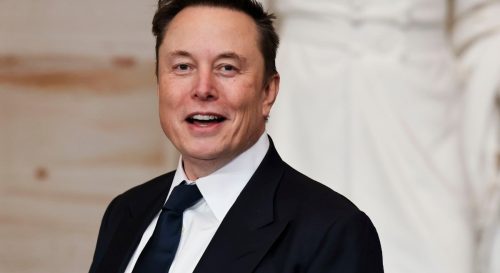
OpenAI and its longtime partner, Microsoft, have lost their final bid to halt a lawsuit filed by billionaire tech entrepreneur Elon Musk, as a United States federal judge ordered the case to proceed to a full jury trial later this month.
A federal court in Oakland, California, on Thursday dismissed attempts by both companies to throw out Musk’s claims that OpenAI abandoned its original mission as a public charity after accepting billions of dollars in funding from Microsoft and transitioning towards a for-profit structure.
Musk, who co-founded OpenAI alongside Sam Altman and others in 2015, alleges that the artificial intelligence firm breached its founding agreement by moving away from its nonprofit and open-source commitments. He later launched rival AI company, xAI, in 2023.
In her ruling, US District Judge Yvonne Gonzalez Rogers held that Musk presented sufficient grounds for the matter to be decided by a jury, with trial scheduled for late April.
“While the ultimate evidence remains unclear, Musk has plausibly alleged that his donations were made for a specific charitable purpose, with the understanding that OpenAI would remain open source and operate strictly as a nonprofit,” the judge ruled.
The court also rejected OpenAI’s argument that Musk lacked legal standing because he donated $38 million through an intermediary, stating that such a position would undermine enforcement of charitable trust obligations.
“Holding otherwise would significantly reduce the enforcement of charitable trusts, contrary to modern legal trends,” Gonzalez Rogers said.
The judge further declined to dismiss Musk’s fraud claims, citing internal emails and private notes from OpenAI co-founder Greg Brockman in 2017. In one email, Brockman reportedly assured Musk of OpenAI’s commitment to its nonprofit structure, while later private notes suggested uncertainty about maintaining that position.
According to the ruling, it will be up to the jury to determine whether Microsoft knowingly aided OpenAI in breaching its obligations to donors, including Musk.
“Musk has identified considerable evidence raising a triable issue of fact that Microsoft had actual knowledge beyond vague suspicion of wrongdoing,” the judge noted.
However, the court dismissed Musk’s claim that Microsoft unjustly enriched itself at his expense, ruling that Musk failed to establish any quasi-contractual relationship or show that Microsoft’s benefits were unfairly obtained.
Reacting to the ruling, OpenAI described the lawsuit as “baseless” and accused Musk of engaging in a pattern of harassment.
“We remain focused on empowering the OpenAI Foundation, which is already one of the best-resourced nonprofits in the world,” the company said in a statement.
Microsoft and Musk’s lawyer, Marc Toberoff, declined to comment as of press time.
OpenAI, best known for its chatbot ChatGPT and recently valued at about $500 billion, announced a major restructuring in October, granting Microsoft a 27 per cent ownership stake while retaining nonprofit control over its for-profit operations. The transition marked the fulfilment of Altman’s long-standing vision to convert OpenAI into a public benefit corporation.
Musk and Altman, once close collaborators, have been locked in legal battles since 2024 over the future direction of OpenAI. Tensions escalated further after OpenAI rejected Musk’s $97.4 billion bid last year to acquire the nonprofit entity controlling the company.
Altman has repeatedly criticized the lawsuit, accusing Musk of weaponizing the legal system to stall competition as xAI emerges as a major rival in the fast-growing artificial intelligence market.
