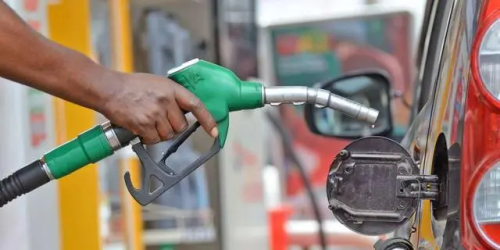
The Nigerian National Petroleum Company Limited (NNPC Ltd.) has again increased the pump price of Premium Motor Spirit (PMS), marking the second adjustment within 48 hours and deepening concerns over rising fuel costs across the country.
The national oil firm raised its Lagos pump price from N835 per litre to N892 per litre, representing a N57 increase over the weekend.
In Abuja, NNPC retail outlets were observed dispensing petrol at N875 per litre, up from N835 per litre previously.
Efforts to obtain an official explanation from NNPC’s spokesperson, Andy Odeh, were unsuccessful as of press time. However, a station manager at an NNPC outlet in the Ikotun area of Lagos, who simply identified himself as John, confirmed that marketers received directives to effect the new pricing.
“We were instructed on Friday to adjust the pumps to N892 per litre. It may affect our sales because several stations around us are selling at lower rates,” he said.
Market checks showed that independent marketers, including Ardova, MRS, and First Royal, were still selling petrol within the N835 to N840 per litre range as of Monday, February 2. The new NNPC price effectively places its product at N53 above the rate offered by Dangote Refinery’s partner stations, intensifying competition in the downstream market.
Industry operators have warned that petrol prices could climb even higher if global crude oil prices and foreign exchange pressures persist.
The National Publicity Secretary of the Independent Petroleum Marketers Association of Nigeria (IPMAN), Chinedu Ukadike, noted that fluctuations in crude oil prices and exchange rates remain the primary determinants of domestic fuel pricing.
According to him, “Any sustained increase in crude oil prices or adverse exchange rate movements will directly push up petrol prices locally.”
Ukadike cautioned that PMS could approach N1,000 per litre, particularly in areas far from coastal depots where transportation costs add to final pump prices. He urged the Federal Government to consider special crude supply arrangements for local refineries and explore mechanisms that could cushion consumers from extreme global price shocks.
Meanwhile, attention continues to shift toward the Dangote Petroleum Refinery, which is expected to play a bigger role in stabilising domestic fuel supply. The $20 billion Lekki-based facility is currently undergoing upgrades aimed at raising its refining capacity from 650,000 barrels per day to 700,000 barrels per day by the end of 2025.
Key refining units, including the Residual Fluid Catalytic Cracker, are said to be at advanced stages of completion. Once the expansion is finalised, the refinery is projected to surpass South Korea’s Onsan Refinery and rank as the sixth-largest refinery in the world by processing capacity.
Stakeholders say increased local refining capacity could, over time, help moderate fuel price volatility in Nigeria’s deregulated downstream market.
