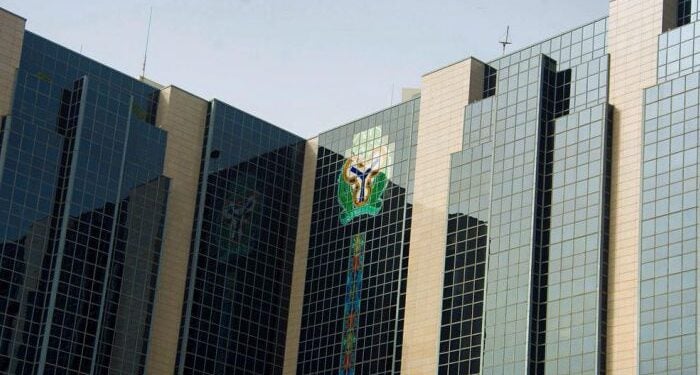
The Central Bank of Nigeria has confirmed that only 82 Bureaux De Change (BDCs) have been granted final approval to operate in the country after meeting its new and stricter regulatory requirements. The disclosure was made in a statement signed by the Acting Director of Corporate Communications, Hakama Ali, on Monday.
According to the apex bank, the newly approved operators are the only BDCs officially recognised to conduct foreign exchange business in Nigeria from 27 November 2025. The bank stressed that any BDC not listed on its official website is not authorised to operate, and members of the public should avoid transacting with such operators to protect themselves from fraud and financial losses.
The Central Bank of Nigeria introduced a new regulatory framework for Bureaux De Change in February 2024, as part of ongoing reforms aimed at sanitising Nigeria’s foreign exchange market and strengthening the financial system. Under the new rules, BDC operators are required to meet significantly higher capital thresholds in order to continue business.
The framework created a two-tier structure for operators. Tier-1 BDCs are required to meet a minimum capital requirement of N2 billion, while Tier-2 operators must meet a minimum capital requirement of N500 million. These new benchmarks replaced the former lower capital requirements and were designed to ensure that only financially strong and compliant operators remain in the market.
In the official statement, the bank said: “The Central Bank of Nigeria, in exercise of its powers conferred under the Banks and Other Financial Institutions Act 2020 and the Regulatory and Supervisory Guidelines for Bureaux De Change Operations in Nigeria 2024, has granted final licences to 82 Bureaux De Change to operate with effect from 27 November 2025.”
Hakama Ali explained that the list of approved BDCs has been published on the CBN’s website and will be updated from time to time to enable Nigerians to verify licensed operators. She also warned that running a BDC business without a valid licence is a criminal offence under Section 57(1) of the Banks and Other Financial Institutions Act 2020 and attracts strict penalties.
The move by the central bank is widely seen as part of a broader strategy to curb illegal foreign exchange trading, reduce currency speculation, and protect the stability of the naira. By tightening regulation, the apex bank aims to reduce the activities of street forex dealers and unregulated operators who often exploit customers and contribute to market distortions.
However, the new rules have also raised concerns within the BDC industry. The Association of Bureau De Change Operators of Nigeria (ABCON) previously warned that the policy could have serious social and economic implications. The President of ABCON, Aminu Gwadebe, said that about three million Nigerians could be at risk of losing their source of livelihood if many BDCs are forced to shut down because they cannot meet the new capital requirements.
Gwadebe disclosed that many of his members have been exploring mergers and partnerships as a survival strategy to meet the new minimum capital thresholds imposed by the central bank. He explained that consolidation was becoming the only realistic option for small operators who wish to remain in business under the new regulatory environment.
Industry analysts have noted that while the policy is tough, it reflects the CBN’s determination to bring order to the foreign exchange market. They believe the long-term benefits could include improved transparency, better compliance with anti-money laundering rules, and increased investor confidence in Nigeria’s financial system.
The CBN maintained that it will continue to monitor the sector closely and take appropriate enforcement actions against any unauthorised operators. It advised Nigerians to always confirm that a BDC is properly licensed before engaging in any foreign exchange transactions.
