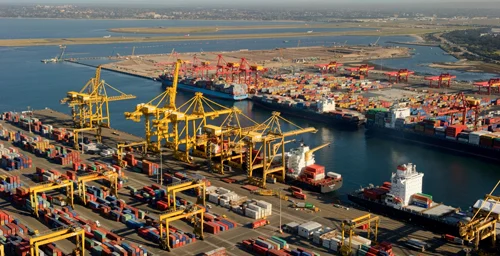
Nigeria’s heavy dependence on imported building materials is exposing the country’s housing sector to serious risks, especially from foreign exchange pressure and global supply chain shocks, a new report on the Lagos housing market has revealed.
The warning was contained in the third edition of the State of Lagos Housing Market Report, published by the Roland Igbinoba Real Foundation for Housing and Urban Development. The report said Nigeria currently relies on imports for about 70 per cent of the materials used in construction, making the housing market unstable and vulnerable to currency volatility and international disruptions.
According to the report, although Nigeria has large deposits of raw materials such as limestone, clay, sand, and timber, the country lacks sufficient local processing capacity. This gap makes it difficult to convert raw materials into finished building products at scale, forcing developers to depend on imported cement components, steel, aluminium, tiles, fittings, and other essentials.
The report explained that Lagos State, as Nigeria’s biggest commercial city and most populated urban centre, sits at the heart of the nation’s construction and real estate activities. Developments and challenges seen in Lagos often mirror what happens across the country, making the city’s building materials market a strong indicator of national housing trends.
The construction industry in Nigeria is currently experiencing strong growth. The report projected that the sector could grow by about eight per cent annually and reach a value of ₦25.72 trillion by 2025. Between 2020 and 2024, the industry recorded a compound annual growth rate of 12.1 per cent, with expectations that it will grow by another 6.4 per cent annually between 2025 and 2029, reaching an estimated ₦35.38 trillion by the end of 2029.
This growth is being driven by rapid urbanisation, population growth, and increasing demand for housing, office buildings, shopping malls, and infrastructure. Government-backed projects such as the Lagos Rail Mass Transit and road expansion programmes are also pushing up construction activity and property values.
However, the report warned that this growth is coming at a very high cost. Rising prices of building materials, high inflation, bureaucratic delays, and expensive loan conditions are making housing development more difficult and less affordable. The report noted that supply chain disruptions and volatile exchange rates have made it harder for developers to plan projects and control costs.
The data in the report showed a dramatic rise in the cost of key building materials over the past decade, especially in Lagos. In September 2015, an 8mm local iron rod sold for about ₦87,000 per 133 units, while the imported version cost ₦102,000. A 12mm local iron rod was around ₦98,000 for 93 units, while the imported one sold for ₦152,000.
By 2023, iron rods ranging from 10mm to 16mm had surged to about ₦800,000 per tonne. Between May 2023 and May 2024 alone, prices jumped sharply. A 12mm iron rod increased from ₦8,000 to ₦19,000, a 16mm rod went from ₦4,800 to ₦11,500, a 10mm rod rose from ₦3,600 to ₦9,500, and an 8mm rod increased from ₦2,500 to ₦6,500. By 2024, the price of iron rods had climbed to ₦1.6 million per tonne or more, representing a 100 per cent increase compared to 2023. The report added that by 2025, prices of iron rods and aluminium products had almost doubled again.
The report stressed that although the construction industry is growing, much of the growth in value is coming from rising prices rather than increased volume of real building activity. This means that while the market appears to be expanding, the real problems of affordability and supply are being hidden by inflation and higher costs.
To address these challenges, the report recommended that Nigeria invest more in local manufacturing hubs for building materials, offer incentives to domestic producers, improve supply chain systems, introduce stable and consistent government policies, adopt sustainable and innovative construction practices, and actively attract local and foreign investors.
The report concluded that Lagos can serve as a testing ground for national reforms. If building material production and supply challenges are properly addressed in Lagos, it could provide a workable model for improving the entire Nigerian construction and housing sector.
