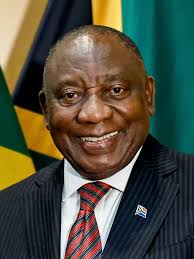
President Cyril Ramaphosa has sent a hopeful message to South Africans as the country steps into January 2026, expressing confidence that the nation and its economy are moving in a better direction despite the many challenges faced in the past year. In his 2026 New Year’s Message, the president admitted that life has not been easy for millions of citizens, but said there are clear signs that the foundations for recovery and growth are being strengthened.
Ramaphosa acknowledged that unemployment, inequality and poverty remain major concerns across South Africa. He also pointed to the high cost of living, rising crime, gangsterism, gender-based violence and femicide, as well as ongoing service delivery problems in some communities. According to him, these issues affected households and businesses throughout 2025 and continue to shape public frustration and anxiety.
The president said government is fully aware of the pain being felt by ordinary South Africans. He assured citizens that their struggles are understood and that efforts are ongoing to tackle the problems through policy reforms, targeted interventions and collaboration across sectors. He stressed that meaningful progress will only come through cooperation between government, business leaders, labour unions, civil society groups and citizens who are committed to building a better future for the country.
Looking at the economy, Ramaphosa highlighted several positive developments recorded towards the end of 2025 and early 2026. He said inflation has eased compared to previous periods, helping to reduce pressure on household spending. The president also noted that the rand has shown signs of strength, supported by improved investor confidence and global economic conditions. One of the major highlights he mentioned was South Africa’s credit rating upgrade, the first in nearly two decades.
According to Ramaphosa, the credit rating improvement will make it easier and cheaper for government to raise funds for critical projects. He explained that this will support investment in infrastructure, social development and economic reforms without putting excessive pressure on public finances. Analysts in the financial sector have also described the upgrade as a signal that international investors are beginning to regain trust in South Africa’s economic management.
The president further said that the country’s structural transformation programme, launched about five years ago, is beginning to show results. He pointed to progress at Eskom, South Africa’s power utility, which has reported over R20 billion in profits in its most recent financial results. He added that the country has avoided load shedding for several months, a development many businesses and households have welcomed after years of unstable electricity supply.
Ramaphosa also spoke about improvements in the rail and port sectors, saying that gradual recovery in these areas is helping the movement of goods across the country. Better rail and port performance, he said, supports exporters, manufacturers and farmers, while also reducing logistics costs that have affected prices and competitiveness.
As the country looks ahead in 2026, infrastructure development remains a major focus of government policy. The president revealed that more than R1 trillion has been budgeted for infrastructure projects over the next three years. He said this funding is already helping to revive roads, ports, railways, energy facilities and water systems across the country. These projects, according to him, are expected to stimulate economic growth and create jobs in construction and related industries.
Ramaphosa also highlighted the role of the private sector in tackling youth unemployment. He said government has partnered with businesses to establish the Youth Employment Service, which has created over 200,000 work experience opportunities for unemployed young South Africans so far. He added that this number is expected to grow in 2026 as more companies come on board.
On security and governance, the president said the fight against corruption remains a top priority. He disclosed that specialised task teams have made progress in tackling illegal mining, kidnapping, attacks on economic infrastructure and construction site extortion. Ramaphosa said government is determined to clean up law enforcement agencies and restore public confidence in the system.
He added that the recommendations of the Madlanga Commission will be implemented to drive reforms within the South African Police Service and other law enforcement institutions. According to him, these reforms are aimed at improving professionalism, accountability and service delivery.
Despite criticism from some quarters, Ramaphosa also defended the launch of the National Dialogue, which brought together delegates from different sectors of society. He said the process will continue throughout 2026, guided by a steering committee made up of community-based representatives who will lead consultations across the country.
The president concluded his message by calling for unity and resilience. He said that although challenges remain, South Africa is becoming stronger and its economy is showing signs of recovery. He urged citizens to work together in 2026 to build the country they desire.
Ramaphosa’s optimism is shared by parts of the financial services sector, where analysts say there are early signs of improvement. The rand is expected to remain relatively stable against the US dollar, supported by the credit rating upgrade and interest rate cuts in the United States. Following cumulative interest rate cuts of 150 basis points by the South African Reserve Bank, further reductions are being predicted in 2026 if inflation remains under control.
