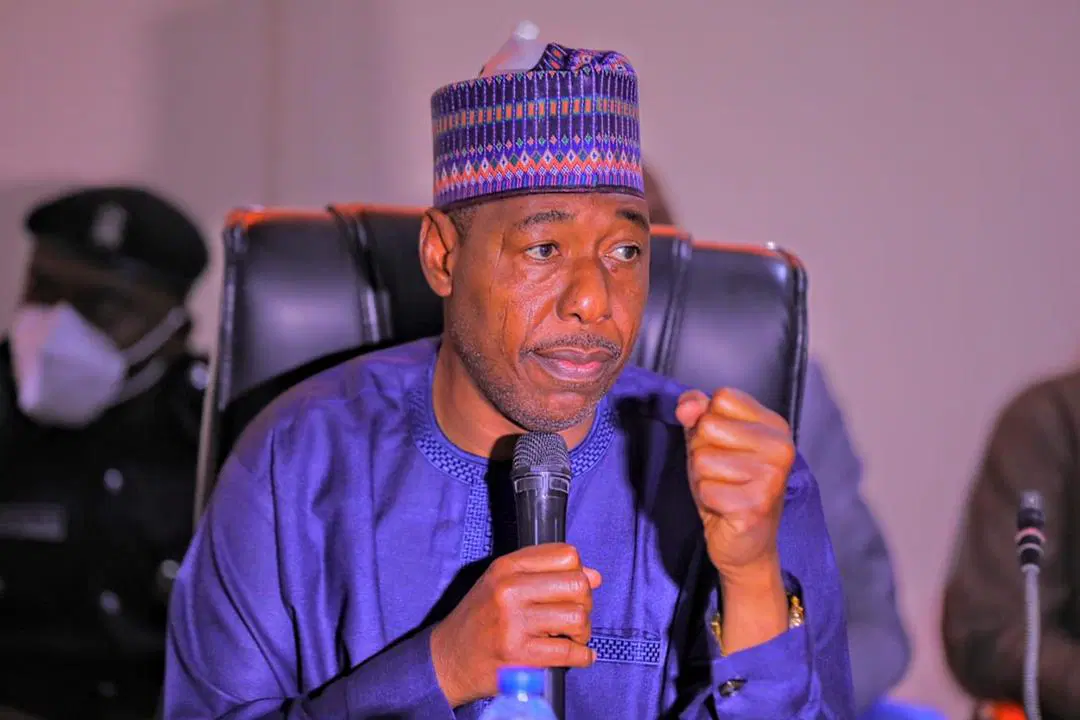
Governor Babagana Zulum of Borno State has said the Boko Haram conflict should not be seen as a religious crisis, stressing that the insurgency has targeted both Muslims and Christians without distinction. The governor made this known on Monday while addressing leaders of the Muslim and Christian communities in the state. He called for deeper reconciliation, unity, and collective action to rebuild trust among the diverse groups in Borno.
Zulum told the gathering that the Boko Haram insurgency has often been misrepresented by some groups seeking to give it a religious colouration, adding that such narratives are false and dangerous. According to him, the conflict is “an assault on our civilisation, humanity, and all that we hold dear, irrespective of creed.”
He stressed the need for the people to reject attempts to frame the crisis in religious terms. “Religious conflict is alien to us. The perpetrators of violence have killed, maimed, and displaced Muslims and Christians alike. They have destroyed mosques and churches with equal impunity,” he said.
The governor noted that available statistics show the scale of loss and suffering across communities. He explained that while every life lost is painful, the overwhelming majority of victims in terms of deaths, abductions, and displacement are Muslims, highlighting the urgent need for unity and collective healing. “This tragedy should bind us together in a common grief and solidarity for a united response,” he said.
Zulum also highlighted his administration’s ongoing reconstruction, resettlement, and rehabilitation programmes. He said the state government is rebuilding communities based strictly on need and fairness, ensuring that no group feels marginalised. “We rebuild based on need and on our commitment to restoring the social fabric of every community,” he added.
As part of efforts to support Christian communities affected by the insurgency, the governor disclosed that his administration has rebuilt 45 Christian worship centres destroyed by Boko Haram. These include 16 churches in Hawul, 11 in Gwoza, 10 in Askira-Uba and eight in Chibok. “We did not do all these as a favour; we did it as a duty. Just as we have rebuilt countless mosques, markets, schools, and homes,” he said.
Zulum urged religious leaders to continue promoting interfaith harmony, condemning violence and supporting peacebuilding initiatives across the state. He said the meeting was aimed at addressing a fundamental pillar for the future peaceful coexistence between Muslims and Christians in Borno.
The governor also called on the international community to partner with Borno State in addressing the root causes of the insurgency, which include poverty, illiteracy, and hunger. He noted that solving these problems would help secure long-term peace and stability.
Responding to the governor’s appeal, the Borno State Chairman of the Christian Association of Nigeria (CAN), Bishop John Bakeni, and the leader of Jama’atu Nasril Islam (JNI) in the state, Sheikh Jafar Ngamdu, both pledged to spread the message of peace and work with stakeholders to strengthen unity among the people.
