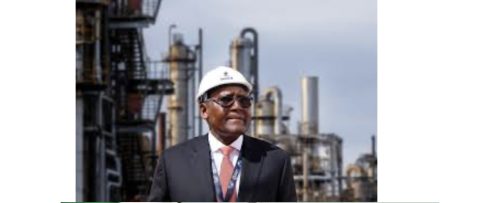
Nigeria’s foremost industrialist and leading domestic investor, Aliko Dangote, has advanced plans to float what could emerge as Africa’s largest initial public offering (IPO), with Dangote Petroleum Refinery & Petrochemicals targeting up to $5 billion from investors.
Indications have emerged that the offer may open as early as May, with market analysts placing the refinery’s valuation between $40 billion and $50 billion. Should this materialise, it would rank among the most significant capital market transactions ever recorded on the continent.
The proposed share sale is expected to involve between 5 and 10 per cent of the company’s equity, a move that is set to unlock investment opportunities for both domestic and foreign participants keen on Africa’s largest refining asset.
Capital market operators have described the planned listing as a watershed moment capable of deepening liquidity and broadening investor participation across African exchanges.
In a move to lay the groundwork, the Nigerian Exchange Group, in collaboration with the African Securities Exchanges Association, recently convened top executives of leading exchanges across the continent on April 1. Discussions centred on structuring the Dangote Refinery IPO to serve as a benchmark for cross-border capital mobilisation.
Findings from the meeting suggest that stakeholders are positioning the offer as a catalyst for enhancing interconnectivity among African capital markets and improving access for a broader pool of investors.
To drive the exercise, Dangote Group has assembled a consortium of financial advisers. Stanbic IBTC Capital will oversee international placements and investor relations, while Vetiva Capital Management has been assigned retail distribution within Nigeria. FirstCap will handle institutional placements, particularly targeting pension funds.
Situated in the Ibeju Lekki Free Zone, the refinery stands as the world’s largest single-train crude processing facility. Built at a cost of $20 billion, it was commissioned in 2023 and commenced operations in early 2024 after nearly a decade of construction.
The facility currently processes about 650,000 barrels of crude oil daily and is gradually ramping up production to meet growing regional demand. Its operations are already reshaping fuel supply dynamics across Africa amid persistent global supply chain pressures.
Exports have continued to expand, with petroleum products now reaching multiple African markets. Recent updates indicate that several cargoes of petrol were delivered to regional destinations within a single month, underscoring rising demand.
Beyond refining, the plant produces up to three million metric tonnes of urea fertiliser annually, bolstering agricultural productivity. Plans are also underway to scale polypropylene production, a critical input in manufacturing sectors such as packaging, textiles and consumer goods.
Financial support for the project has remained robust, with the African Export-Import Bank underwriting $2.5 billion of a $4 billion syndicated loan. The bank’s management has reiterated the strategic importance of backing indigenous African projects to drive economic resilience and long-term growth.
Economic benefits from the refinery are already evident. Over 150,000 direct and indirect jobs have been created, alongside extensive technical training for thousands of engineers.
According to projections by the International Monetary Fund, the refinery could boost Nigeria’s non-oil GDP by 1.5 per cent while increasing foreign exchange reserves by $5.5 billion.
With production scaling steadily, Nigeria is on course to shift from a net importer to a net exporter of refined petroleum products. Current output meets between 35 and 50 per cent of domestic petrol demand, with export volumes rising across the continent.
Meanwhile, the Securities and Exchange Commission Nigeria is reviewing a proposed share structure that would allow investors to purchase shares in naira while receiving dividends in US dollars—an innovation aimed at attracting foreign participation and mitigating currency risks.
The company is expected to file its prospectus this April, followed by a nationwide investor roadshow ahead of the public offer. Subject to regulatory approvals and investor appetite, trading of the shares could commence on the Nigerian Exchange between June and July.
Market watchers say the planned listing represents a defining moment for Africa’s financial ecosystem, highlighting the scale of capital that can be mobilised within the continent and reinforcing ongoing efforts to integrate regional capital markets.
