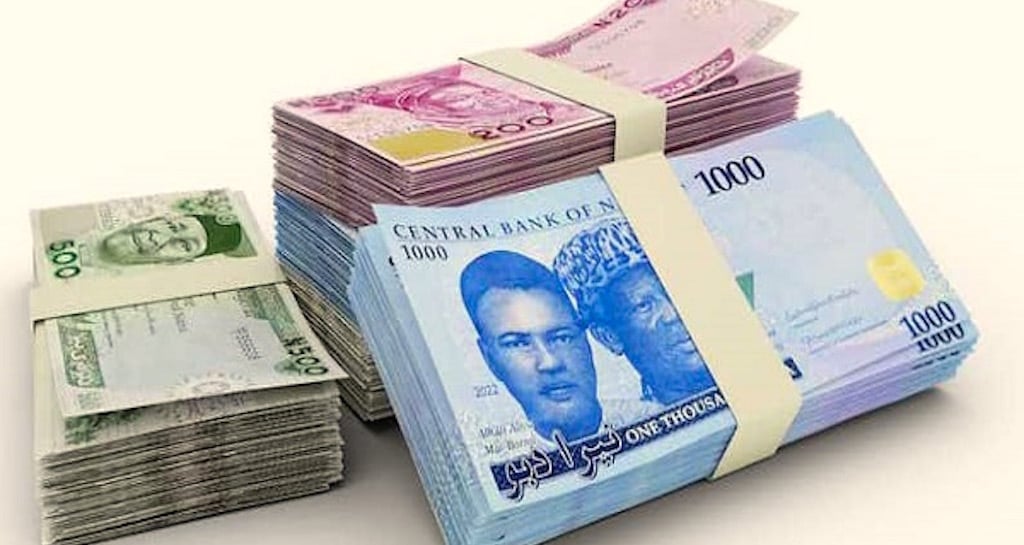
The naira recorded a stronger performance in the past week as it closed at N1,446.74 per dollar at the official market, showing a 0.69 per cent rise compared to the previous week’s rate of N1,456.72 per dollar. This upward movement came after the sharp volatility recorded earlier in the month. For most of the trading week, the naira stayed below N1,450 per dollar at the official window. At the parallel market, the currency also improved slightly as it appreciated by 0.07 per cent to close at around N1,476 per dollar. Many traders said the market was relatively calm as supply improved across different segments.
The Governor of the Central Bank of Nigeria, Mr Olayemi Cardoso, gave more insight into the performance of the local currency during the 60th Annual Bankers’ Dinner held in Lagos on Friday. Cardoso told the gathering of bankers, policymakers and financial experts that Nigeria recorded foreign capital inflows of $20.98bn in the first ten months of 2025. He explained that the figure represented a 70 per cent rise above the total inflows recorded in 2024 and a massive 428 per cent jump compared to the $3.9bn inflow in 2023. He said the improved investor confidence was part of the results of the ongoing reforms in the foreign exchange market.
Cowry Asset Management, in its weekly financial report, said the improvement did not come from a sudden jump in inflows but from what it described as “deeper, more balanced two-way interest” in the FX market. The firm explained that liquidity improved noticeably during the week and the bid-offer spreads became narrower. Cowry Asset Management noted that the market was becoming more stable and operating within a more predictable pricing range. The report added that the Monetary Policy Committee’s reaffirmation of the willing-buyer-willing-seller framework helped to guide expectations, as it signalled that FX pricing would continue to be largely market-driven with minimal intervention from the CBN.
Analysts at AIICO Capital also linked the stronger performance of the naira to the increased activities of Foreign Portfolio Investors and FX supply from the Central Bank of Nigeria. According to the analysts, the Nigerian currency appreciated by N9.98 per dollar within the week because foreign investors sold more of their dollar positions, pushing more liquidity into the system. They added that the steady foreign inflows eased demand pressures, especially at major market benchmarks. As a result, the naira continued to appreciate steadily through the week as the supply of dollars outpaced demand. AIICO Capital estimated the gain at 0.69 per cent week-on-week, which brought the naira to N1,446.74 per dollar.
On the outlook for the new week, Cowry Asset Management said the naira might still face some mild pressure because of continuous FX demand and what it called “lingering structural imbalances” in the market. However, the firm believes that the gradual increase in Nigeria’s external reserves should help cushion the pressure. The analysts added that month-end inflows could also offer short-term support, especially as the post-MPC environment appears calmer. According to them, price discovery may continue to reflect true market forces instead of being influenced by sudden or emotional reactions.
Meanwhile, Governor Cardoso used the Bankers’ Dinner to highlight the progress made under the CBN’s foreign exchange reform agenda. He said the most visible sign of renewed confidence in the Nigerian economy was the transformation of the FX market. According to him, the CBN maintained the unification of multiple exchange-rate windows throughout the year. Cardoso said the once-crippling multi-billion-dollar FX backlog had been fully cleared, giving businesses more certainty to plan and restoring trust in the market.
He also explained that the introduction of the Nigerian Foreign Exchange Code created clear guidelines on transparency, ethics, governance and fair practices among authorised dealers. Cardoso added that the deployment of the Electronic Foreign Exchange Management System, powered by Bloomberg BMatch, had changed the way FX transactions were conducted. He said the system brought in mandatory order submission, real-time visibility for regulators and better price discovery, all of which helped to reduce manipulation and restore discipline in the market.
Cardoso reported that the naira now trades within a narrower and more stable band. The gap between the official rate and the parallel market, which used to be over 60 per cent, has dropped to below two per cent. He said the foreign inflows of $20.98bn recorded between January and October 2025 were enough proof that investor confidence was returning.
