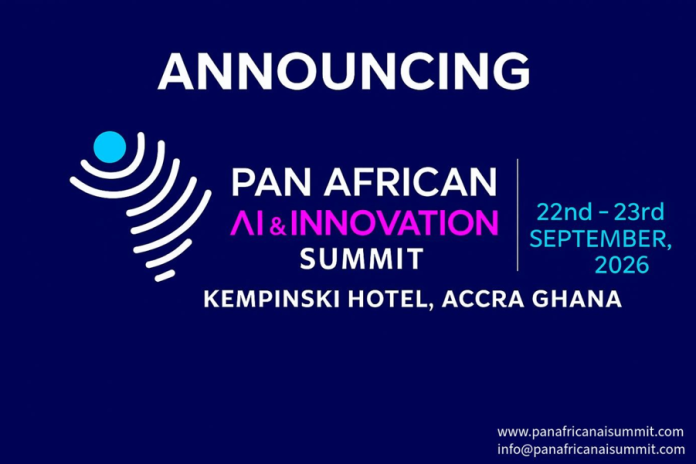
Organisers of the Pan African AI Summit have announced that the event will return to Accra, Ghana, in September 2026, as preparations begin for the second edition of the continental technology gathering. The summit is scheduled to hold from September 22 to 23, 2026, at the Kempinski Hotel Gold Coast City, Accra.
The 2026 edition of the Pan African AI Summit will focus on expanding and strengthening Africa’s ethical artificial intelligence ecosystem. According to the organisers, the theme for the event is “Scaling Africa’s Ethical AI Ecosystem: Youth Empowerment, Policy, Partnerships, and Skill.” The theme reflects growing interest across the continent in how artificial intelligence can be developed and deployed responsibly while supporting economic growth and inclusion.
The summit is being organised by Pan African AI Summits & Corporate Training Ltd, a company focused on promoting AI knowledge, skills development and policy engagement across Africa. The organisers said the second edition will build on the outcomes and momentum generated by the inaugural summit held in 2025.
The first Pan African AI Summit attracted about 1,000 participants, both physically and virtually. It featured 43 speakers and welcomed delegates from more than 30 countries across Africa and beyond. Participants at the maiden edition included policymakers, technology experts, academics, entrepreneurs, students and representatives of international organisations.
According to the organisers, the 2025 summit played a role in reinforcing Ghana’s growing reputation as a digital and innovation hub in Africa. One of the major highlights of the inaugural event was the announcement and discussion around the proposed 1 billion dollar Ghana–United Arab Emirates Innovation and Technology Hub. The project was presented as a key step towards strengthening Ghana’s technology ecosystem and positioning the country as a gateway for digital innovation in West Africa.
The organisers said lessons and recommendations from the first summit will shape the structure and content of the 2026 programme. They explained that the upcoming edition will be more focused, practical and impact-driven, with activities designed to translate discussions into concrete outcomes.
According to information released, the 2026 Pan African AI Summit programme will be built around four main areas. The first is youth empowerment, with an emphasis on expanding AI masterclasses, hands-on training sessions and structured mentorship programmes. Organisers said these initiatives are aimed at equipping young Africans with practical AI skills and exposing them to career and entrepreneurship opportunities in the technology sector.
The second focus area is policy development. The summit will host ministerial-level discussions and expert roundtables where policymakers, regulators and industry leaders can exchange ideas on AI governance, data protection, ethics and regulation. Organisers said these conversations are important as African countries seek to balance innovation with safeguards around privacy, security and fairness.
The third area is partnerships and investment. The 2026 summit is expected to provide more opportunities for collaboration between startups, investors, governments and development partners. Organisers said plans are underway to enhance the AI pitch competition introduced at the first summit, with the aim of connecting African AI startups to funding, mentorship and market access.
The fourth focus area is the ethical application of AI across key sectors of the African economy. According to the organisers, discussions and case studies will examine how artificial intelligence can be applied responsibly in areas such as education, agriculture, healthcare, financial services and public administration. The goal is to promote solutions that are inclusive, culturally relevant and aligned with Africa’s development priorities.
Organisers said participation in the Pan African AI Summit will remain free of charge, as was the case in 2025. They explained that keeping the event free is a deliberate strategy to widen access to AI knowledge and ensure that students, young professionals and innovators from different backgrounds can participate without financial barriers.
The 2026 summit is expected to attract a wide range of participants, including government officials, central bank leaders, regulators, global technology companies, startups, researchers, academics and civil society organisations. Organisers believe the diversity of participants will enrich discussions and encourage cross-sector collaboration.
Preparations for the summit are already underway, with the organising team calling for strategic partners to support the event. According to them, partnerships will be critical in advancing Africa’s AI agenda, particularly in areas such as skills development, research, infrastructure and ethical standards.
Industry observers say the decision to host the summit again in Accra reflects Ghana’s increasing role in Africa’s digital transformation efforts. Over the past few years, Ghana has invested in digital public infrastructure, technology hubs and innovation-friendly policies, attracting attention from international technology firms and development partners.
As artificial intelligence continues to shape global economies, African countries are under pressure to ensure they are not left behind. Stakeholders say platforms such as the Pan African AI Summit provide an opportunity for African voices to shape the continent’s AI future, rather than simply adopting solutions developed elsewhere.
While challenges such as limited infrastructure, skills gaps and funding constraints remain, organisers of the summit say sustained dialogue, partnerships and investment can help unlock Africa’s AI potential. They added that the 2026 edition aims to move beyond awareness and focus more on implementation, skills transfer and long-term impact.
With less than two years to the event, stakeholders across government, industry and academia are expected to engage with the summit’s planning process. Organisers say further details, including speakers and programme highlights, will be announced in the coming months as preparations continue.
