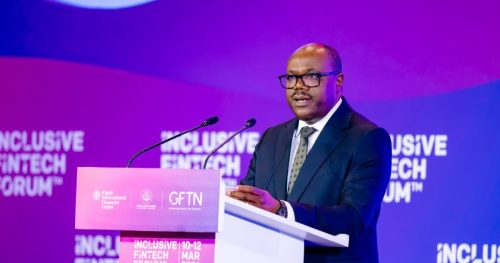
Inclusive Fintech Forum opened in Kigali this week with Rwandan officials highlighting progress in expanding access to financial services through digital technology.
Addressing participants at the third edition of the forum, Justin Nsengiyumva said about 92 percent of adults in the country are now engaged with some form of digital financial service.
Nsengiyumva told delegates drawn from across Africa and other regions that Rwanda’s efforts to expand financial inclusion have been supported by long term investments in digital infrastructure.
He said the expansion of telecommunications networks over the past two decades has made 4G connectivity available to most citizens and supported the digitisation of several government services.
According to him, platforms such as IremboGov have helped streamline access to public services while improving efficiency and transparency in government processes.
The Prime Minister said digital financial tools are increasingly being used across both formal and informal sectors of the economy.
He noted that rural farmers can now receive payments directly through mobile phones, while small business owners and young entrepreneurs are able to access credit through digital channels without visiting bank branches.
Nsengiyumva said the expansion of these services has helped widen financial access across the economy.
“Our goal is to create an even more conducive environment for innovation and investment,” he said, adding that the government plans to introduce legislation to regulate digital assets and strengthen confidence among investors and consumers as new financial technologies emerge.
Also speaking at the forum, Soraya Hakuziyaremye said financial inclusion in Rwanda has risen significantly over the past decade.
She noted that the proportion of adults with access to financial services increased from about 21 percent in 2008 to more than 90 percent today.
Hakuziyaremye emphasised the need for cooperation among African regulators as digital finance continues to reshape the continent’s financial landscape.
“Digital money, advanced payments and financial intelligence are no longer concepts,” she said. “They are transforming how we transfer funds, invest and regulate financial institutions globally.”
Despite the progress, officials acknowledged that several challenges remain across the region, including high capital requirements, costly cross border transactions and regulatory differences that continue to affect financial integration.
Nsengiyumva said regional initiatives such as the African Continental Free Trade Area would require strong collaboration between governments and industry stakeholders to support broader economic integration.
Data presented at the forum showed that more than 75 percent of adults in Rwanda now hold bank accounts, compared with about 25 percent a decade ago, reflecting the rapid growth of formal financial services as digital platforms expand across the country.
