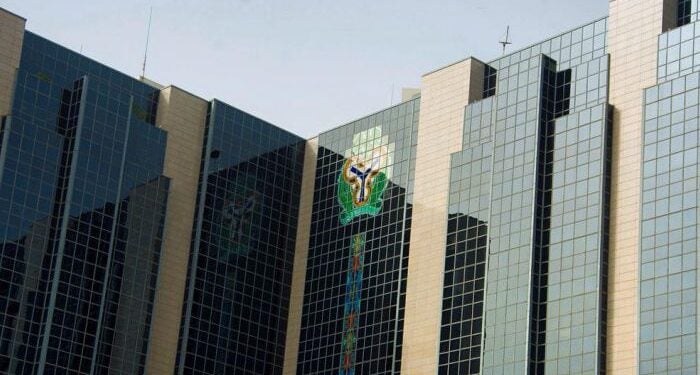
The Central Bank of Nigeria has announced major changes to the country’s cash-management rules, removing all limits on how much cash customers can deposit in banks while maintaining strict weekly withdrawal ceilings. The new framework takes effect on January 1, 2026.
The apex bank disclosed the revised policy in a circular signed by the Director, Financial Policy and Regulation Department, Dr Rita Sike. According to the CBN, the update was introduced “to reflect present-day realities” after several years of adjustments to the cashless policy.
A major highlight of the new rule is the full abolition of the cumulative deposit limit. The bank stated that charges previously imposed on customers who deposited cash above certain thresholds have now been scrapped.
“The cumulative deposit limit is hereby removed and the fee for excess deposit shall no longer apply,” the circular said. This means customers can deposit any amount of cash into their accounts without paying extra fees.
This marks a major shift from the CBN’s 2019 plan to impose charges on cash deposits and withdrawals in selected states — Lagos, Ogun, Kano, Abia, Anambra, Rivers and the FCT — before extending the policy nationwide in 2020. Although deposit charges were suspended in 2023, the new circular confirms they have now been completely removed.
Despite the new flexibility on deposits, the CBN kept in place the cumulative weekly withdrawal limits, meaning individuals can withdraw a maximum of N500,000 per week, while corporate organisations are restricted to N5 million.
Withdrawals above these limits will attract a 3% fee for individuals and 5% for corporates on the excess amount. The charges will be shared between the CBN and the financial institutions in a 40:60 ratio.
The bank also removed the special approval that previously allowed individuals to withdraw up to N5 million monthly and corporates up to N10 million.
ATM withdrawals remain limited to N100,000 daily and N500,000 weekly, and ATM and PoS transactions count towards the weekly withdrawal cap. The CBN added that all denominations can now be loaded into ATMs.
The limit on over-the-counter encashment of third-party cheques remains N100,000, and such withdrawals will continue to form part of the cumulative weekly limit.
Under the revised framework, banks must render monthly reports on withdrawals above set limits and on large deposits. They are also required to maintain separate internal accounts to warehouse charges collected on excess cash withdrawals.
While exemptions still exist — including revenue-generating accounts of federal, state, and local governments, as well as accounts of microfinance banks and primary mortgage banks — the circular noted that embassies, diplomatic missions, and donor-aid agencies are no longer exempt from specific cash-policy rules.
The circular cancels 24 previous directives issued by the apex bank, signalling one of the most comprehensive overhauls of Nigeria’s cash-management regulations in recent years.
