The Federal Government has projected a total revenue of N50.74 trillion for 2026 and an economic growth rate of 4.68 per cent, even as the proposed deficit for the year has risen so sharply that it now exceeds the entire national budget of 2022 by N2.78 trillion. The development has sparked fresh concerns among economists and policy analysts about Nigeria’s rising debt, widening fiscal gap and the growing pressure on public finances.
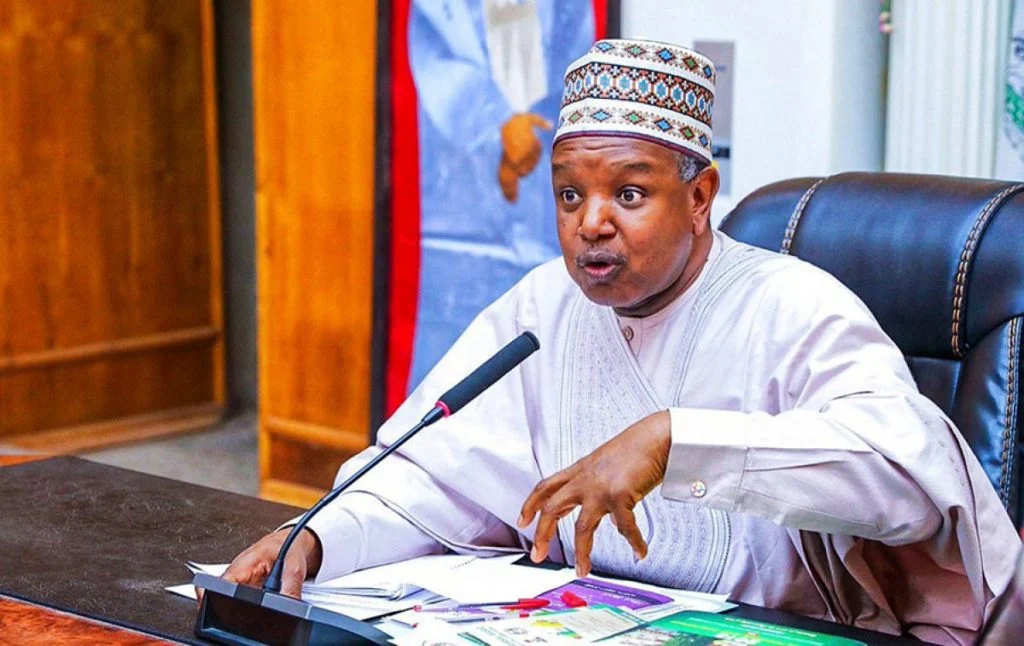
The new figures were released after the Federal Executive Council approved the 2026–2028 Medium-Term Expenditure Framework and Fiscal Strategy Paper in Abuja. The Minister of Budget and Economic Planning, Senator Atiku Bagudu, briefed journalists after the meeting and explained that the document would be sent to the National Assembly for consideration.
Bagudu said the government used a cautious oil benchmark of $64.85 per barrel and an exchange rate assumption of N1,512 per dollar for the 2026 budget cycle. He said the assumptions were reached after consultations with ministries, private sector groups, civil society organisations and development partners. For the first time, the government adopted two crude oil production figures: an optimistic target of 2.06 million barrels per day from the oil industry, and a conservative benchmark of 1.8 million barrels per day for the budget. According to Bagudu, this dual approach provides a 12.6 per cent safety buffer to protect the budget from output disruptions.
He said the benchmark price is lower than what Nigeria usually earns from Bonny Light crude, but stressed that the government preferred caution due to uncertainties in the global oil market. Bagudu projected a growth rate of 4.68 per cent for 2026 and warned that political activities ahead of the 2027 elections may increase pressure on the naira. He said election-related spending has historically affected the exchange rate and may do so again in 2026.
According to the revenue breakdown, the Federation is expected to earn N50.74tn, with N22.60tn going to the Federal Government, N16.30tn to the states and N11.85tn to local governments. The Federal Government’s total revenue from all sources is projected at N34.33tn, including N4.98tn from government-owned enterprises. Bagudu noted that the figure is 16 per cent lower than the revenue estimate for 2025.
He highlighted major spending areas in the proposed 2026 budget: statutory transfers of N3tn, non-debt recurrent expenditure of N15.27tn, and debt service obligations amounting to N15.91tn. Based on the proposed spending envelope of N54.43tn, debt servicing will account for 29.2 per cent of the entire budget, meaning almost three out of every ten naira spent next year will go towards paying debt.
Nigeria’s planned N20.10tn deficit, which represents 36.9 per cent of total spending, suggests the government will borrow more than one-third of its entire budget. The deficit is more than double the N9.22tn in the 2025 budget. Analysts noted that the gap is now larger than the entire amended 2022 budget of N17.32tn, underscoring Nigeria’s rising dependence on borrowing.
Bagudu said the government reviewed the performance of the 2025 budget and incorporated feedback from key stakeholders. He added that President Bola Ahmed Tinubu has secured the support of the National Economic Council for deeper coordination between fiscal and monetary authorities, especially in security funding and infrastructure projects under the Renewed Hope agenda. He also said the government will strengthen vigilance against revenue leakages in the oil, gas and solid minerals sectors.
However, economic experts have expressed strong concerns about the size and timing of the 2026 deficit. The Chief Executive Officer of the Centre for the Promotion of Private Enterprise, Dr. Muda Yusuf, warned that Nigeria risks falling into a deeper debt trap if the government fails to control borrowing. He said the fragile macroeconomic stability witnessed in recent months could be lost if deficits continue to rise sharply. Yusuf urged the government to use its improved revenue performance to reduce borrowing instead of expanding the deficit.
A professor of economics at Olabisi Onabanjo University, Prof. Sheriffdeen Tella, questioned the basis of preparing the 2026 budget when the 2025 budget has barely been implemented. He said the government should have rolled over the existing plan instead of producing a fresh document without clear performance indicators. He described the large deficit as unrealistic and warned that Nigeria may end up running multiple budgets in one year.
The National President of the Nigerian Economic Society, Prof. Adeola Adenikinju, criticised the government for drifting away from the January-to-December budget cycle. He said late preparation and approval of the MTEF/FSP weaken predictability and discourage investors. He also warned that the proposed deficit violates the Fiscal Responsibility Act, which requires deficit levels to remain below three per cent of GDP. According to him, borrowing heavily from domestic markets will push up interest rates, crowd out private businesses, worsen inflation and increase currency instability.
Adenikinju said the quality of spending is equally important, stressing that borrowing is only beneficial when used for productive and timely capital projects. He noted that delays in releasing capital funds often reduce their impact and erode public confidence in the budgeting process.
