Across Kenya, a quiet wave of change is helping women entrepreneurs transform their businesses and lives.
From the warm aroma of freshly baked bread to the intricate beauty of handcrafted bags and jewellery made from natural materials, businesswomen are demonstrating what growth, resilience, and innovation can achieve when paired with the right support realistic support comes through.
At the heart of the wave is the Affirmative Finance Action for Women in Africa (AFAWA) initiative of the African Development Bank. AFAWA works to bridge a $42 billion financing gap for African women entrepreneurs that is the result of limited access to affordable finance owing to a lack of collateral, skills gaps, and cultural and legal barriers.
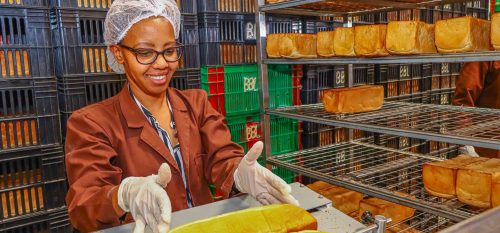
Agnes Maina, the Managing Director of Bake Bites Limited – a bread and buns bakery located in Thika, 42 kilometres northeast of Kenya’s capital, Nairobi – says she first faced the collateral barrier when she co-founded her enterprise in 2017.
“When you go to seek financing, like I did, they’ll ask for collateral. For most women and small businesses, we don’t have collateral in our names or under a business that has just started,” she said.
Through one of its partner institutions, she learned about AFAWA, and was able to access a loan of Ksh3.5 million (about $27,000) in 2024. She used the funds to purchase an industrial oven, a flour mixer and an automated bun producer. The outcome? “Our daily output has increased dramatically – by about 1,000% – compared to when we started. Today, we are producing almost 10,000 packets of bread and buns in a day,” she said, as she pushed a trolley filled with rows of freshly baked bread.
“The help we’ve received wasn’t just financial but also technical,” she went on. “Through capacity building and training supported by AFAWA, I have a mentor assigned to me who walks this journey with me. He has been able to identify key gaps to growing the business— among them, the use of social media marketing to improve product visibility.”
Maina said her proudest achievement is seeing business growth translate into 30 jobs for men and women, who now have a steady income to support their families.
Some 24 kilometres north of Nairobi in Kiambu, Kotiam Limited, is abuzz with activity. Young women are busy cutting leather, denim, and Ankara fabric, as others stitch and finish swatches into tote bags, laptop sleeves, toiletry bags, passport holders, denim dining sets, aprons, corporate gift items, and table runners.
Nelly Nkowsseu, Kotiam’s founder, says she experienced a shift in the growth of her operations following a six-month training she received through AFAWA two years ago. The training covered digital marketing, market development, production management and financial systems strengthening. The business now employs 12 full-time staff.
“In three years, I’m targeting 30 full-time staff,” she declared.
Based on the progress she has made since 2018 when she established the company, she now dreams big, Nkowsseu plans to enter the Zanzibar market in the short to medium term and then expand to the United States and Northern Europe. Her ambitions are driven by the impact of the online marketing support she received, which has significantly strengthened her market reach.
“We now reach more retail partners, who account for 70% of sales, with corporate clients comprising the remaining 30%,” she noted.
The African Development Bank’s Principal AFAWA Officer for East Africa, Susan Okoh, emphasises the importance of targeted support for women entrepreneurs, going beyond unlocking access to finance to equip women with the skills and networks they need to grow and thrive.
AFAWA is implemented in partnership with the African Guarantee Fund, which jointly play a key role in de-risking lending to women-led businesses. Complementing de-risked lending is capacity building support from business development service (BDS) providers, which equip entrepreneurs with essential skills in financial management, business planning, product standardisation, marketing, and market access – ensuring they are well positioned for growth, as demonstrated by Nkowsseu and Maina.
AFAWA is targeting extending $5 billion in loans to women-led businesses and entrepreneurs by the end of 2026. The goal is more than a number: it is a practical pathway for women to grow their businesses, create jobs, and help reshape Africa’s entrepreneurial landscape.
