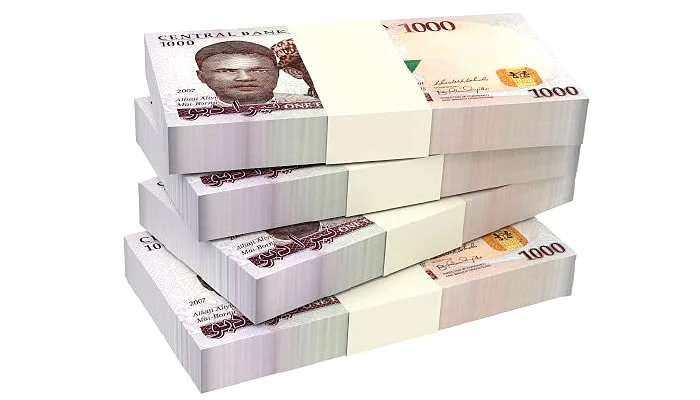
Nigeria’s currency recorded a slight weakening at the official foreign exchange market on Monday, as the naira closed at N1,451.86 per US dollar, compared to N1,450.43 per dollar recorded at the close of trading on Friday.
Data from the Nigerian Foreign Exchange Market (NFEM) daily exchange summary published by the Central Bank of Nigeria showed that the naira traded within a narrow range during the day. It hit an intraday high of N1,457 per dollar and a low of N1,450.25 per dollar, reflecting cautious and steady activity among market participants.
Market watchers said the marginal depreciation reflects increased demand for foreign exchange as businesses and individuals begin to prepare for year-end obligations, including imports, travel, school fees, and holiday-related expenses. Although liquidity in the market remains relatively stable, analysts noted that the market has become more sensitive to any changes in dollar supply.
The movement of the naira is still within a tight trading band, suggesting that the market is adjusting gradually to seasonal demand pressures. Analysts believe traders are also waiting for further policy signals from monetary authorities that could influence market direction in the coming weeks.
At the parallel market, also known as the black market, the naira remained unchanged at N1,463 per dollar, according to data from Cowry Asset Management. The firm said the stability in the parallel market highlighted the different forces driving the official and informal foreign exchange markets.
While the official market continues to respond to regulatory interventions and structured trading activity, the parallel market often reacts more strongly to speculative demand, cash availability, and street-level dollar liquidity. This has created a divergence in price movements between both segments of the forex market.
Last week, the naira recorded a cumulative depreciation of N3.69 against the US dollar. This was largely driven by higher dollar demand that outpaced available supply in the market. Although there were inflows from Foreign Portfolio Investors (FPIs) and intervention sales by the Central Bank of Nigeria, these were not strong enough to significantly reduce pressure on the local currency. Overall, the naira weakened by about 0.25 per cent on a week-on-week basis.
Analysts said the current mild pressure on the naira is also a continuation of trends seen in November, when the currency faced additional strain from global geopolitical developments and stronger demand for the US dollar. In its November report, AIICO Capital noted that geopolitical tensions and external pressures on the dollar slowed down what had been a period of relative appreciation for the naira.
According to the report, the naira depreciated moderately against the US dollar in November, with the NFEM rate falling by 1.76 per cent from N1,421.73 per dollar to N1,446.74 per dollar. The parallel market also weakened by 1.03 per cent, moving from N1,455 per dollar to N1,470 per dollar over the same period.
AIICO Capital explained that volatility in the forex market peaked around the middle of the month, driven by a sharp rise in dollar demand and global developments that unsettled foreign investors. These factors reportedly triggered sell-offs in Nigerian assets and led to capital outflows, adding more pressure to the naira.
The report added that despite recent reforms introduced by the Central Bank of Nigeria and a positive outlook revision by international rating agencies, investor demand for dollars remained higher than supply, extending the pressure on the naira until the end of the month and halting what had been three consecutive months of appreciation.
However, there was some positive news on Nigeria’s external buffers. External reserves rose by $1.5 billion month-on-month to $44.67 billion as of the end of November, supported by active reserve management and steady inflows. Analysts said this stronger reserve position provides some cushion for the central bank to manage market volatility and support the stability of the foreign exchange market.
