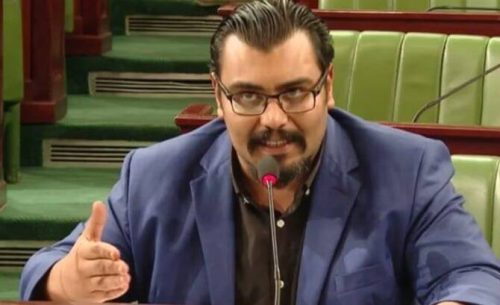
A court in Tunisia has sentenced parliamentarian Ahmed Saidani to eight months’ imprisonment for comments made on social media about President Kais Saied, in a ruling critics say underscores a widening clampdown on dissent.
Judicial authorities said the legislator was convicted on charges of insulting others through electronic communication, following a Facebook post in which he ridiculed the head of state with a satirical remark. Saidani, once aligned with Saied’s political agenda, had recently emerged as a vocal critic, accusing the presidency of concentrating decision-making power while deflecting responsibility for national challenges.
The lawmaker was arrested earlier this month after publishing the post that mocked the president using a phrase interpreted by authorities as offensive. His detention and subsequent sentencing have drawn condemnation from opposition figures and civil society voices.
Reacting to the judgment, fellow parliamentarian Bilel Mechri questioned the legality of the arrest, arguing that the move undermines legislative oversight. He said detaining an elected representative over critical commentary raises concerns about the balance of power between the executive and legislature.
Saidani entered parliament in late 2022 after elections marked by notably low voter turnout. The polls followed sweeping political changes in 2021, when the president dissolved the previous legislature and dismissed the government, thereafter governing largely by decree — a development opposition groups have repeatedly denounced as a power grab.
Since consolidating authority, several political opponents, journalists and critics have been detained, prompting rights organisations to warn of shrinking civic space. They allege that the country is drifting toward one-man rule, a claim the administration rejects.
The president has consistently defended his actions, insisting they are lawful measures aimed at restoring order and rooting out corruption within state institutions.
The case has attracted international attention, with global media outlets including Reuters highlighting it as part of a broader trend of tightening political control in the North African nation.
