In a groundbreaking leap for Africa’s circular economy drive, researchers at the University of Cape Town (UCT) have transformed a once-experimental idea—turning human urine into high-quality, sustainable fertiliser—into a fully operational spin-out company now making waves across the continent.
The start-up, aptly named PeeCycling, has not only commercialised years of scientific research but has also earned a coveted spot on the shortlist for the Africa Prize for Engineering Innovation, widely regarded as the continent’s most prestigious honour for engineering ingenuity and entrepreneurship. Established by the Royal Academy of Engineering, the award recognises scalable African innovations that tackle local challenges while driving economic advancement.
Professor Dyllon Randall, co-founder of PeeCycling and a leading water quality engineering expert at UCT’s Department of Civil Engineering and the Future Water Institute, described the recognition as a major boost.
“Being shortlisted…is an incredible honour. It validates that our engineering approach is a scalable solution for the continent’s sanitation and fertiliser needs,” he said.
Closing the Loop on Sanitation and Agriculture
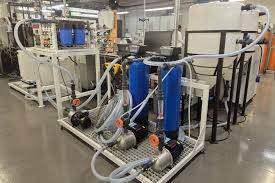
Registered in December 2023, PeeCycling uses a novel system that collects and concentrates urine, stripping it of harmful compounds and producing a nutrient-rich fertiliser. Randall likened the technology to desalination—except instead of purifying seawater, it converts human urine into a safe agricultural input.
According to him, the long-term goal is nothing short of transformative: making sanitation water-neutral and resource-positive, and turning buildings into miniature nutrient refineries that protect water systems while supporting global food production.
A Decade of Research, Now Ready for the World
The journey to commercialisation spans nearly a decade. Since 2017, Randall and his team have painstakingly eliminated technical risks across the value chain—from waterless collection mechanisms to chemical pre-treatment and large-scale concentration.
“It has required building strategic partnerships to ensure our technical goals translate into real-world impact,” he noted.
Energy-Efficient, Scalable Technology
One of PeeCycling’s standout strengths is its energy efficiency. Unlike conventional thermal treatment methods that rely on evaporating liquid, the start-up avoids energy-intensive phase changes altogether. Instead, it uses reverse osmosis, a globally established filtration technology, making the process cheaper, scalable and easier to replicate anywhere in the world.
“We aren’t building bespoke machines,” Randall explained. “We’re using a proven industrial platform that can be serviced and scaled worldwide.”
A Testament to UCT’s Innovation Culture
PeeCycling carries personal significance for Randall. The project began as the PhD research of co-founder Dr Caitlin Courtney, making its evolution into a globally recognised start-up a defining achievement for UCT’s innovation ecosystem.
The company has already begun to expand its team, hiring its first staff member, UCT master’s student Anna Reid, as chief technical officer. Reid is responsible for driving the commercial scale-up of fertiliser production, ensuring a direct link between academic insight and industrial application.
Randall believes the start-up’s progress underscores UCT and the Future Water Institute’s leadership in circular sanitation innovation.
“By treating buildings as nutrient and water recovery hubs, we create a resilient circular economy where nothing is wasted and everything is reused,” he said.
As PeeCycling gains continental and global attention, its success signals a new era in Africa’s pursuit of sustainable engineering solutions—one where even the most unconventional resources hold the potential to reshape industries and strengthen climate resilience.
