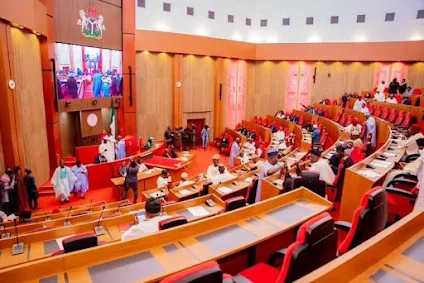
Members of the Senate Committee on Appropriations have called for the full removal of electricity subsidy, arguing that it has become an unsustainable burden on public finances and a major constraint to government revenue.
The call was made on Monday during a public hearing on the 2026 budget proposal at the National Assembly. Chairman of the committee, Senator Adeola Olamilekan, said reforms in the power sector would remain incomplete unless electricity subsidies were entirely phased out.
Olamilekan, who represents Ogun West Senatorial District, noted that despite the unbundling of the power sector and recent constitutional changes empowering states to generate electricity, the federal government continues to spend trillions of naira annually on subsidies.
According to him, the persistence of subsidy payments undermines the ability of government to fund critical obligations. He questioned the rationale of budgeting with limited revenue while maintaining costly subsidies, insisting that their removal would free up funds to support the implementation of the budget.
He said the reforms underpinning the 2026 budget were aimed at consolidating earlier policy measures and must be effectively implemented to deliver results. Olamilekan stressed that reforms alone were not enough, adding that their success depended on how well they were embedded in people-oriented government programmes.
For decades, the federal government has subsidised electricity consumption in a bid to keep tariffs affordable. However, critics have warned that removing the subsidy could lead to higher electricity tariffs, deepen the cost-of-living crisis and place additional pressure on businesses already struggling with rising operating costs.
At the same hearing, Olamilekan also defended the federal government’s plan to borrow about ₦25.91 trillion to part-finance the 2026 budget. He argued that borrowing was a global practice and unavoidable given Nigeria’s revenue challenges and uneven monthly inflows.
He explained that projected revenues often fall short in some months, making borrowing necessary to keep government operations running. According to him, the government plans to source funds from both domestic and international markets, including the Eurobond market, to cover the budget deficit.
The senator warned that failure to meet debt obligations could damage Nigeria’s credit rating and standing with international financial institutions. He commended the current administration for meeting its debt commitments but emphasised the urgent need to unlock additional revenue sources to address persistent budget deficits.
