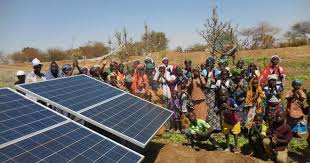
Nigeria’s renewable energy sector has attracted over $2 billion in private capital, driven by policy reforms aimed at boosting local manufacturing and strengthening investor confidence, the Managing Director of the Rural Electrification Agency (REA), Abba Aliyu, has disclosed.
Aliyu made this known during a webinar hosted by the African Association of Energy Journalists and Publishers, where he highlighted ongoing efforts to reposition Nigeria as a key player in Africa’s clean energy transition.
He attributed the capital inflow to deliberate government policies focused on strengthening domestic production capacity and creating an enabling environment for private sector participation. According to him, Nigeria’s solar manufacturing capacity has more than doubled in recent years, increasing from about 120 megawatts to approximately 300 megawatts, with an additional 3.7 gigawatts currently in the pipeline.
Aliyu described the development as part of a broader strategy to attract long-term investment into the sector, noting that the gains are already beginning to reflect in export activity. Solar panels produced locally, he said, are now being shipped from Lagos to Accra, Ghana, marking a shift from import dependence to regional supply.
“For the first time, Nigeria is producing solar panels locally, and they are already being exported,” he stated, adding that the country is gradually assuming a leadership role in West Africa’s energy transition.
Beyond manufacturing, the REA boss noted that the Federal Government is implementing regulatory reforms to enhance project viability and attract more private investment into the power sector.
He further revealed that Nigeria’s approach to expanding electricity access is drawing interest from several African countries, including Mozambique, Benin, Burkina Faso, Niger, Chad, Mauritania and Mauritius, all of which are exploring similar frameworks to scale electricity access.
Central to the strategy is Nigeria’s Distributed Access through Renewable Energy Scale-Up programme, a $750 million initiative designed to expand power supply through mini-grids and decentralised energy systems. The programme operates a results-based financing model, requiring developers to commit capital upfront before accessing incentives.
Aliyu noted that the initiative is expected to unlock an additional $1.1 billion in private investment, with backing from institutions such as Citibank Nigeria, Lotus Bank and the International Finance Corporation.
While the figures point to growing momentum in Nigeria’s renewable energy sector, he acknowledged that challenges such as infrastructure deficits and broader economic uncertainties persist.
Nevertheless, industry observers say the scale of planned investments reflects rising investor confidence in Nigeria’s long-term clean energy prospects and its potential to drive sustainable power solutions across the region.
