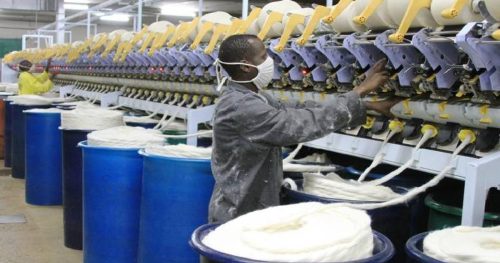
Kenya has long held ambitions for industrial prosperity and to become a manufacturing powerhouse, but a look at the numbers tells a different story. Whereas we are making progress, the sector is yet to reach its full potential.
Over the past decade, the manufacturing sector’s contribution to GDP has declined from about 11.08% in 2011 to 7.3% in 2024, reflecting persistent structural challenges facing the industry. Despite this trend, manufacturing output rose from KSh 3.51 trillion in 2023 to KSh 3.69 trillion in 2024, and formal employment edged up from 362,300 to 369,200 workers-about 11.5 percent of total formal jobs. The sector also remains a major taxpayer, contributing roughly KSh 365 billion in customs and domestic taxes between January 2023 and January 2024.
Manufactured exports are widely seen as a key indicator of industrialization in developing economies. By this measure, Kenya still lags many of its peers. Manufactured goods account for only 30.74 percent of Kenya’s merchandise exports. In comparison, the share stands at 40.49 percent in South Africa, 52.17 percent in Egypt, 85.83 percent in Vietnam, and 87.90 percent in South Korea. Closer home, South Africa and Egypt are rapidly strengthening their industrial capabilities, positioning themselves as regional manufacturing leaders.
These numbers raise the question: if manufacturing is central to Kenya’s economic ambitions, why is growth still modest? This underscores a central truth that industrial transformation requires deliberate policy choices, sustained government support, and a clear strategy to overcome structural constraints.
Manufacturing remains central to the growth and well-being of a nation. It is widely recognized as a key driver of economic transformation, enabling countries to move from low-productivity agriculture to higher-productivity modern sectors while creating jobs and reducing poverty. While Kenya stalled, others surged ahead. A good example is Vietnam which over the past decade, has steadily expanded its manufacturing base, particularly between 2010 and 2022, transforming the sector into a central pillar of its economic success.
By 2024, Vietnam’s manufacturing value added was estimated at US$109.9 billion, with the sector projected to grow at a compound annual rate of 8.78 percent between 2024 and 2028. Vietnam’s rise did not happen by accident. The country pursued a deliberate industrial strategy that entailed attracting foreign direct investment in labour-intensive manufacturing, building infrastructure that enabled export growth, and offering targeted government incentives such as corporate tax breaks for high-tech companies and specialized industrial zones.
Every year, Kenya Association of Manufacturers (KAM) develops the Manufacturing Priority Agenda (MPA). The agenda outlines policy reforms and strategic interventions aimed at strengthening the competitiveness and resilience of Kenya’s manufacturing sector.
This year’s theme “Turbocharging the economy through the manufacturing sector to spur all-inclusive economic transformation” reflects a stark reality that Kenya cannot achieve broad-based prosperity without a strong industrial base.
Global competitiveness lies at the heart of this agenda. Kenyan manufacturers operate in an increasingly competitive global environment, yet the country still trails its continental peers. According to the 2023 United Nations Industrial Development Organization (UNIDO) Competitive Industrial Performance Index, Kenya ranked 112th globally, compared to 53rd for South Africa and 68th for Egypt.
Closing this gap requires confronting the structural constraints that weigh down the sector. Manufacturers face high production costs, expensive electricity, complex taxes and levies on industrial inputs, logistical inefficiencies, and persistent delays in VAT refunds. Infrastructure bottlenecks, including congestion at the ports further increase the cost of doing business.
Therefore, policy responses ought to be deliberate: rationalizing taxes on industrial inputs, improving energy affordability, strengthening logistics infrastructure, and ensuring predictable regulatory frameworks. Industrial competitiveness does not thrive in an environment of uncertainty.
Export-led growth is another critical frontier. Kenya enjoys preferential access to several major markets through trade arrangements such as the East African Community, Common Market for Eastern and Southern Africa (COMESA), the African Growth and Opportunity Act (AGOA), and the Kenya – European Union–Economic Partnership Agreement (Kenya-EU-EPA) and the African Continental Free Trade Area (AfCFTA). Yet preferential access alone is not enough. Kenyan manufacturers must be able to produce goods that are globally competitive in price, quality, and scale.
Equally important is the development of manufacturing Small and Medium Enterprises (SMEs), who make up over 90 percent of businesses in Kenya, account for 81 percent of employment and about 12 percent of GDP. Strengthening access to finance, expanding market opportunities, and improving governance frameworks could transform these enterprises into the next generation of industrial suppliers and exporters.
Agriculture holds enormous, untapped potential for industrialization. Although the sector contributes roughly 24 percent of GDP, manufacturers still import large quantities of agro-based inputs such as maize, wheat, soybeans, sugar, and fruit concentrates. Stronger linkages between farmers and manufacturers could unlock value chains that reduce imports, boost rural incomes, and strengthen domestic supply chains.
Ultimately, the case for manufacturing goes beyond factories and production lines. Manufacturing has two powerful characteristics that make it uniquely valuable for economic development. The first is scalability: as factories grow, economies of scale increase productivity, profits, and incomes.
The second is reach: manufacturing creates extensive backward and forward linkages across the economy, generating jobs in agriculture, logistics, services, and retail. But none of this can flourish without a stable macroeconomic environment. Manufacturers require predictable exchange rates, manageable inflation, affordable credit, and consistent tax policies. Fiscal discipline, debt sustainability, and policy certainty are prerequisites for industrial growth.
If government and industry can translate these proposals into concrete reforms: lowering production costs, stabilizing policy frameworks, and building stronger industrial ecosystems, Kenya could gradually shift from a consumption-driven economy to a production-driven one. If this transformation takes hold, its impact will extend far beyond factory floors, reaching millions of Kenyans whose prosperity depends on a stronger, more productive economy.
