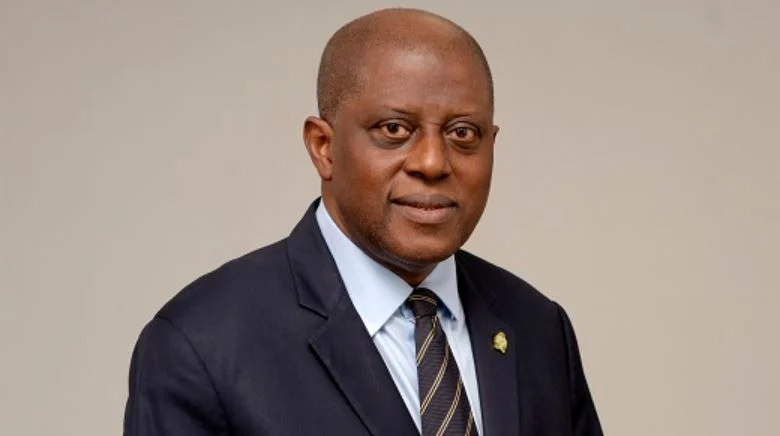
Governor of the Central Bank of Nigeria (CBN), Mr. Olayemi Cardoso, has said the country’s net foreign reserves have risen to $49 billion, marking a strong and sustained recovery from about $3 billion recorded in May 2023.
Cardoso disclosed this yesterday in Abuja at the second edition of the National Economic Council (NEC) Conference, noting that the reserves reached $49 billion as at February 5, 2026, buoyed by inflows from diaspora remittances, non-oil exports, and other private and institutional sources.
According to him, the steady accretion to the reserves reflects growing confidence in the Nigerian economy and provides a stronger buffer for currency stability.
“This is obviously a very important statistic. When we took over, net reserves were about $3 billion. By the end of last year, they had risen strongly into the $30 billion range. As at February 5, 2026, they stood at $49 billion. We are now net buyers,” Cardoso said.
He explained that the CBN now allows market forces to largely determine foreign exchange prices, with the apex bank intervening mainly to purchase forex when conditions permit. This, he said, has helped narrow the gap between the official and parallel market exchange rates.
“The premium between the official and parallel market rates has collapsed to under two per cent,” he stated.
Cardoso identified diaspora remittances as a key driver of the improvement in reserves, stressing that Nigerians abroad have shown strong commitment to supporting the economy.
“Remittances have made a big difference to how we have grown our reserves. Nigerians in the diaspora come from every state represented here. We have engaged with them and made it easier for them to remit funds back home,” he said.
He added that sustained collaboration with state governors and other stakeholders would be critical to maintaining the momentum.
On access to foreign exchange, Cardoso said recent reforms have made forex more readily available to Nigerians, particularly travellers.
“When people travel now, you don’t have to look for foreign exchange. You can use your naira card to pay for what you want. The naira is more competitive and people are not afraid to hold it,” he said.
Recalling past challenges, the CBN governor noted that the naira, once widely rejected in parts of the West African sub-region, has regained acceptability due to improved predictability and stability in the forex market.
“In those days, if you went around West Africa with naira, nobody wanted to touch it. That has changed. There is now predictability and the ability to plan,” he said, warning that holding foreign currency without genuine need could result in losses.
On the banking sector, Cardoso said ongoing recapitalisation is strengthening financial institutions and positioning them to support Nigeria’s long-term growth objectives, including the ambition of building a $1 trillion economy.
“Banks are recapitalising, investors are earning positive real returns, and equity markets are recovering on the back of improved earnings and stability,” he said, adding that the CBN is also developing clearer succession rules to enhance resilience in the banking system.
He pointed to improving macroeconomic indicators, including GDP growth of 3.98 per cent, a strong current account position, and a $3.42 billion surplus recorded in the third quarter of 2025.
“We haven’t had this kind of current account strength in a very long time,” Cardoso noted, adding that inflation has moderated to about 15.15 per cent, signalling that recent reforms are yielding results.
Looking ahead, he said the CBN has developed a 2026–2030 roadmap focused on sustaining macroeconomic stability as a foundation for productivity and growth.
“Without stability, there will be no growth. One positive outcome of the reforms is that we now have stability,” he said.
According to him, priorities include reducing inflation, normalising the foreign exchange market, strengthening external reserves, and safeguarding the value of the naira.
“We will do whatever it takes to protect the value of the naira,” Cardoso said, while cautioning that risks remain, including excess liquidity in the system and potential pressures from election-related spending.
He stressed that monetary policy alone cannot deliver lasting stability, calling for fiscal discipline, supply-side reforms, and stronger policy coordination across government.
“Monetary policy is necessary, but it is not sufficient. Monetary stability requires fiscal discipline and credibility. Policy coherence is a strong anchor for stability,” he said.
In his welcome address, Minister of Budget and Economic Planning, Senator Abubakar Atiku Bagudu, commended President Bola Ahmed Tinubu for the reforms implemented so far, saying they have improved the fiscal position of states and local governments.
“Today, a more united federation is gathered here because of the choices you made. Your reforms have improved the fiscal condition of states and local governments, even as much of the burden is borne by the Federal Government,” Bagudu said.
He added that members of the NEC, representing the 36 states and the Federal Capital Territory, have largely aligned with the reform agenda and continue to work with the Federal Government on security, infrastructure, fiscal and monetary coordination, domestic production, and efforts to curb oil theft.
