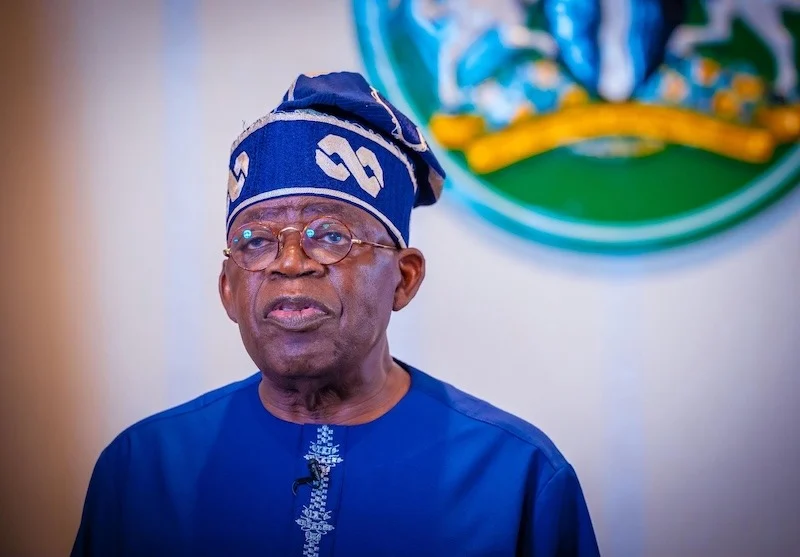
President Bola Ahmed Tinubu has expressed strong displeasure over the growing backlog of unpaid federal contractors and has set up a high-level committee to resolve funding delays and clear outstanding debts. The decision followed a briefing during Wednesday’s Federal Executive Council meeting held at the State House in Abuja.
Speaking to journalists after the meeting, the President’s Special Adviser on Information and Strategy, Bayo Onanuga, said President Tinubu became visibly upset after learning that about 2,000 contractors are currently owed by the Federal Government. According to Onanuga, the President demanded an urgent and coordinated solution.
“He made it very, very clear he is not happy and wants a one-stop solution,” Onanuga said. “The Director-General of the Bureau of Public Procurement told the President that about 2,000 contractors are being owed money, and this made the President very upset. So the ministers are going to look into the problem and find a solution, including how to secure funds to pay the contractors.”
To address the issue, Tinubu established a multi-ministerial committee made up of key members of the economic and infrastructure sectors. The committee includes the Minister of Finance and Coordinating Minister of the Economy, Wale Edun; Minister of Budget and Economic Planning, Atiku Bagudu; Minister of Works, Dave Umahi; Minister of Education, Olatunji Alausa; Minister of Housing, Ahmed Dangiwa; and Minister of Marine and Blue Economy, Gboyega Oyetola. Also on the team are the Director-General of the Budget Office of the Federation, Tanimu Kurfi, and the Chairman of the Federal Inland Revenue Service, Dr Zacch Adedeji.
Onanuga explained that the committee has been instructed to work collaboratively and present a clear repayment plan to President Tinubu. Their mandate includes determining the size of the debt, identifying funding options, and proposing a sustainable framework to prevent future accumulations.
“All of them are supposed to sit down, develop a plan, meet as a committee, and then go to the President to present the solution they have found for allocating funds to pay contractors,” he said.
He added that the briefing by the Director-General of the Bureau of Public Procurement exposed the scale of the legacy debts, prompting the President’s directive for urgent action. Onanuga noted that the President questioned why contractors remained unpaid despite improved revenue collections from agencies such as the Federal Inland Revenue Service.
“The mandate is to find the money and fix the problem. We need to look at the root causes—why is this happening? Why are we seeing higher revenue numbers from FIRS yet still owing contractors? That’s why the President set up a multi-ministerial committee to examine everything,” he said.
Onanuga also mentioned that President Tinubu signalled willingness to consider borrowing if necessary to clear verified contractor debts. He said the committee is expected to meet the President quickly to present initial recommendations.
The issue of unpaid contractors has been growing for months. In September, the All Indigenous Contractors Association of Nigeria protested at the Ministry of Finance in Abuja, claiming that more than N4 trillion in certified 2024 capital project payments was outstanding. The group also staged a demonstration at the National Assembly, calling for immediate intervention.
Earlier in January 2024, the Ministry of Works began a verification exercise to confirm and clear an estimated N1.5 trillion owed on federal highway contracts. Despite these efforts, backlogs have persisted, partly due to Nigeria’s overlapping budget cycles. The government extended portions of the 2024 capital budget deep into 2025, complicating cash flow and project scheduling.
Pressure on public finances has also increased. On November 12, lawmakers approved an additional N1.15 trillion in domestic borrowing to address the widening 2025 budget deficit. Around the same period, the Federal Government raised $2.35 billion from Eurobond markets to strengthen its financing position.
As the new committee begins work, attention now turns to how quickly the government can mobilise funds and restore confidence among contractors who remain essential partners in delivering infrastructure, education, housing, and other public services across the country.
