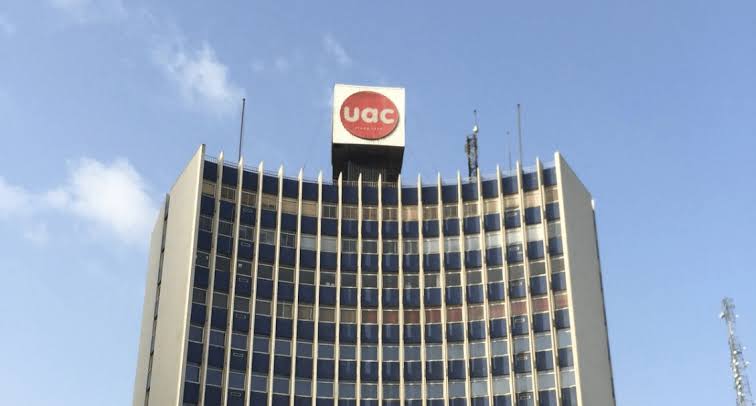
UAC of Nigeria Plc is moving into a new phase of its business strategy, focusing on reducing debt and strengthening its balance sheet after a major expansion of its portfolio.
The company’s acquisition of C.H.I. Limited, the maker of Chivita and Hollandia, significantly increased the scale of UAC’s operations but also raised its borrowing and finance costs.
UAC completed the acquisition for N182.5 billion in October 2025, bringing the packaged food and beverage business fully under its control. The transaction expanded UAC’s consumer brands while increasing the financial obligations attached to the group. (Businessday NG)
Debt reduction becomes a priority
UAC’s 2025 results showed that net debt rose to N294 billion following the C.H.I. acquisition, while long-term debt-to-EBITDA stood at 3.2 times.
The company has since begun working to reduce its leverage through stronger cash generation and improved working-capital management. Free cash flow increased to N14 billion in 2025 from N2.1 billion a year earlier. (MarketScreener)
By the first half of 2026, the company had made further progress. Net debt had fallen by N37 billion, while its net debt-to-EBITDA ratio improved from 5.9 times to 2.7 times. Free cash flow also increased sharply to N71 billion during the period. (Businessday NG)
Stronger earnings provide support
UAC’s enlarged portfolio has also started to generate stronger earnings.
For the six months ended June 2026, group revenue increased more than threefold to N365 billion, while profit before tax rose to N34 billion. Profit after tax reached N20 billion, representing a 172 percent increase from the same period in 2025.
The packaged food and beverages segment, which now includes C.H.I., was the biggest contributor to the growth, recording N33.6 billion in profit before tax during the first half of the year. (Businessday NG)
However, the stronger earnings have come alongside higher finance costs. UAC’s net finance cost rose significantly as interest expenses on the borrowings used to finance the C.H.I. transaction increased.

Longer-term funding strategy
UAC has also taken steps to restructure its funding profile and reduce refinancing pressure.
In February 2026, the company listed a N54.03 billion, seven-year fixed-rate bond on the FMDQ Securities Exchange. The bond was issued under UAC’s N150 billion debt issuance programme, with proceeds earmarked for refinancing existing obligations, capital expenditure and working capital. (Nairametrics)
The longer-term funding is intended to give UAC greater balance-sheet flexibility as it integrates C.H.I. and expands its consumer businesses.
With the acquisition now integrated into the group, the focus is shifting from expansion to debt reduction, operational efficiency and stronger cash generation.
The success of this next phase will depend on how effectively UAC converts its enlarged portfolio into sustainable cash flows while managing borrowing costs and refinancing obligations.
SEO Title: UAC Shifts Focus to Debt Reduction After Major Expansion
Meta Description: UAC of Nigeria is focusing on debt reduction and stronger cash flows after its N182.5bn C.H.I. acquisition expanded the group’s portfolio.
