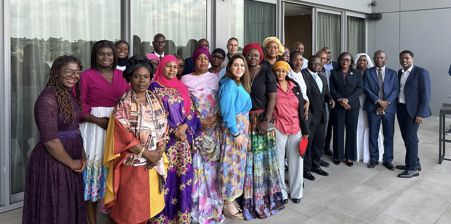
African Trade and Investment Development Insurance has said correcting risk perceptions in Africa’s financial markets will be key to improving access to finance for women led businesses and expanding investment across the continent.
The institution said capital in many African markets has often been priced based on perceived volatility rather than actual economic potential, limiting access to financing for several sectors of the economy.
According to the organisation, women led enterprises have been particularly affected by this imbalance, despite their growing contribution to employment, trade and economic activity across the region.
Across Africa, women entrepreneurs play a significant role in local value chains and small business development, yet many face constraints in accessing credit and participating in cross border trade.
Industry analysts say the challenge is less about business capacity and more about financing structures and risk assessments that continue to limit the flow of capital to smaller enterprises.
Over the past 25 years, ATIDI said it has supported more than $88 billion in investments and cross border trade transactions across African markets.
The organisation currently holds an A rating with stable outlook from Standard & Poor’s and an A2 rating with stable outlook from Moody’s, reflecting its financial position and risk management framework.
In 2025, the institution was named Development Finance Institution of the Year at the African Banker Awards, recognition that officials say reflects its growing role in supporting trade and investment across the continent.
ATIDI said part of its mandate is to reduce market failures that prevent businesses from accessing finance, particularly through insurance instruments that help reduce investment risks.
The organisation provides political risk insurance that protects investors against risks such as expropriation and currency inconvertibility, while credit risk insurance helps financial institutions manage counterparty default risk and expand trade finance.
It also issues surety bonds that enable businesses to participate in infrastructure projects and government procurement processes.
To expand lending to smaller enterprises, ATIDI has implemented a Portfolio Risk Sharing Agreement with KfW Development Bank.
The programme allows risk to be shared between lenders and the institution, enabling banks to increase credit to small and medium sized enterprises that may otherwise struggle to access financing.
ATIDI said the arrangement helps reduce capital constraints for financial institutions while encouraging greater private sector participation in SME lending.
Another initiative, the Regional Liquidity Support Facility, developed with support from KfW Development Bank and Norad, focuses on addressing payment delays in renewable energy and infrastructure projects.
By mitigating liquidity risks linked to public sector offtakers, the facility is designed to strengthen investor confidence in projects related to energy access and industrial development.
The institution also said its activities support regional trade integration initiatives including the African Continental Free Trade Area.
Working with partners such as ZEP-RE and KfW, ATIDI is supporting the COMESA Regional Customs Transit Guarantee Scheme, which aims to reduce border delays and transaction costs in cross border trade.
Officials say improving trade logistics and financial access will particularly benefit women led businesses, many of which rely on regional markets for growth.
The institution said expanding opportunities for women in trade and investment remains central to its long term strategy, noting that broader participation in economic activity could strengthen markets and support sustainable growth across the continent.
