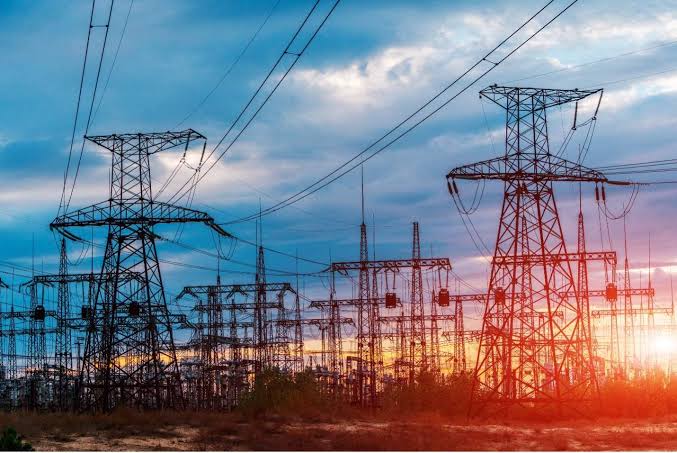
The Federal Government says it will prioritise gas supply and reliable electricity for industrial clusters as part of efforts to reduce production costs and strengthen Nigeria’s manufacturing sector.
President Bola Tinubu, represented by the Minister of State for Industry, Trade and Investment, John Enoh, made this known at the 54th Annual General Meeting of the Manufacturers Association of Nigeria (MAN) in Lagos.
He said reliable energy was critical to the survival and competitiveness of Nigerian manufacturers, noting that energy costs affect the price of virtually every product made in the country.
“We will continue to prioritise gas for industry and provide reliable power for industrial clusters because the cost of energy is the cost of everything we make,” Tinubu said.
Government targets bigger manufacturing sector
The Federal Government is targeting an increase in manufacturing’s contribution to real GDP to between 20 and 25 percent by 2030, from below 9 percent in 2024.
The administration also plans to support industrial development through four priority areas: metals and solid minerals, oil and gas, construction and manufacturing.
Tinubu said the government intends to channel up to 5 percent of GDP into industrial financing, working with the Bank of Industry and development-finance institutions to provide affordable, long-term funding for productive businesses.
The government’s approach comes as Nigeria seeks to reverse decades of deindustrialisation and expand domestic production.
Manufacturing records growth despite challenges
Tinubu acknowledged that manufacturers continue to face significant operating pressures despite recent improvements in the sector.
Manufacturing grew by 3.29 percent in the first quarter of 2026 and 3.24 percent in the second quarter, according to data from the National Bureau of Statistics.
However, the sector’s contribution to GDP slipped to 7.72 percent.
Tinubu also disclosed that manufacturers were holding almost N2 trillion worth of unsold inventory, with some businesses reportedly selling products below cost simply to remain operational.
The government therefore plans to track the number of factories reopened, production capacity, jobs created and exports generated through its Industrial Revolution Work Group.
Four-point industrial strategy
The President outlined four key areas supporting the government’s industrialisation plan.
The first is providing competitive electricity and gas to industrial clusters and special economic zones.
The second is expanding access to patient capital for machinery, raw materials and business expansion.
The third is strengthening demand for locally produced goods through the Nigeria First policy, which makes Nigerian-made products the preferred option in public procurement.
The fourth is improving market access by harmonising standards, reducing border delays and helping Nigerian manufacturers take advantage of the African Continental Free Trade Area, which covers a market of about 1.4 billion people.
Nigeria’s domestic gas supply has recently crossed 2 billion cubic feet per day as the government works to increase supplies to power plants and industries.
MAN calls for faster implementation
MAN President Francis Meshioye said the Nigeria Industrial Policy 2025 could provide a framework for accelerating industrial development, but its success would depend on consistent implementation and measurable results.
He identified high energy and input costs, expensive logistics, inadequate infrastructure, policy uncertainty, multiple taxation and limited access to finance as major constraints facing manufacturers.
Meshioye urged the government to establish a Nigeria First Industrial Fund offering long-term concessionary financing and to review electricity pricing for manufacturers.
He also called for dedicated power feeders and embedded generation for industrial facilities, stronger foreign-exchange support for productive manufacturers and improved protection against dumping and substandard imports.
The association further urged the government to prioritise gas allocation to manufacturers and settle outstanding foreign-exchange forward obligations.
Gas seen as key to industrial growth
The push for greater gas supply comes as Nigeria seeks to turn its large gas reserves into a stronger source of industrial growth.
The country has more than 200 trillion cubic feet of proven gas reserves, but infrastructure and investment constraints have limited the ability to deliver sufficient supplies to businesses and households.
Industry stakeholders have argued that expanding gas processing, transportation and distribution infrastructure is essential if Nigeria is to use its gas resources to support manufacturing and economic diversification.
For manufacturers, the immediate challenge remains the cost and reliability of energy. The government’s plan to prioritise gas and power for industrial clusters is therefore aimed at reducing one of the biggest constraints on domestic production.
SEO Title: FG to Prioritise Gas for Industrial Clusters to Cut Costs
Meta Description: The Federal Government plans to prioritise gas and reliable power for industrial clusters to reduce energy costs and boost Nigerian manufacturing.
Read also on Radarr: Nigeria’s Industrial Funding Needs Factory-Level Reforms to Deliver Results | Gas Minister Urges NNPC to Fast-Track AKK, OB3 Pipeline Completion, Expand Domestic Gas Use
