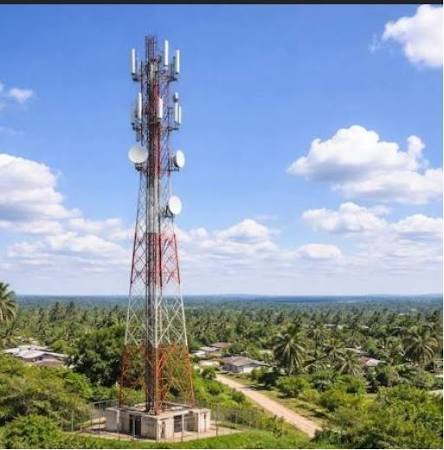
The Federal Government is developing a blended funding model to expand telecommunications services to rural communities with little or no network coverage.
The proposed model will combine funding from the Universal Service Provision Fund (USPF), the Rural Electrification Agency (REA) and state governments to finance telecom infrastructure and the power systems needed to operate it.
The initiative emerged from discussions at the Nigeria Digital Connectivity Investment Forum, organised by the Nigerian Communications Commission (NCC) in partnership with Swedfund and Ookla.
Under the proposed arrangement, the USPF would finance telecommunications infrastructure such as towers, base stations, small cells, backhaul and other network equipment in communities with no connectivity.
The REA would support the energy component by providing funding for solar mini-grids, batteries and solar panels to power the telecom facilities, while state governments would be expected to provide land, security and rights of way.
The government is targeting six months to secure funding for the proposed infrastructure.
Communities to own and manage infrastructure
A major feature of the proposed model is community ownership.
Rather than leaving rural infrastructure entirely in the hands of telecom operators or government agencies, communities would form cooperatives that own and maintain the facilities.
The cooperatives could also share revenue generated from the infrastructure while taking responsibility for keeping the assets operational.
The approach is similar to community-based models already used in rural electrification and is intended to give local residents a direct stake in the infrastructure serving their communities.
The USPF has previously identified community ownership as a way of promoting entrepreneurship and improving the sustainability of universal-service projects.
Telecom and electricity funding combined
The blended approach recognises that rural connectivity depends on more than telecommunications infrastructure.
A mobile tower without a reliable power supply cannot provide consistent service, while a powered telecom site still requires adequate backhaul infrastructure to deliver broadband services.
Bringing telecommunications and rural electrification funding together is therefore expected to help address both challenges at the same time.
The NCC and REA have also been working together on rural connectivity and infrastructure mapping, creating a basis for coordinating telecom and electricity investments.
Stakeholders at the forum called for stronger support for the USPF as a major funding channel for underserved communities, alongside public, private and development-finance resources.
3,700 towers planned
The community ownership proposal comes as the government prepares to deploy about 3,700 communications sites across the country under the Nigeria Universal Communication Access Project (NUCAP).
The project is designed to provide rural broadband, public Wi-Fi, digital learning solutions and related energy infrastructure to underserved and unserved communities.
The government has also been pursuing Project BRIDGE, a planned 90,000-kilometre national fibre network designed to strengthen Nigeria’s digital backbone and improve broadband access across the country.
Project BRIDGE is being developed through a public-private partnership, with funding expected from development finance institutions and private-sector investors.
The government has secured funding commitments from institutions including the World Bank, African Development Bank and European Bank for Reconstruction and Development for the broader fibre infrastructure programme.
Infrastructure alone may not close digital gap
Despite plans to expand network coverage, stakeholders noted that building more telecom infrastructure will not automatically increase internet usage.
Affordability remains a major challenge, particularly for people who cannot afford internet-enabled smartphones or data services.
Digital skills, reliable electricity and other barriers to internet access also continue to affect adoption.
This means the success of rural connectivity programmes will depend not only on how many towers or fibre kilometres are deployed, but also on whether residents can afford to use the services.
The government is therefore pursuing complementary measures, including efforts to reduce the cost of devices and expand alternative connectivity technologies.
The proposed community ownership model could also give rural residents a financial interest in the infrastructure serving them, potentially encouraging communities to protect and maintain the facilities.
The broader challenge will be turning the proposed blended financing structure into sustainable networks that provide affordable and reliable connectivity to communities that have historically remained underserved.
SEO title: FG Plans Blended Funding for Community-Owned Rural Telecom Networks
Meta description: The Federal Government plans blended funding from telecom, electricity and state resources to expand community-owned rural networks across Nigeria.
Read also on Radarr: Mirova Commits $10m to ARC Ride’s E-Mobility Expansion in Kenya | Bank of Industry Launches Sustainable Finance Framework to Boost Inclusive and Climate-Resilient Growth
