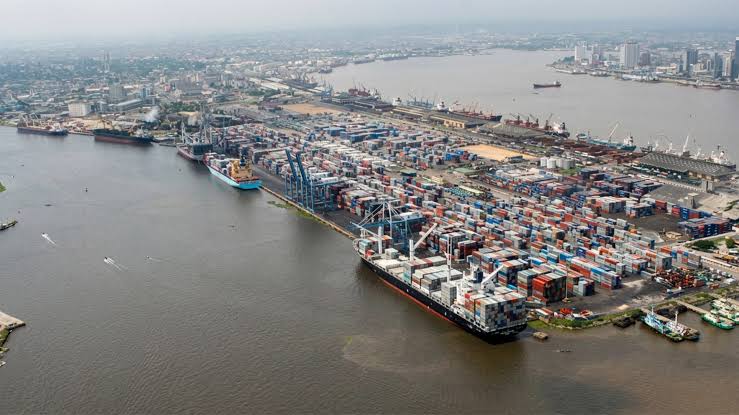
Maritime industry stakeholders have called for a clear legal framework to support Nigeria’s digital port systems, warning that technology alone will not eliminate delays and inefficiencies in cargo clearance.
The call comes as the Federal Government continues to roll out digital platforms designed to streamline trade processes and improve coordination among agencies operating at the nation’s ports.
One of the major initiatives is the National Single Window (NSW), a unified digital platform designed to allow traders and other stakeholders to submit trade documents through a single system.
The platform is intended to reduce paperwork, improve information sharing and accelerate cargo clearance. Its official framework provides for one-time submission of trade and maritime documents and integration among relevant regulatory agencies. (National Single Window)
However, legal experts and industry stakeholders have raised concerns about the need for legislation that clearly defines how the system should operate and assigns responsibilities to the agencies involved.
Legal backing needed
Ugochukwu Eze, managing partner at Eaglex Law Practice, said the National Single Window requires stronger statutory backing to provide certainty over its operation.
He argued that relying primarily on government policy could create legal uncertainty, particularly over which agency has authority to operate the system and how responsibilities should be shared.
He also stressed the need for clear rules covering liability, data sharing and the handling of information between the different agencies connected to the platform.
The concerns come against the backdrop of Nigeria’s broader effort to digitise port operations and reduce the delays associated with manual processes.
Interoperability remains a challenge
Stakeholders also identified the lack of interoperability between existing digital systems as one of the major obstacles to efficient port operations.
Several agencies and private operators already use their own digital platforms, including the Nigeria Ports Authority, Nigeria Customs Service, terminal operators and shipping companies.
However, systems that operate independently can make it difficult for information to move seamlessly across the entire cargo journey.
Chris Adeleke, co-founder of AD Marina, said Nigeria has the technical capacity and human resources required for digital transformation, but systems must be connected for the benefits to be realised.
The objective, stakeholders said, should be to allow all parties involved in a shipment to access relevant information as cargo moves through the port.
This would improve visibility, reduce duplication and allow agencies and operators to prepare ahead of a vessel or cargo’s arrival.
Clear timelines and penalties
Stakeholders also called for clearly defined responsibilities and deadlines for agencies using the digital systems.
Samuel Ebidunmi, a maritime and supply-chain consultant, said each stakeholder should have specific responsibilities and response times, alongside penalties for failing to meet agreed deadlines.
He argued that digital platforms would have limited impact if users could ignore deadlines without consequences.
A digital system should therefore not only show where a process is delayed but also identify the agency responsible and provide a mechanism for resolving the delay.
Oluwole Oyeniran, digital engineering leader at Deloitte West Africa, similarly stressed the importance of ownership and accountability.
He said dashboards and digital tracking tools would have little value if there was no clear responsibility for taking action when problems arise.
Nigeria looks to global port models
Industry experts have also pointed to international ports such as Singapore and Rotterdam as examples Nigeria could learn from.
Rather than simply copying their technology, stakeholders said Nigeria should adopt the principles behind their systems, particularly advance scheduling, standardised data and coordination across the logistics chain.
A more integrated system could allow vessels, terminals and other service providers to know in advance when cargo is expected and what resources will be required.
The aim is to move information ahead of cargo rather than wait for each stage of the process to be completed before the next stakeholder receives the necessary data.
Nigeria has already taken steps towards greater digital integration. The National Single Window went live in March 2026, while the Nigeria Ports Authority has also been developing a Port Community System designed to connect customs, terminal operators, shipping lines and freight forwarders on a common platform. (Businessday NG)
The Federal Government had previously targeted reducing average cargo clearance time from about 21 days to less than seven days by the end of 2026 through the National Single Window and related port reforms. (State House)
Stakeholders said achieving that goal will require more than technology. A strong legal framework, clearly defined responsibilities, interoperable systems and enforceable deadlines will be critical to ensuring Nigeria’s digital port reforms translate into faster and more transparent trade processes.
SEO title: Stakeholders Call for Legal Framework to Strengthen Nigeria’s Digital Port Systems
Meta description: Maritime stakeholders want a clear legal framework, defined responsibilities and interoperable systems to make Nigeria’s digital port reforms more effective.
Read also on Radarr: Nigeria Pushes Africa to Process Minerals Locally | Civil Society Group Faults Dangote’s Call for Probe of NMDPRA Boss
