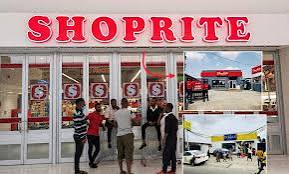
Nigeria’s supermarket industry is facing increased competition as Shoprite shifts towards smaller neighbourhood stores, putting it in more direct competition with local retailers such as Bokku! Mart and Justrite.
The change marks a new phase in the country’s grocery retail market, where supermarkets are increasingly targeting residential communities and cost-conscious shoppers rather than relying mainly on large outlets in shopping malls.
Bokku and Justrite have built their businesses around smaller retail formats that bring everyday groceries closer to consumers. Their expansion has strengthened their presence among middle- and lower-income households seeking affordable food and household essentials.
Shoprite’s decision to adopt a similar approach comes after its traditional large-format stores faced rising operating expenses, foreign exchange pressures and challenging trading conditions.
Shoprite changes its retail strategy
Shoprite Nigeria is moving away from depending primarily on large shopping mall outlets as it looks to make its operations more cost-efficient.
Adekunle Adebiyi, executive director of investments at MBO Capital Management Limited, an investor in Shoprite Nigeria, confirmed that the company plans to expand through smaller outlets.
“We’re going to be opening standalone neighbourhood stores, which was always the plan,” Adebiyi said.
The strategy is expected to bring Shoprite closer to residential communities while reducing some of the expenses associated with operating large supermarkets.
The retailer’s renewed approach follows a restructuring process that began in August 2025. In March 2026, Shoprite clarified that it was not leaving Nigeria but reorganising its operations to improve its business model.
The company also disclosed plans to reopen outlets at The Palms Shopping Mall and Circle Mall in Lagos while exploring smaller store formats.
However, it has not announced the number of neighbourhood outlets it intends to establish, their locations or the timeline for the expansion.
Bokku and Justrite strengthen their neighbourhood presence
Local supermarket operators have gained ground by positioning their outlets close to where consumers live and work.
Bokku! Mart, owned by Atreos Limited, has expanded rapidly through a micro-format retail model that allows it to operate in densely populated communities without depending on major shopping mall infrastructure.
An Estate Intel report cited by BusinessDay showed that Bokku! Mart had grown to more than 200 stores across Lagos, Ogun and Oyo states within three years.
Its business model combines smaller stores with bulk purchasing arrangements, allowing the retailer to negotiate discounts and offer competitive prices. The report estimated that its products are typically priced 15 to 30 percent below those of competitors.
Justrite has also established a presence in the neighbourhood supermarket segment, competing through accessible locations and pricing strategies.
Other retailers, including Addide Stores and Grocery Bazaar, are also targeting consumers through community-based outlets and combinations of wholesale and retail distribution.
Addide Stores, which opened its first outlet in Akoka, Lagos, in March 2008, has expanded to 44 locations across areas including Bariga, Gbagada and Surulere.
Grocery Bazaar operates 23 locations concentrated in Lagos, with additional outlets in Ogun State. Its hybrid model serves both household shoppers and small traders looking for wholesale-priced products.
Local supermarkets gain ground among consumers
Data from Shoppoint Insights’ Retail Pulse for the first quarter of 2026 highlights the growing presence of neighbourhood supermarket chains.
Bokku appeared on 7.7 percent of receipts scanned by Shoppoint Rewards shoppers, while Justrite accounted for 3 percent.
The figures reflect the increasing relevance of these retailers as consumers adjust their shopping habits in response to rising living costs.
Femi Egbesola, president of the Association of Small Business Owners of Nigeria (ASBON), said Shoprite’s earlier shutdowns suggested that the retailer had not fully adapted to the country’s business environment.
He explained that indigenous supermarket operators have an advantage because they understand local consumer behaviour and the challenges of operating in Nigeria.
Egbesola also believes Shoprite’s return to neighbourhood retail could increase competition, improve access to everyday products and create more opportunities for small businesses supplying supermarkets.
He noted that greater competition among retailers could put downward pressure on the prices of goods, potentially benefiting consumers.
Cost-of-living pressures reshape shopping habits
Nigeria’s economic conditions are also influencing the way households purchase groceries and other essentials.
A 2026 McKinsey report, Meeting the Pragmatic Shopper, found that traditional trade accounts for between 90 and 95 percent of Nigeria’s grocery retail market.
The research, which included 5,013 Nigerian respondents as part of a five-country survey involving 9,036 consumers, highlighted how inflation, currency movements and pressure on household incomes have changed spending patterns.
It also found that disposable income grew by only 4.5 percent in 2024.
Damian Hattingh, partner and leader of McKinsey’s Consumer Practice in Africa, explained that consumers are becoming more selective about their spending decisions.
“They are becoming more selective about where they save, where they spend and what they believe is worth paying for,” he said.
This suggests that affordability is no longer the only consideration influencing supermarket choices. Consumers are also weighing product quality, convenience and health against the amount they spend.
Nigeria’s headline inflation rate stood at 14.63 percent in September 2026, compared with 15.39 percent in August, according to the National Bureau of Statistics.
For retailers, these conditions make smaller neighbourhood outlets an attractive way to reach shoppers while managing operating costs.
Shoprite faces a more competitive retail market
Shoprite’s shift towards neighbourhood stores places it in a market where local supermarket chains have already established customer relationships and developed operating models suited to Nigerian communities.
The company’s Nigerian business underwent an ownership change in June 2021, when a consortium led by Persianas Investment Limited acquired its operations following Shoprite Holdings’ decision to exit direct ownership.
The business continued under Retail Supermarkets Nigeria Limited through a franchise arrangement.
Its latest restructuring reflects an effort to adjust to local market conditions and compete more effectively.
However, Shoprite’s success will depend on whether it can offer competitive prices, convenient locations and reliable product availability while keeping operating expenses under control.
For Bokku and Justrite, the arrival of a stronger Shoprite neighbourhood strategy could increase pressure on pricing and customer retention. At the same time, the competition could give Nigerian shoppers more options for purchasing everyday essentials.
The battle for Nigeria’s neighbourhood grocery market is therefore becoming less about the size of supermarket outlets and more about who can serve consumers conveniently and affordably.
