c
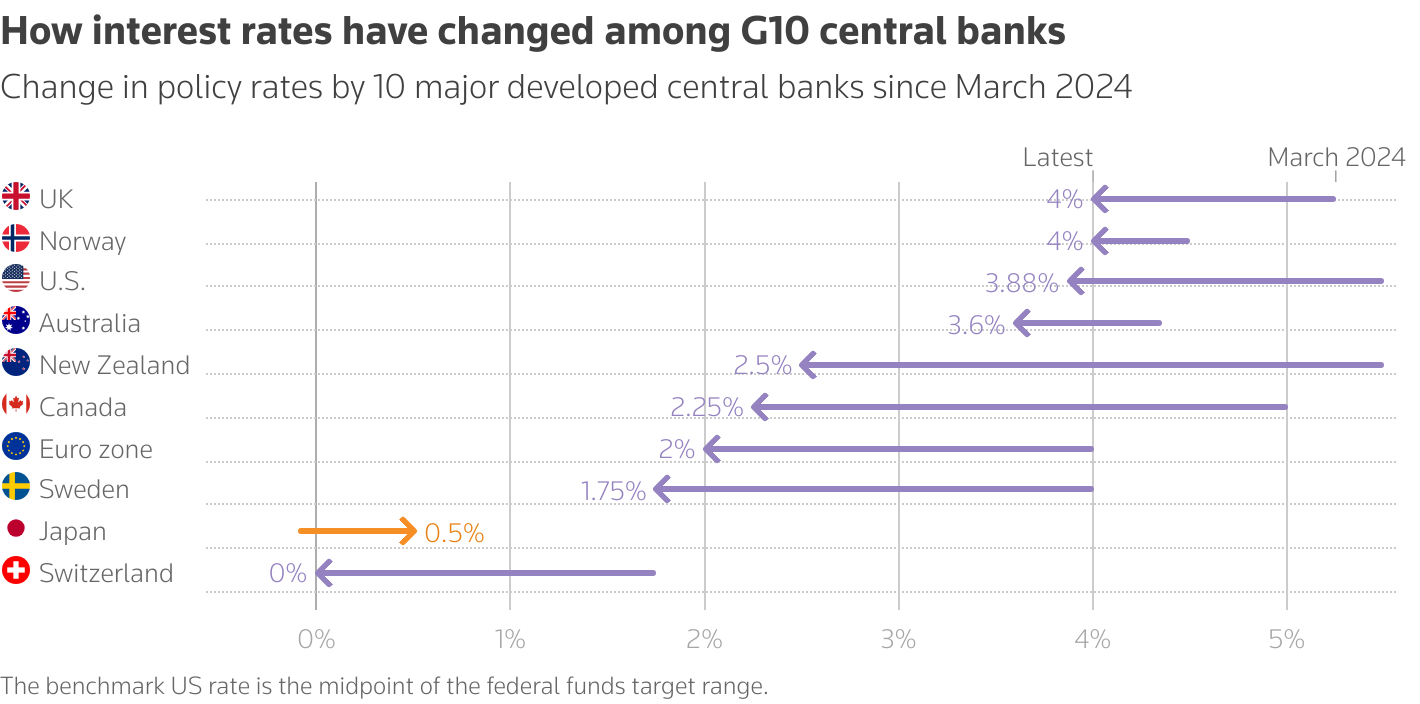
The Bank of England (BoE) kept its benchmark interest rate unchanged at 3.75 percent on Thursday, extending its pause for a sixth consecutive meeting. The decision came as UK inflation climbed to 3.1 percent in August, well above the central bank’s 2 percent target. (Bank of England)
The decision was not unanimous. Six members of the Monetary Policy Committee voted to maintain the rate, while three supported a 0.25 percentage-point increase to 4 percent.
The BoE said the prolonged conflict in the Middle East had pushed crude and refined energy prices higher, adding to inflationary pressures and financial-market volatility. (Bank of England)
US and Japan Raise Interest Rates
The US Federal Reserve also raised its benchmark interest rate by 0.25 percentage points to a range of 3.75 to 4 percent, marking its first rate increase in three years. The move came as US inflation remained above the Federal Reserve’s 2 percent target. (Reuters)
The Federal Reserve’s latest projections also indicate that most policymakers expect at least one additional rate increase before the end of 2026. However, future decisions will continue to depend on economic and inflation data.
Japan’s central bank has also moved towards tighter monetary policy. The Bank of Japan raised its benchmark rate from 1 percent to 1.25 percent, its highest level in 31 years, as inflation moved closer to its 2 percent target. (AP News)
The move marks another step away from the ultra-low interest-rate policies Japan maintained for decades while attempting to overcome deflation.
European Central Bank Tightens Policy
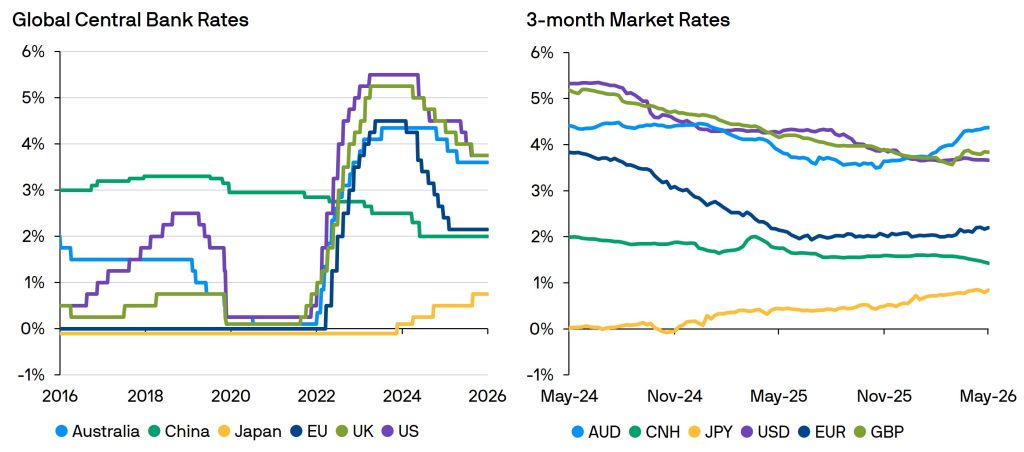
The European Central Bank (ECB) raised its three key interest rates by 25 basis points on September 10, taking the deposit facility rate to 2.50 percent, the main refinancing rate to 2.65 percent and the marginal lending facility to 2.90 percent.
The ECB said the decision reflected continuing inflationary pressures linked to the conflict in the Middle East. It expects euro-area inflation to average 3 percent in 2026 before easing to 2.5 percent in 2027 and 2.1 percent in 2028. (European Central Bank)
Central Banks Face Different Economic Pressures
The contrasting decisions highlight the different challenges facing major economies.
While the UK is holding rates steady despite inflation remaining above target, the US, Japan and euro area have opted for higher borrowing costs as they respond to inflation and energy-price pressures.
For households and businesses, higher interest rates can increase the cost of borrowing, while keeping rates unchanged can provide some relief but may allow inflationary pressures to persist.
The Bank of England said its future decisions would depend on how long the energy shock lasts and whether higher prices begin to influence wages and broader price-setting. (Bank of England)
With inflation, energy prices and geopolitical uncertainty continuing to shape the global economy, major central banks are increasingly taking different approaches to monetary policy rather than moving in the same direction.
