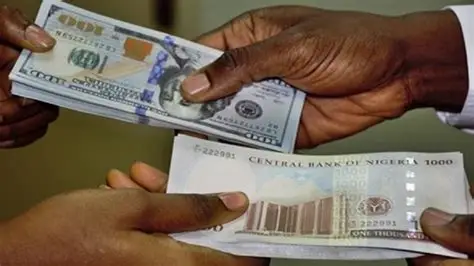
Nigeria’s naira strengthened to a two-year high of N1,331.77 per dollar in the official foreign exchange market on Wednesday, despite concerns that the recent interest-rate cut could put fresh pressure on the currency.
The appreciation was supported by stronger dollar inflows, improved market liquidity and rising external reserves. The naira has gained 24.68 percent from N1,660.49 per dollar recorded in October 2024.
In the parallel market, the currency has also recovered from its 2024 levels, although it traded at about N1,370 per dollar on Wednesday on a day-to-day basis.
Reserves approach $55 billion
Nigeria’s gross external reserves rose to $54.98 billion as of October 6, 2026, up from $42.54 billion recorded a year earlier.
The stronger reserve position provides additional support for the foreign exchange market and gives the Central Bank of Nigeria greater capacity to meet external obligations and manage market pressures.
Foreign exchange supply has also improved. The CBN said total FX inflows reached $10.82 billion in July, with $7.33 billion, or nearly 68 percent, coming from autonomous sources.
Remittances through international money transfer operators stood at $950 million during the month, while net foreign portfolio inflows reached $6.31 billion between January and August 2026.
Rate cut fails to weaken the naira
The naira’s recent strength comes after the Monetary Policy Committee cut the Monetary Policy Rate from 26.5 percent to 23 percent in September.
The 350-basis-point reduction was accompanied by a recalibration of the asymmetric corridor, while the Cash Reserve Ratio and liquidity ratio were left unchanged.
Despite the rate cut, analysts said the currency has remained relatively stable, supported by stronger external buffers and improved foreign exchange liquidity.
However, United Capital analysts warned that Nigeria remains exposed to changes in global investor sentiment because portfolio investments can reverse quickly. Coronation Merchant Bank also cautioned that the rate cut should not automatically be interpreted as the beginning of a prolonged monetary easing cycle.
Inflation and economic growth improve
Other economic indicators have also strengthened. Headline inflation fell to 15.43 percent in July 2026, while Nigeria’s real GDP grew by 4.43 percent year-on-year in the second quarter, with non-oil activity providing much of the growth.
Analysts said the combination of stronger FX inflows, higher reserves, moderating inflation and improved confidence in the market-based exchange-rate system has supported the naira’s recovery.
The key challenge now is whether these gains can be sustained without excessive dependence on volatile portfolio inflows.
SEO Title
Naira Hits Two-Year High Despite Rate Cut, Reserves Near $55bn
Meta Description
Nigeria’s naira hits a two-year high at N1,331.77 per dollar as stronger FX inflows, rising reserves and improved liquidity support the currency.
