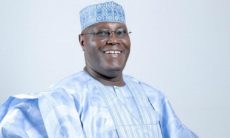
Former Vice President Atiku Abubakar is positioning his 2027 presidential campaign around economic relief, opposition cooperation and northern political mobilisation, while describing the election as his final attempt at the presidency.
Atiku, the presidential candidate of the African Democratic Congress (ADC), has promised to review the minimum wage and restore petrol subsidy if elected, while working to build a broader political coalition ahead of the election.
Subsidy promise returns to the debate
Atiku has renewed his call for the restoration of petrol subsidy, a major policy difference between his campaign and President Bola Tinubu’s economic reform programme.
In August, Atiku said: “On the question of subsidy, my position has not changed and will not change: I will restore it!”
He has argued that a targeted subsidy would provide immediate relief by lowering fuel and transportation costs and reducing pressure on household expenses.
The Federal Government and the ruling All Progressives Congress (APC) have opposed the proposal, pointing to the economic implications of restoring subsidy.
Atiku targets wage review
The minimum wage is another major part of Atiku’s economic message.
Nigeria’s national minimum wage was increased from N30,000 to N70,000 in 2024. Atiku has argued that rising costs of fuel, food, transportation and housing have reduced the purchasing power of the new wage.
On September 27, he called for an immediate review of the minimum wage and promised to begin increasing the wage floor from his first day in office if elected.
“At N1,400 a litre, the entire N70,000 monthly minimum wage buys just 50 litres of petrol. What does the worker take home to feed the children? What pays the rent? What gets that worker back to work on Monday?” he asked.
The seven ADC governorship candidates in the North-West have also pledged to implement a N110,000 minimum wage across their states if elected.
El-Rufai takes campaign role
Former Kaduna State governor Nasir El-Rufai has been appointed deputy chairman of Atiku’s National Campaign Council, placing him in a senior position within the campaign structure.
Kashim Ibrahim-Imam chairs the council, while Austin Akobundu serves as director-general and campaign manager. Veteran journalist Dele Momodu is deputy director-general of media and communications, while former APC national chairman John Oyegun heads the campaign’s advisory council.
El-Rufai’s inclusion brings experience from both Kaduna State and the federal government, and his role is expected to involve political coordination and engagement with stakeholders.
However, his political role comes as he faces ongoing legal proceedings over allegations involving the interception of communications concerning National Security Adviser Nuhu Ribadu. El-Rufai has pleaded not guilty, and the case remains unresolved.
Dele Momodu defended his inclusion in the campaign, describing it as “a way of honouring his sacrifice” and saying his difficulties were “quite political in nature.”
Debate over regional power rotation
Atiku’s decision to seek the presidency from the North has also renewed debate over Nigeria’s informal arrangement of rotating presidential power between the North and South.
Former Kaduna Central senator Shehu Sani said an Atiku victory in 2027 could bring an end to the informal rotation arrangement.
“If Atiku wins, it means that is the end of rotational presidency in Nigeria,” Sani said.
He also acknowledged Atiku’s constitutional right to contest, while arguing that the South should complete an eight-year tenure before power returns to the North in 2031.
Rotational presidency is not a constitutional requirement, leaving the issue as a political convention rather than a legal restriction on candidates.
Analysts offer different views
Economist Peter Awah said Atiku’s economic proposals could appeal to Nigerians dealing with rising living costs, but their impact would depend on how the policies are financed and implemented.
“Subsidy can lower immediate costs, but it requires funding. Higher wages can improve nominal incomes, but they can equally increase government expenditure,” Awah said.
Political analyst Jackson Lekan Ojo said the economic situation could give Atiku’s campaign greater traction, pointing to unemployment, living costs, hunger and insecurity.
Political scientist Bernard Mikko, however, said Atiku would face challenges associated with seeking to return presidential power to the North in 2027.
“He is contesting at the wrong time, and voters are aware of that. There is a need to keep Nigeria united,” Mikko said.
He added that Atiku would need support beyond the North to build a national coalition.
Atiku calls 2027 his final bid
Atiku has repeatedly described the 2027 election as his last presidential contest.
“Whether I win or lose, 2027 will be my last time contesting for the presidency,” he said during a Facebook Live session on August 19.
His presidential political journey includes the 1993 Social Democratic Party primary, the 2007 general election on the Action Congress platform, the 2011 PDP primary, the 2015 APC primary, and the 2019 and 2023 presidential elections under the PDP.
Although the 2027 contest will be his seventh major presidential attempt across primaries and general elections, he has appeared on the presidential ballot in three general elections: 2007, 2019 and 2023.
Read also on Radarr: Political Tension Builds as Key Figures Rally to Challenge President Tinubu’s 2027 Re-Election Bid | Tinubu Faces Opposition Backlash as Petrol Discounts Return
