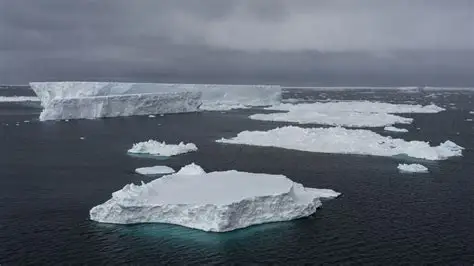
More than 12 trillion tons of ice have disappeared from Greenland and Antarctica since 1979, according to a major scientific study that examined long-term changes in the world’s two largest ice sheets.
The research, published in Scientific Data, found that about 11.3 trillion metric tons of ice have either melted or been discharged into the oceans, contributing roughly 3.2 centimetres to global sea-level rise.
Scientists say the primary driver of the ice loss is warming ocean temperatures surrounding the ice sheets rather than rising air temperatures.
Inès Otosaka, an ice scientist at Northumbria University, said satellite observations show a clear pattern of increasing ice loss over time.
“From our satellite observations, we’ve seen that there is a clear trend that the ice sheets are losing more mass and it has been increasing from decade to decade… And that’s quite clear that there’s a link to climate change.”
The study found that the rate of ice loss increased significantly during the 2010s, with researchers warning that the trend could continue for many years.
Otosaka noted that while the resulting sea-level rise may appear small, its impact is significant.
“11.3 trillion tons of ice, but then when you convert to an average global sea level, it’s only 3.2 centimeters. But even if it seems like a small number, we know that every centimeter of sea level rise matters.”
According to scientists, each additional centimetre of sea-level rise could expose between two and three million more people to annual coastal flooding, highlighting the growing risks associated with climate change.
