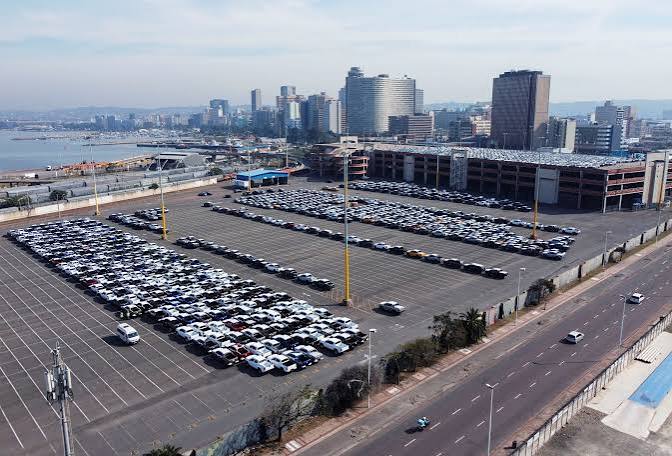
South Africa will stop supporting the assembly of vehicles from imported kits, Trade, Industry and Competition Minister Parks Tau said on Thursday, in a policy shift aimed at pushing carmakers to build more of their vehicles locally and lift local content from an average of 38% to 60%.
Speaking at South African Auto Week, Tau said existing semi knocked-down (SKD) operations would be phased out and that new SKD plants would not qualify for policy support, Reuters reported via CNBC Africa.
What happened
SKD assembly involves importing a vehicle body and most of its parts in kit form and putting them together locally. It has been a cheaper way for some manufacturers to enter the South African market without the heavy investment needed for full production.
The government is now reviewing the Automotive Production and Development Programme (APDP), the main incentive framework for the car industry, with industry bodies NAAMSA and NAACAM and organised labour. As part of that overhaul, the legal definition of complete knock-down (CKD) assembly will be tightened so that only vehicles built from the ground up with locally sourced components qualify.
Medium and heavy commercial vehicles will be excluded from the change. The International Trade Administration Commission, which sets import tariffs, will also study whether the ladder-frame light commercial segment, which includes pickup trucks, needs additional support before a final decision is made.
Tau made clear that protection would come with conditions, saying that “any additional protection should be accompanied by reciprocal commitments” on production.
Why it matters
The car industry is one of South Africa’s most important manufacturing sectors and a major exporter. The country’s Automotive Master Plan aims to raise local content to 60%, double employment in the sector and lift South Africa’s share of global vehicle output to 1% by 2035.
Established carmakers have long lobbied for the change. Earlier this year, the head of BMW Group South Africa argued that SKD assemblers were exploiting a loophole by bringing in engines almost duty free under aftermarket categories, while creating few jobs or investments. In July, the chief executive of Toyota South Africa Motors said the sector had moved beyond the need for SKD and that kit assembly could weaken the case for larger, full-scale investments.
For newer entrants, including brands that have used kit assembly to compete on price, the policy could raise costs or force them to commit to deeper local production. Any extra costs could eventually feed through to vehicle prices.
The move also has wider relevance across Africa, where several governments are trying to grow local vehicle assembly. South Africa’s decision signals that, in its view, kit assembly alone is no longer enough to support jobs and industrial growth in a mature car market.
What to watch
The government has not yet published a timeline for phasing out existing SKD operations or for the tariff commission’s study of the pickup segment. Investors will look for details on how long current assemblers will have to adjust and what reciprocal commitments carmakers will be asked to make in return for continued support.
The final shape of the revised APDP will be critical. It will determine how attractive South Africa remains as a production base for global carmakers, at a time when trade tensions and shifting supply chains are forcing manufacturers to rethink where they build.
