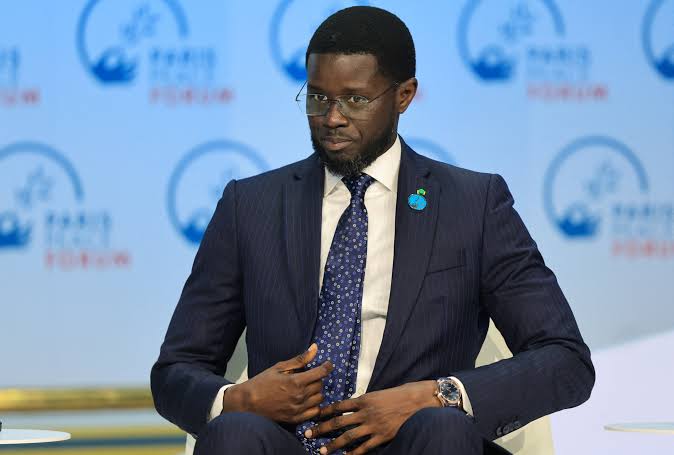
DAKAR, November 21 (Radarr Africa) – Senegalese President Bassirou Diomaye Faye signed a decree on Thursday putting the revised 2026 budget into force, bypassing a National Assembly that had rejected it, as lawmakers also threw out the first part of the 2027 finance bill a day earlier.
Decree No. 2026-2416 puts the 2026 revised finance bill into force. It was signed in Dakar on November 19 on the report of Finance Minister Cheikh Diba. The decree says its purpose is “to guarantee respect of our international commitments and budget continuity.”
According to the text of the decree, the government acted under article 68 of the Constitution after the 60-day deadline for parliament to adopt the bill passed without amendments being approved. The bill was sent to the Assembly on September 18. It was rejected in the finance committee between October 20 and 23, sent back to committee on October 27, rejected again on October 30 and definitively rejected in plenary on November 3.
The presidency said Mr Faye acted as guardian of the constitution and guarantor of the regular functioning of the state. The decree will be published in the official gazette.
On Wednesday, November 18, the Assembly rejected the first part of the 2027 finance bill, which covers revenue, spending authority and borrowing. Reported tallies put the number of deputies voting against at between 126 and 128 of the 165 members, with 18 in favour and three abstentions.
Assembly president Ousmane Sonko, who was dismissed as prime minister in May and whose Pastef party controls the chamber, announced the result. He said the second part of the bill cannot be submitted before the first is adopted.
Mr Diba had defended the 2027 bill before the vote. It foresees revenue of 5,653.9bn CFA francs and spending of 7,005.6bn CFA francs, leaving a deficit of 1,351.7bn CFA francs, equal to 4.7% of gross domestic product.
Public investment would fall by 792bn CFA francs in 2027, a cut that deputies criticised. Social spending was set at 2,392.3bn CFA francs, or 39% of credits excluding debt service, including 1,477.7bn CFA francs for higher and national education, 505bn CFA francs for social protection and 341.1bn CFA francs for health.
Mr Diba warned the chamber about the state of the public finances. “Une prévision n’est pas une prophétie,” he said, meaning a forecast is not a prophecy. Budget Minister Bassirou Sarr told deputies that the 2026 budget rested on ambitious forecasts, not all of which were collected.
Speaking to Reuters, Mr Diba said the country was “teetering on the brink of disaster” on a day-to-day basis, and warned that a prolonged impasse could complicate the International Monetary Fund programme and raise financing costs.
The stakes are tied to that programme. Senegal reached a staff-level agreement with the IMF in September on a three-year loan package of $2.2bn, which still needs approval by the Fund’s executive board before any money is disbursed.
The IMF said last week that Senegal must implement the policies agreed under the staff-level agreement, including completion of a budget framework. The Fund has also pressed the government over debts that were misreported by the previous administration, which analysts put at some $13bn.
Public-sector debt was estimated at 132% of GDP at the end of 2024. Senegal’s government has agreed to restructure its debt under the G20 Common Framework, a decision Mr Sonko has criticised.
Mr Sonko has complained that the IMF met everyone except the National Assembly.
