By Radarr Africa Business Desk
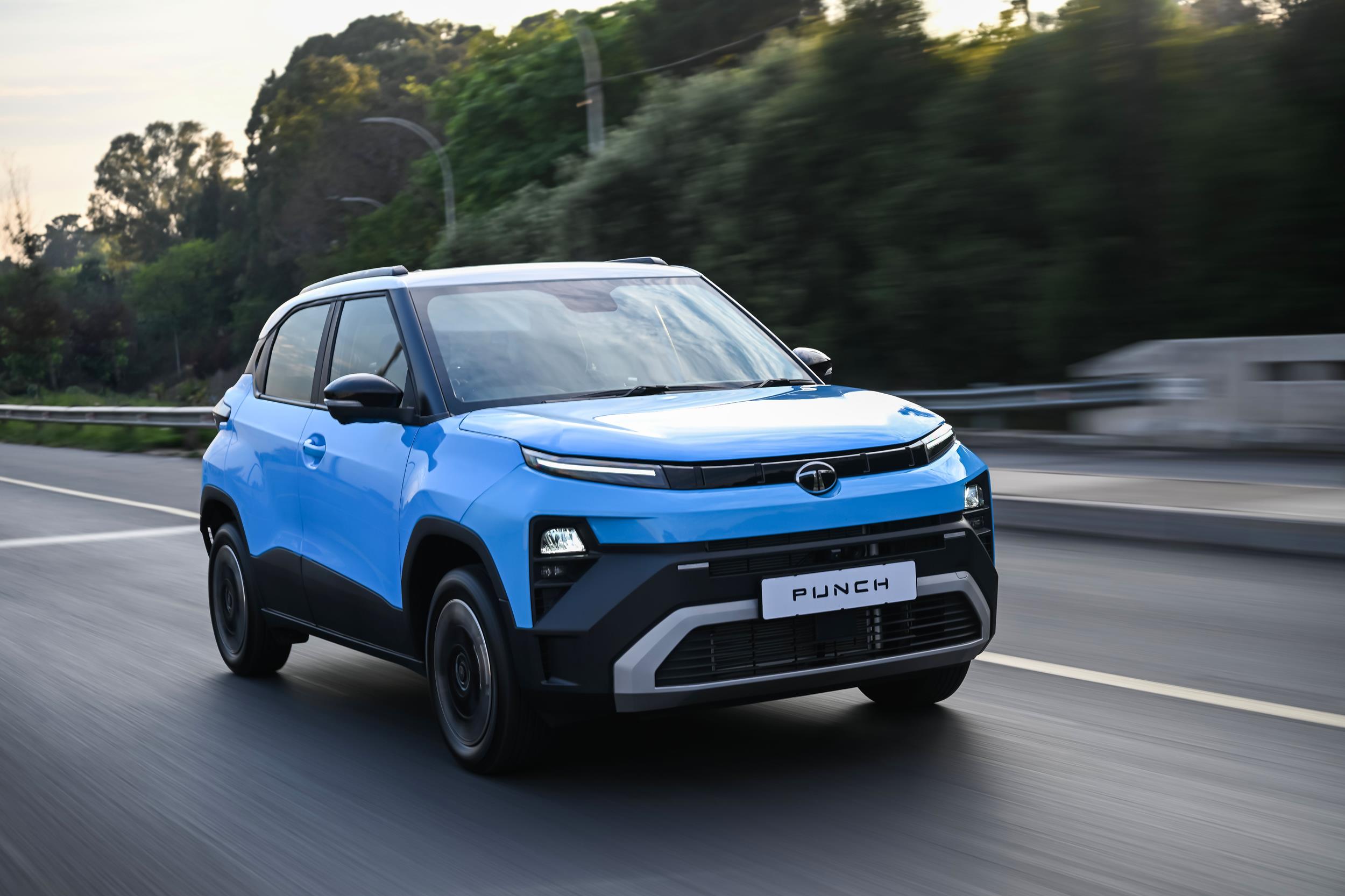
LAGOS, November 4 (Radarr Africa) – South Africa’s new vehicle sales rose 10.4 per cent year on year in October to 61,890 units, according to figures from Naamsa reported by The Citizen on November 3.
The Citizen said it was the second month in a row in which the local industry “moved more than 60 000 units”. The newspaper described October’s total as a record since statistics began, a claim Radarr Africa has not independently verified. October 2025 sales were 56,051 units, it reported.
Passenger car sales rose 13.6 per cent to 45,084 units from 39,704 a year earlier, The Citizen reported. Light commercial vehicle sales rose 2.2 per cent to 13,689 from 13,398.
Medium commercial vehicles slipped 0.9 per cent to 770 units, while heavy commercial vehicles rose 8.1 per cent to 2,347, according to the same figures.
Exports rose 6.3 per cent to 38,117 units from 35,853 in October 2025. Business Tech Africa, in its November 3 summary of the Naamsa data, said year-to-date exports remain 8.3 per cent below 2025 levels.
Toyota was the top-selling brand with 14,495 units, down from 15,366 in September, The Citizen reported. Suzuki was second with 7,292 units, its first month above 7,000 and its highest since 6,890 in October 2025, according to the newspaper.
Volkswagen, including Audi, sold 6,515 units, followed by Ford with 3,353, Hyundai with 3,207, GWM with 2,919 and Chery with 2,754. Kia sold 2,233, Isuzu 2,123, Jetour 2,102 and Renault 1,706, the report showed. Isuzu’s sales fell from 3,022 in September.
The Toyota Hilux was the best-selling model with 3,820 units. It was followed by the Volkswagen Polo Vivo with 2,695, the Ford Ranger with 2,381 and the Suzuki Swift with 2,344, according to The Citizen.
The newspaper said the Chery Q displaced the BYD Dolphin Surf as the country’s best-selling fully electric vehicle in October, with 438 units.
Business Tech Africa reported separately that sales of new energy vehicles (plug-in hybrid, hybrid and battery-electric) reached 22,389 units from January to September. That was up 34 per cent on the 16,703 sold in all of last year, it said. Battery-electric and plug-in hybrid vehicles made up 50.5 per cent of year-to-date new energy vehicle sales.
The sales data arrives as South African carmakers face a trade shock. Business Tech Africa reported that the United States will suspend South Africa and Rwanda from the African Growth and Opportunity Act (AGOA) from January 1, 2027, ending duty-free access for thousands of products.
It said South Africa had about $1.7 billion in AGOA exports in 2025, mainly vehicle parts, citrus and wine.
The Citizen article did not carry comment from Naamsa. Radarr Africa has therefore attributed the figures to Naamsa as reported by the newspaper, without direct quotation from the council.
Passenger cars accounted for about 73 per cent of domestic sales in October, a Radarr Africa calculation from The Citizen’s figures of 45,084 passenger cars out of 61,890 units. Exports are reported separately and are not part of that total.
Sales have exceeded 60,000 units for two consecutive months, according to the newspaper. Its report did not give a forecast for November or for the full year.
Global 1: Stocks and dollar slide as early US midterm results point to Democratic gains
Slug: us-midterms-stocks-dollar-slide-democratic-wins
Focus keyword: US midterm elections markets
Tags: US midterms, Wall Street, S&P 500, Nasdaq, US dollar, Treasury yields, AI stocks
Meta description: US stock futures and the dollar fell as early midterm results favoured Democrats, with Nasdaq futures down 1.8% and Asian shares reversing gains.
By Radarr Africa Business Desk
LAGOS, November 4 (Radarr Africa) – US stock futures and the dollar fell on Wednesday as early results from the United States midterm elections pointed to gains for the Democrats, Reuters reported.
S&P 500 futures were down 0.8 per cent and Nasdaq futures were down 1.8 per cent, according to the Reuters report, published in Singapore. The 10-year Treasury yield fell 6 basis points to 4.906 per cent.
The dollar weakened broadly. The euro rose 0.4 per cent to $1.1239, sterling gained 0.37 per cent to $1.3464, and the dollar index fell 0.32 per cent to 101.39, Reuters said.
In North Carolina, former governor Roy Cooper defeated the Trump-backed Republican Michael Whatley, flipping a Republican-held Senate seat according to media projections. That gave Democrats one of the four net gains they need for a Senate majority, Reuters reported. In Georgia, Democrat Jon Ossoff won re-election.
Democrats were favoured to win the House, while the Senate contest remained a close, state-by-state fight whose outcome was not final, the report said. It added that more than $1.48 billion had been wagered on the midterms, with prediction markets signalling growing expectations of a Democratic sweep of Congress.
Charu Chanana, chief investment strategist at Saxo in Singapore, said markets appeared to be pricing in a stronger Democratic showing, which could reduce expectations for further fiscal stimulus. She said the sharper fall in the Nasdaq reflected concerns about greater regulatory scrutiny of artificial intelligence and big technology companies, and that lower Treasury yields could eventually bring relief.
Other strategists played down the risk. Michael Arone, chief investment strategist at State Street Global Advisors, said: “I don’t think the big risk to markets is from the blue wave.” He said the danger was investors overreacting to it, according to Reuters.
Tai Hui, chief market strategist for Asia-Pacific at J.P. Morgan Asset Management, said “Trump still has veto power”, which he described as a sticking point for the remaining two years. He expected a divided government to limit fiscal deficits and argued that AI, rather than politics, was the bigger market story, Reuters reported.
Jesper Koll of Monex Group in Tokyo took a different view. He said “the AI momentum has turned negative” with or without a Republican majority, according to the report.
In Asia, shares reversed earlier gains despite strong third-quarter results and a forecast from chipmaker AMD, which had helped ease concerns about the AI trade after Intel’s weak outlook the previous week. The MSCI Asia-Pacific index excluding Japan fell 0.5 per cent, South Korea’s KOSPI dropped 1.6 per cent and Japan’s Nikkei fell 3 per cent after returning from a holiday, Reuters reported.
Before the results, TheStreet reported on November 3 that JPMorgan had put the chance of a Democratic “blue wave” at 66 per cent, with an expected move in the S&P 500 of between minus 0.25 per cent and plus 0.50 per cent and lower long-end yields.
On Tuesday, Wall Street closed mixed: the Nasdaq gained 0.83 per cent and the S&P 500 rose 0.36 per cent, while the Dow fell 0.38 per cent, according to TheStreet.
Investopedia reported that House Minority Leader Hakeem Jeffries planned to introduce bills within 100 hours to reverse Medicaid and Medicare cuts, end tariffs and halt the Iran war unless Congress authorises it, citing the New York Times and aides. Democrats would probably still need Republican support to override presidential vetoes, it said.
Oil prices were choppy after hitting a four-week low in the previous session, Reuters said, as investors weighed talks to end the wars in Ukraine and Iran against attacks that could disrupt supplies. It said the effective blockade of the Strait of Hormuz, which previously carried about 20 per cent of global oil supplies, had redirected energy flows and raised inflation worries.
The Reuters report said the election could affect the AI buildout, the US fiscal outlook, defence spending and regulation in healthcare, banking and cryptocurrencies. It noted the final outcome of the Senate contest was still open when the report was published.
