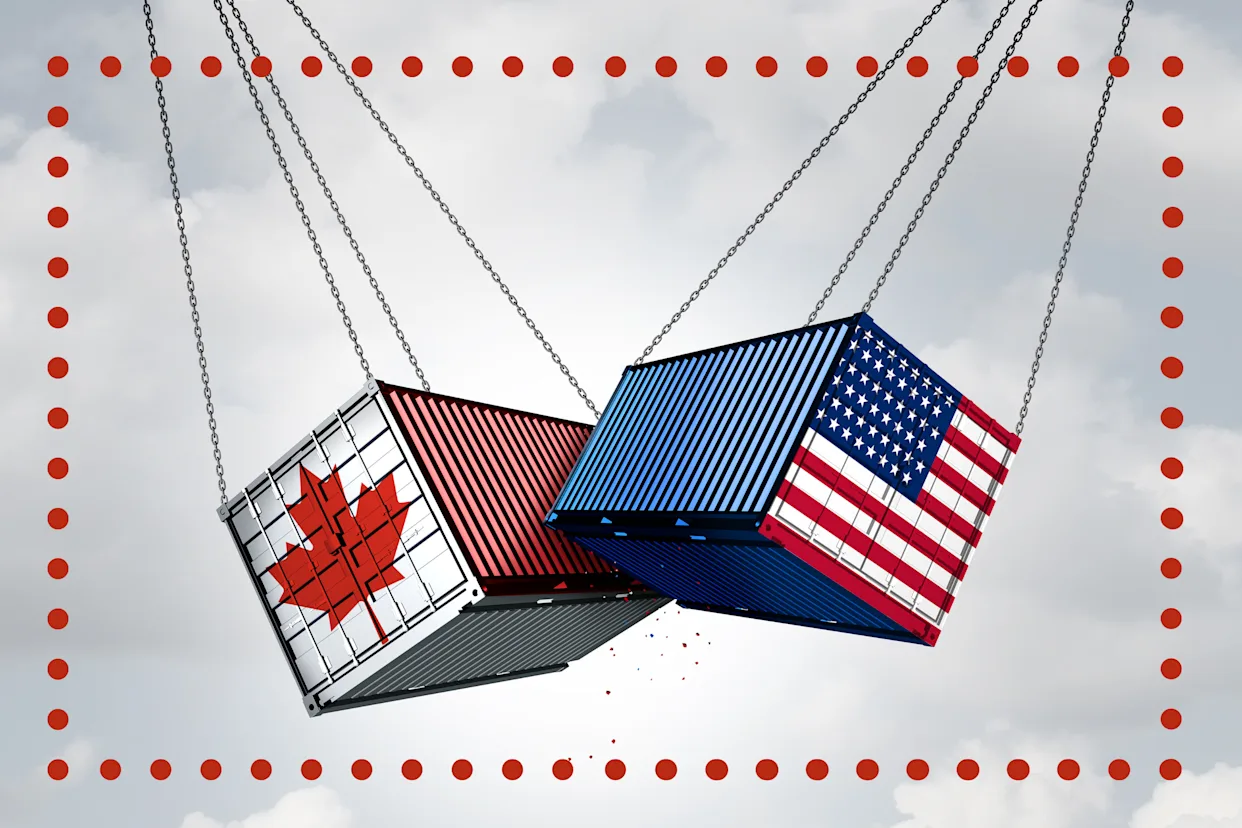
Canada has begun imposing retaliatory tariffs on a wide range of American goods, with the new measures taking effect Tuesday as Ottawa prepares for what could become a prolonged trade dispute with its largest trading partner.
The counter-tariffs cover nearly C$28 billion ($20 billion; £15 billion) worth of US products, including steel, furniture and cotton T-shirts. Some items will face tariffs as high as 50 per cent.
Fresh fish and lobster were initially included in the list but were later removed following opposition from Canada’s seafood industry. The decision highlights the delicate balance facing Ottawa as it responds to US trade measures while trying to protect its own economy.
Canada, US Struggle to Restart Trade Talks
Officials from both countries have said they remain interested in reaching a new trade agreement. However, there has been little progress toward restarting negotiations since talks broke down in late August.
Canadian Prime Minister Mark Carney said last week that Ottawa remained committed to reaching a long-term agreement that would benefit both countries.
“We’re ready to sit down and and strike that deal when the Americans are ready,” Carney said.
US Trade Representative Jamieson Greer, however, said Washington believed Canada needed to make the next move.
“We offered them the best deal, they looked at it square in the face and turned around,” Greer said in an interview with Fox News, adding that communication between the two sides had been limited since negotiations collapsed.
In a separate interview with Canadian broadcaster CBC, Greer warned Canada against retaliatory measures and suggested Washington could respond by restricting imports of some Canadian products.
Trump Targets Bombardier
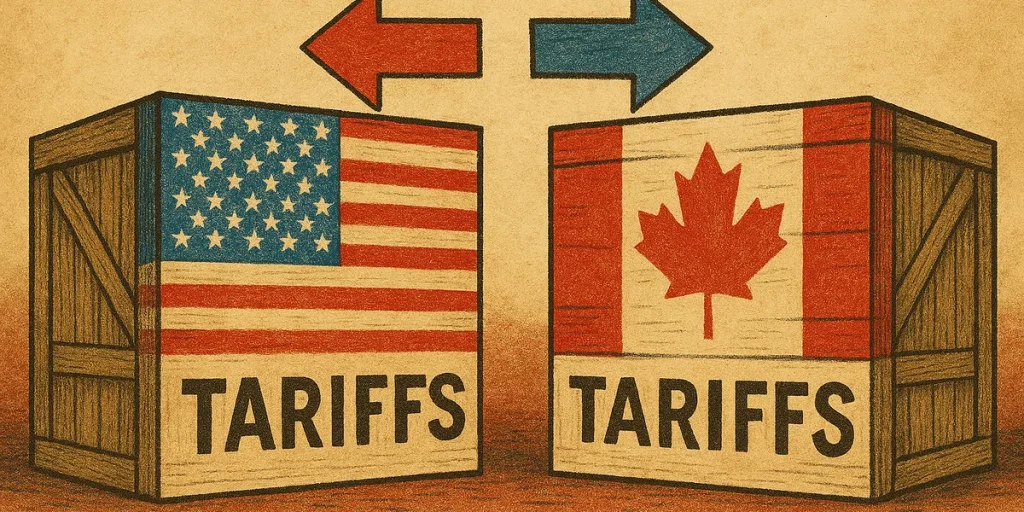
US President Donald Trump also escalated his criticism of Canada on Monday, threatening to stop all US business with Canadian aircraft manufacturer Bombardier unless the company moved its manufacturing operations to the United States.
Bombardier is one of Canada’s largest companies and contributed more than C$7 billion to the country’s annual GDP in 2024, according to a PwC report commissioned by the company.
Trump also criticised Canada in a series of posts on Truth Social over the weekend, including one in which he described the Canadian-US exchange rate as “unacceptable”.
Another post displayed a map of North America, including Canada and Mexico, as well as Greenland, covered with the US flag.
US-Canada Trade War Raises Business Concerns
Canada and the United States have the world’s largest bilateral trading relationship, valued at nearly $900 billion in 2025.
With tariffs from both sides now taking effect, companies across the two countries are assessing the potential impact on supply chains, prices and investment.
The US currently imposes a 25 per cent tariff on Canadian cars and trucks, in addition to tariffs on Canadian steel, aluminium and lumber.
In late August, Trump also introduced new 50 per cent tariffs on a range of other Canadian products, including dairy, alcohol, hockey sticks and perfume.
Canada’s latest measures, which Carney described as “dollar-for-dollar”, will apply to hundreds of American products entering the country.
The new tariffs are in addition to existing Canadian retaliatory duties on finished American cars and trucks that do not comply with the free trade agreement between Canada, the US and Mexico, known as USMCA in the United States and CUSMA in Canada.
Businesses Prepare for Prolonged Dispute
Opinion polls indicate that most Canadians support Ottawa’s decision to retaliate against US tariffs.
However, economists have warned that the latest measures could increase prices for consumers, particularly on everyday products such as clothing, food and furniture.
The Canadian Chamber of Commerce has urged the government to take a targeted approach to its retaliation.
“Businesses understand retaliation but don’t want to see endless escalation,” said the Chamber’s CEO and President Candace Laing in a statement to the BBC on Friday.
She added that businesses “are preparing for this trade dispute to last”.
The fisheries sector has already demonstrated the potential unintended consequences of the trade measures. Following pressure from the industry, Canada removed dozens of seafood products from its tariff list.
The Canadian and US lobster industries are closely connected, with American lobster often transported to Canada for processing before being shipped back to the United States for sale.
Canadian Economy Faces Fresh Pressure
Canada’s economy had shown signs of resilience before the latest escalation in the trade dispute.
GDP grew by 3.3 per cent in the second quarter, while the country added 181,000 jobs between April and July.
However, approximately 41,000 jobs were lost in August, a period that coincided with the introduction of new US tariffs and the breakdown of trade negotiations.
Manufacturing was among the sectors to record modest growth, with the Canadian government attributing the increase partly to consumers and businesses purchasing more domestically produced goods.
Carney has also pledged to reduce Canada’s dependence on the US by diversifying the country’s international trade.
July data showed that the proportion of Canadian exports going to the US had fallen to 66 per cent, compared with an average of 75 per cent before the trade war.
As tariffs deepen the strain on the two economies, Canadian businesses are increasingly preparing for a prolonged dispute while Ottawa searches for alternative markets and continues to leave the door open for a new agreement with Washington.
