Iran has increased the price of petrol for consumers who exceed their monthly fuel allocation, as the country grapples with mounting economic pressures following months of war.
The latest adjustment, announced early Tuesday by state media, is the second petrol price increase introduced by the government since December.
Fuel price increases remain highly sensitive in Iran because they can quickly fuel inflation and public unrest. A petrol price hike in 2019 triggered nationwide protests and a subsequent crackdown that reportedly left more than 300 people dead.
Although the government did not specifically refer to the war with the United States, its announcement cited the “current situation” and said additional revenue generated from the price increase would be distributed to households.
New Petrol Price Takes Effect
Under the new pricing system, consumers who purchase more than their monthly quota of 110 litres will now pay 100,000 rials, approximately seven US cents, per litre.
The new rate is twice the price heavy users have paid since December.
Despite the increase, Iran continues to have some of the cheapest petrol prices in the world. However, the latest adjustment is expected to add to the financial strain facing the country’s population of more than 90 million.
Iran’s currency has continued to weaken, reaching record lows and further eroding consumers’ purchasing power. On Monday, the US dollar was trading at around 2.22 million rials.
Keramat Veis Karami, CEO of Iran’s state oil distribution company, said on Monday that the new petrol price would affect about 15 per cent of consumers, according to the official IRNA news agency.
Petrol Consumption Hits Record High
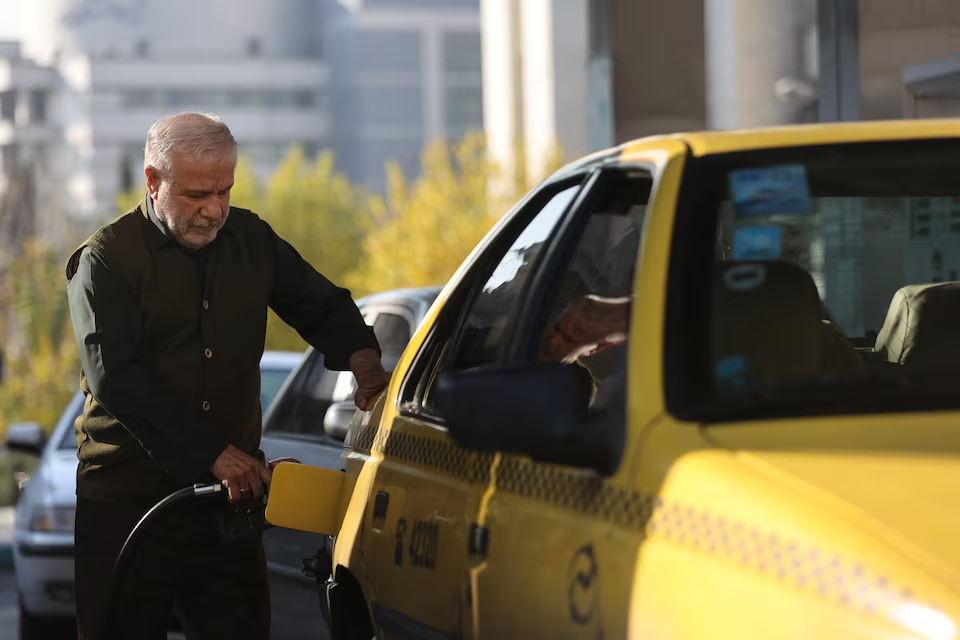
The price adjustment comes as Iran struggles to meet rising domestic demand for fuel.
Karami said petrol consumption reached a record 145 million litres per day in August, significantly exceeding the country’s domestic production capacity of 122 million litres per day.
Although Iran is one of the world’s major oil producers, its limited refining capacity means the country continues to rely on fuel imports to meet domestic demand.
Authorities hope that higher prices for heavy users will help reduce excessive consumption, which experts have linked partly to Iran’s ageing vehicle fleet and inadequate public transportation system.
Fuel Hike Could Push Inflation Higher
Economists and other experts have warned that increasing petrol prices could add further pressure to inflation in an economy already facing severe challenges.
Iran’s annual inflation rate is currently around 67 per cent, according to the country’s statistics centre, a government agency.
Higher fuel costs could also increase transportation and operating expenses, potentially pushing up the prices of goods and services.
Cheap petrol has long been viewed by many Iranians as an entitlement, making attempts to reform fuel subsidies particularly difficult for successive governments.
Fuel price increases have historically triggered public anger. In 1964, a petrol price hike sparked mass demonstrations and a strike by taxi drivers, forcing the shah’s government to deploy military vehicles to replace those of striking drivers.
With inflation high, the currency under pressure and fuel consumption continuing to rise, the latest petrol price increase reflects the difficult choices facing Iran as it attempts to manage its economy while maintaining affordable access to essential energy.
