
US President Donald Trump has said he does not expect the war with Iran to end before November’s crucial midterm elections, suggesting that oil prices may also remain elevated until after the vote.
“I think the war’s going to end immediately after the election because they can’t hold out any longer,” Trump said on Wednesday while travelling to Texas for the Republican Party’s first midterm election convention.
Trump repeated the claim at the convention, arguing that short-term economic difficulties were necessary to prevent Iran from developing nuclear weapons.
The president is facing declining approval ratings and growing pressure from members of his own Republican Party to bring the conflict to an end. The war began when the US and Israel launched attacks against Iran in February, triggering a wider regional conflict.
Iran retaliated with missile and drone strikes against Israel and Arab countries hosting US military facilities, escalating tensions across the Middle East.
Oil Prices Rise Amid Middle East Conflict
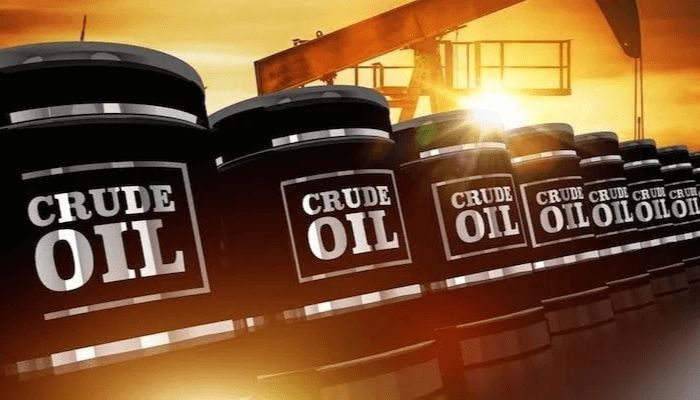
Brent crude, the global oil benchmark, has climbed above $100 (£74) three times in the past six months as Iranian attacks disrupted production in Gulf states and affected exports through the strategically important Strait of Hormuz.
The United States has also imposed a naval blockade on Iranian ports and recently began attacking Iranian-linked tankers following strikes on US warships and other vessels.
“Right after the election, oil prices are going to be tumbling downward,” Trump told reporters. “I think it’s going to take a little bit longer than the midterm.”
Trump also accused Iran of attempting to influence the US election, claiming Tehran wanted a Democratic victory.
He said Iran was “desperate to try and affect the election, so that we can get a nice weak group of people in there” – an apparent reference to the Democrats – “and leave them alone and let them have their nuclear weapon”.
Trump did not provide evidence to support the allegation. Tehran has repeatedly rejected claims that it is pursuing nuclear weapons, maintaining that its nuclear programme is intended solely for peaceful purposes.
At the Republican convention in Texas, Trump again linked an end to the war with falling oil prices, saying they would decline “as soon as we win the war with Iran”.
He also acknowledged that some Americans are unhappy about the economic impact of the conflict.
“Guys come up to me and say, ‘I wish you didn’t do the war in Iran. Now gasoline is up’”.
Trump said additional negotiations with Tehran could still take place, “but it’s not something we’re looking at”.
War Puts Pressure on Trump Ahead of Midterms
Trump had initially predicted that the conflict would last only a few weeks. Now in its seventh month, the war has contributed to higher fuel and grocery costs, putting additional pressure on his administration.
The midterm elections are scheduled for November 3, with Republicans facing the possibility of losing control of Congress.
Trump used his appearance at the Texas convention to energise Republican supporters ahead of the election. Historically, the party occupying the White House tends to lose congressional seats during midterm elections.
Fighting Intensifies Across the Region
Military tensions have intensified in recent days, with attacks targeting oil infrastructure across the Middle East. The violence has pushed global fuel prices higher and increased concerns about the cost of transporting goods.
Oil reached $100 a barrel on Wednesday for the first time since July. US diesel prices also hit a record high earlier in the week, raising fears of broader increases in consumer prices.
There are also concerns that persistent increases in energy costs could contribute to higher interest rates.
US and Iran Exchange Claims of Attacks
The US military said on Tuesday night that it had attacked and destroyed five oil tankers linked to Iran’s Islamic Revolutionary Guard Corps (IRGC) in the Gulf of Oman and northern Gulf.
The IRGC later claimed that its naval forces had attacked two US Navy destroyers and eight oil tankers in the Strait of Hormuz, causing “heavy damage” to the vessels. US Central Command denied that its warships had been hit.
The IRGC also said it launched ballistic missiles at US military maintenance facilities, hangars and aircraft at Muwaffaq Salti Air Base in Jordan.
Jordanian armed forces said they intercepted 20 Iranian missiles, while two others landed in unpopulated areas without causing casualties.
Later on Wednesday, sources told CBS News, the BBC’s US partner, that several US fighter jets at the Jordanian air base were damaged during the Iranian strikes.
According to people familiar with the incident, one A-10 Thunderbolt aircraft was hit and lost a wing, while around eight F-15s sustained minor damage.
Explosions were also reported in southern Iran on Wednesday night. Iranian officials denied that the area had been targeted by US forces, saying the sounds originated from the sea.
Houthis Target Saudi Arabia
In another development, Yemen’s Iran-backed Houthi movement launched a series of missile and drone attacks against southwestern Saudi Arabia on Tuesday.
The attacks targeted the world’s largest oil exporter and reportedly caused fires at several oil facilities.
Saudi media reported additional Houthi attacks on Wednesday, citing a military spokesman who condemned missile and drone strikes on Khamis Mushait, Abha and Jazan.
The Houthis said the attacks were retaliation for several days of Saudi airstrikes on their positions in western Yemen, where an informal four-year ceasefire has collapsed.
With the conflict continuing to spread and energy prices rising, Trump faces growing economic and political pressure as Republicans prepare for a potentially difficult November midterm election.
