Buying
The proposed Initial Public Offering (IPO) of Dangote Petroleum Refinery and Petrochemicals FZE is set to become one of the biggest transactions in Nigeria’s capital market, following approval from the Securities and Exchange Commission (SEC).
The proposed offer involves 4.1 billion ordinary shares at ₦525 per share, potentially raising about ₦2.15 trillion if fully subscribed. The SEC has also registered the company’s existing 120.13 billion ordinary shares.
For Nigerian investors, however, the size of the offering is only part of the story. The company’s valuation, profitability, expansion plans, dividend prospects and associated risks are equally important.
Here are 10 key things investors should know before subscribing.
1. IPO Could Raise ₦2.15 Trillion
At ₦525 per share, the proposed sale of 4.1 billion shares could raise approximately ₦2.15 trillion if fully subscribed.
The size of the offering could make it one of the largest transactions in Nigeria’s capital market and increase the Nigerian Exchange’s market capitalization.
2. Investors Would Become Shareholders
The IPO would give members of the public an opportunity to acquire shares in the refinery business.
Investors could benefit from future share-price appreciation and dividends if the company performs well and declares distributions. However, shareholders would also bear the risks associated with the company’s financial performance and the wider refining and petrochemical sectors.
3. ₦525 Does Not Guarantee Returns
The ₦525 offer price should not be viewed as a guaranteed return.
Once listed, the share price will be influenced by market demand, company earnings, economic conditions and investor expectations. The stock could rise or fall depending on how the business performs and how the market values it.
4. The Refinery Operates on a Massive Scale
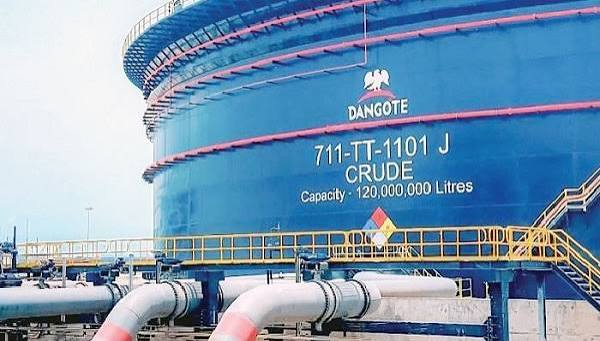
Located in Ibeju-Lekki, Lagos, the Dangote Petroleum Refinery and Petrochemicals Complex occupies about 2,635 hectares.
The refinery has a stated capacity of 700,000 barrels per day, making it the world’s largest single-train refinery. Its ability to maintain efficient operations at this scale will be crucial to its long-term profitability.
5. Expansion Could Boost Earnings
The refinery is undergoing an expansion programme expected to increase its capacity to 1.4 million barrels per day.
If completed successfully, the expansion could increase production, revenues and export potential. However, investors will also need to consider the cost, financing, timeline and execution risks involved.
6. It Is More Than a Refinery
The investment extends beyond petroleum refining.
The complex includes a 900,000-tonnes-per-annum polypropylene plant, a 435-megawatt power plant, storage facilities and marine infrastructure.
Its storage network comprises 177 tanks with a combined capacity of approximately 4.742 billion litres, while its marine facilities are designed to support cargo and logistics operations.
7. Nigeria Offers a Large Domestic Market
Nigeria’s dependence on imported refined petroleum products has historically been linked to inadequate domestic refining capacity.
The Dangote Refinery was developed partly to address this gap and, at full production, is designed to serve a significant portion of domestic demand while also supplying international markets.
However, performance will depend on crude availability, refining margins, demand, operating costs and market prices.
8. Investors Should Study the Share Structure
The SEC has registered 120.13 billion existing ordinary shares, while 4.1 billion shares are proposed for the public offering.
Investors should examine the final prospectus to understand the percentage being offered, free float, shareholder rights and ownership concentration.
These factors can influence how easily the shares are traded after listing.
9. Profitability Matters
The refinery’s size and capacity may attract attention, but investors ultimately need to assess its ability to generate sustainable profits and cash flow.
Key indicators include revenue, operating margins, refining margins, production volumes, utilisation rates, operating expenses, debt and cash generation.
Investors should also consider risks linked to crude supply, foreign exchange, oil prices, regulation, maintenance and competition.
10. IPO Could Reshape Nigeria’s Capital Market
A successful listing could give individuals, pension funds and institutional investors an opportunity to own shares in one of Africa’s major industrial assets.
It could also increase activity on the Nigerian equity market and encourage other large companies to consider public listings as a source of long-term capital.
What Investors Should Check Before Subscribing
SEC approval clears the way for the offering, but it should not be interpreted as an investment recommendation.
Before subscribing, investors should carefully review the final offer documents, including the company’s financial performance, profitability, cash flow, debt obligations, use of IPO proceeds, valuation, dividend policy, public shareholding, expansion costs and key business risks.
The Dangote Refinery IPO could mark a significant moment for Nigeria’s capital market. However, investors should look beyond the size and prominence of the transaction and determine whether the company’s future earnings and cash flows justify the ₦525 offer price.
