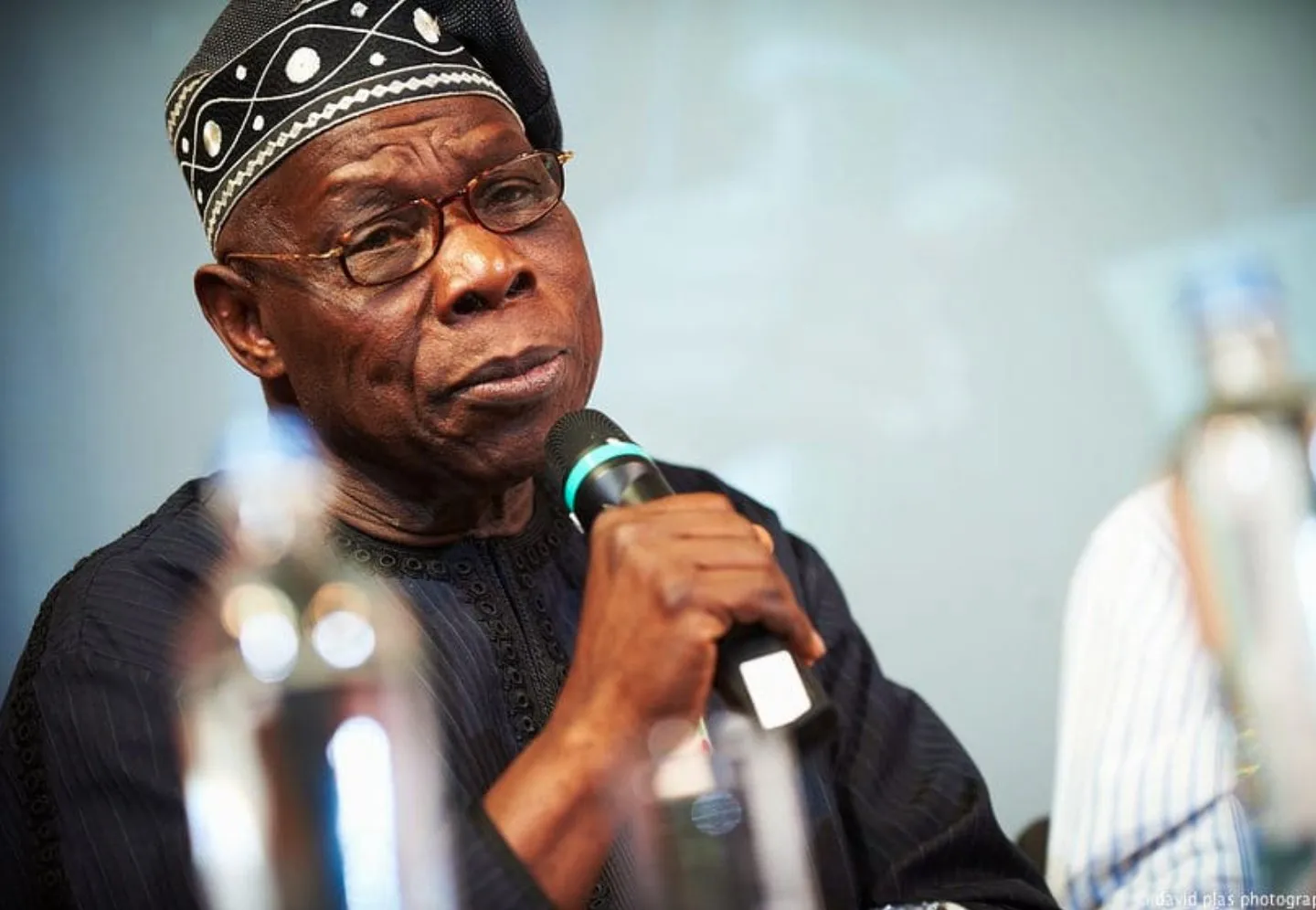
Former President Olusegun Obasanjo has argued that Nigeria has the resources and human capital needed to build a prosperous economy and has “no business with poverty.”
Obasanjo made the remarks during an interview on C-Suite Café, where he discussed Nigeria’s economic challenges and what he described as the country’s failure to fully harness its abundant resources.
In the interview, shared on YouTube and dated September 10, the former president highlighted Nigeria’s vast agricultural potential, saying the country had millions of hectares of arable land, favourable climatic conditions and abundant water resources that could support large-scale food production and agricultural exports.
“Nigeria had millions of hectares of arable land, favourable climatic conditions and abundant water resources capable of supporting food production and large-scale agricultural exports.”
Obasanjo Highlights Nigeria’s Human Capital
Obasanjo also identified Nigeria’s human capital as one of the country’s major assets, pointing to the entrepreneurial and intellectual abilities of Nigerians both within the country and in the diaspora.
He argued that this human capital remained largely underutilised despite its potential to contribute significantly to economic growth, innovation and national development.
He further noted that Nigeria’s resource base extends beyond crude oil and natural gas, highlighting the potential of the country’s solid minerals sector to diversify government revenue.
Obasanjo further identified “solid minerals, in addition to crude oil and natural gas, as resources that could help diversify Nigeria’s sources of revenue.”
Former President Criticises Policy Inconsistency
The former president attributed some of Nigeria’s economic difficulties to inconsistent government policies, particularly the tendency of successive administrations to discontinue programmes introduced by their predecessors.
He specifically criticised the abandonment of long-term agricultural initiatives whenever there is a change in government, arguing that such interruptions undermine sustainable economic development.
He “blamed policy inconsistency for some of the challenges confronting the economy,” particularly the “abandonment of long-term programmes and agricultural initiatives when administrations change.”
Obasanjo also expressed concerns about public borrowing, recalling the debt relief obtained during his administration, which he said amounted to approximately $30 billion in 2005 and 2006.
The former president also identified corruption, crude oil theft and weaknesses in revenue collection as major challenges preventing Nigeria from effectively converting its resources into economic development.
He identified “corruption, crude oil theft and leakages in revenue generation” as other factors undermining the country’s ability to deploy its resources for development.
Obasanjo Calls for Political Will and Accountability
According to Obasanjo, tackling poverty in Nigeria requires strong political commitment, consistency in government policies and greater fiscal accountability across all levels of government.
According to Obasanjo, “addressing Nigeria’s poverty requires political will, continuity in policies, particularly those relating to food security, and fiscal accountability at all levels of government.”
He maintained that Nigeria’s economic challenges were not insurmountable and that effective management of the country’s resources, combined with continuity in economic policies, could put the country on a stronger path to long-term development.
He said the “country’s economic difficulties could be addressed if its resources were properly managed and successive governments maintained policies capable of producing long-term development.”
