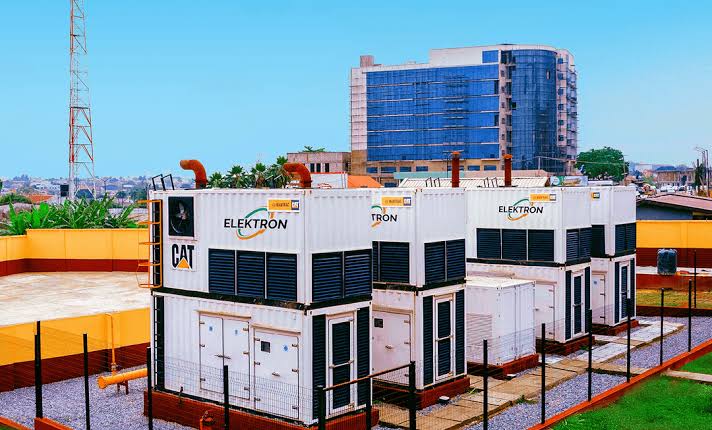
LAGOS, November 20 (Radarr Africa) – Elektron Energy has agreed to acquire Daystar Power Group from Shell, taking over a solar and hybrid power platform of about 150 megawatts that serves businesses in Nigeria, Ghana, Côte d’Ivoire, Senegal and Togo.
Under the agreement, Elektron Renewables Limited, a subsidiary of Elektron Energy Development Strategies Limited, will buy Shell Overseas Investments B.V.’s 100 per cent ownership interest in Daystar. The deal is subject to regulatory conditions and approvals, and until completion there will be no change to Daystar’s day-to-day operations.
Deen Solebo, co-chief executive officer and chief financial officer of Elektron Energy, said Daystar’s capabilities “accelerate our strategy to build a diversified cleaner energy platform”. Elektron said the acquisition complements its existing energy infrastructure and renewable-energy platform and supports its aim of delivering reliable, scalable energy across West Africa.
Yischai Beinisch, chief executive of Daystar Power, said, “We believe Elektron is well positioned to support the company’s next phase of development.”
Daystar sells solar and hybrid power to commercial and industrial customers, pairing solar with batteries or backup generators. Contracts are usually long-term, with the provider owning and operating the equipment, so customers do not have to buy or maintain the systems themselves. The company was launched in 2017 by Jasper Graf von Hardenberg and Christian Wessels.
Shell announced in September 2022 that it would acquire Daystar, then a Lagos-based provider with about 32 megawatts of installed solar capacity, more than 300 installations and a team of about 140 people. It said the deal would deliver carbon emission reductions and power cost savings to commercial and industrial businesses across Africa. Shell’s then executive vice-president for renewable generation, Thomas Brostrøm, called the purchase a fundamental step in growing the company’s presence in emerging power markets.
At the time, Hardenberg said it was “important to find someone with a strong balance sheet to back us”. Shell said it aimed to build its renewable business to 400 megawatts within three years, and Daystar planned to expand into East and Southern Africa.
Daystar’s projects have included plants serving Nigerian Bottling Company factories, a 107-kilowatt-peak installation at a Seplat factory in Delta State, a 600-kilowatt-peak plant at UAC Swan in Jos and a 997-kilowatt-peak farm at Atlantic Shrimpers in Badagry, according to figures published in 2022.
More recently, Daystar installed 6,884 kilowatt-peak of solar across four Nestlé manufacturing facilities in West Africa. They are two Abidjan sites in Côte d’Ivoire with 3,447 kilowatt-peak combined, a Tema factory in Ghana with 2,547 kilowatt-peak and a Dakar facility in Senegal with 890 kilowatt-peak. The systems were reported as fully operational in June 2026, when Beinisch said nearly 7 megawatts across four Nestlé facilities was a number the company was proud of.
Samer Chedid, chief executive of Nestlé’s Central and West Africa region, said at the time that the investment reflected the company’s commitment to building a business. Nestlé’s net-zero targets and a drive to cut emissions and improve energy resilience were behind the programme.
For Shell, the sale is part of an effort to “high-grade” its portfolio. The company said it will keep focusing on asset-backed power trading and associated energy solutions. Shell has spent recent years weighing how much capital to commit to renewable power generation.
For Elektron, the purchase brings an established regional footprint and a customer base it did not have before.
