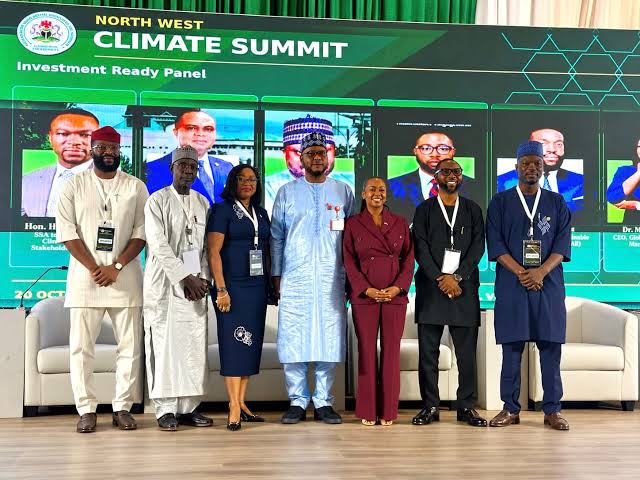
The Federal Government is seeking to raise more than ₦20 billion over the next four years to address climate change challenges across Nigeria’s North-West region, as stakeholders warn that environmental pressures are threatening food security, water resources and economic stability.
The funding plan was announced at the North-West Climate Summit in Abuja on Tuesday, October 20, 2026. The initiative aims to bring state and local governments, investors, financial institutions and development partners together to develop sustainable responses to climate-related challenges.
Abdullahi Tanko Yakasai, Senior Special Assistant to the President on Community Engagement for the North-West, said the region needed coordinated action to address environmental risks and protect vulnerable communities.
“For Nigeria, and particularly for the people in the North-West region, the question is no longer whether climate change will affect our development, but how effectively we can prepare for its consequences and turn the challenge into an opportunity for sustainable growth,” stakeholders said.
The initiative is built around three major components: a Climate Marketplace, a Climate Academy and a dedicated Climate Fund.
FG Plans Climate Fund to Address Flooding and Drought
The proposed Climate Fund is expected to mobilise resources for projects addressing flooding, drought, desertification and other environmental challenges. It will also support renewable energy initiatives and other interventions designed to improve the region’s resilience to climate change.
Yakasai said the government was seeking approximately ₦20 billion over four years to help communities respond to the growing effects of environmental degradation.
“We’re looking at the region of N20 billion in the next four years, to help ease the problems of climate because this is what is bedeviling the whole world,” he said.
The fund is expected to attract financing from domestic and international sources, including development partners and financial institutions. Its success will depend on securing the necessary resources and directing them towards projects with measurable benefits for affected communities.
Climate Academy to Train 10,000 Young Nigerians
Another major component of the initiative is the proposed Climate Academy, which aims to equip 10,000 young people across the North-West with skills in climate resilience, adaptation and environmental sustainability.
Yakasai said the programme would prepare young Nigerians to participate in climate-related initiatives while building local capacity to respond to environmental challenges.
The summit also introduced a Climate Marketplace to connect state and local governments with potential investors and development partners.
Through the platform, governments will be able to showcase climate-related projects and attract funding from domestic institutions, international financial organisations and private investors.
Yakasai explained that the marketplace would help connect climate knowledge and policy with investment and practical improvements in people’s lives.
“Their success, however, will depend on how effectively they connect knowledge to policy, policy to investment, and investment to tangible improvements in people’s lives,” he said.
Climate Change Threatens Agriculture and Food Security
Stakeholders at the summit warned that climate change is creating growing challenges for agriculture, livestock production and water security across the North-West.
Irregular rainfall, prolonged dry spells, desertification, soil degradation and flooding are threatening livelihoods and undermining economic stability in a region where millions of people depend on farming and related activities.
These environmental pressures could also disrupt food supply chains, increase household vulnerability and place additional demands on government resources.
The Chairman of the House of Representatives Committee on Climate Change, Kama Nkemkanma, who represented Speaker Tajudeen Abbas, stressed the need for coordinated interventions to address these risks.
The initiative is being developed in collaboration with regional stakeholders, including the North-West Development Commission and the North-West Governors’ Forum.
Stakeholders Seek Investment and Regional Cooperation
Mea Boykins, lead consultant for the initiative, described the summit as an opportunity to establish strategic partnerships, mobilise investment and develop practical solutions to climate challenges in Northern Nigeria.
“The true success of this summit will be measured not by who was in the room, but by what we accomplish together after leaving it,” Boykins said.
Stakeholders emphasised that the initiative must move beyond discussions and deliver funded projects that improve livelihoods, strengthen infrastructure and protect communities against environmental risks.
The proposed funding plan also comes as Nigeria prepares for further international climate discussions, with regional authorities seeking opportunities to attract investment and strengthen cooperation with development partners.
The government’s challenge will be to secure the targeted ₦20 billion, ensure transparent management of the funds and translate the proposed programmes into lasting improvements for communities across the North-West.
