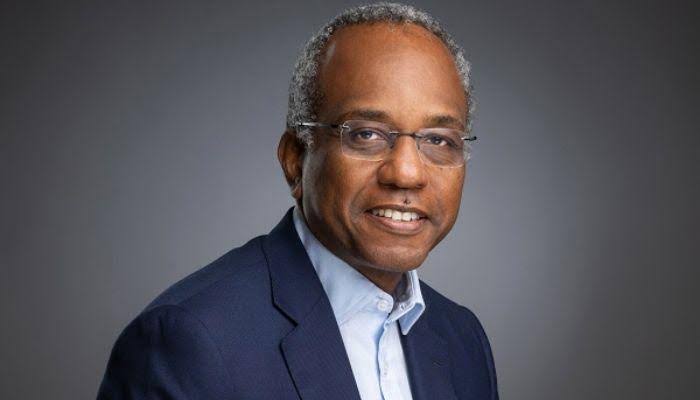
Funso Doherty, the New Nigeria Democratic Congress (NDC) governorship candidate in Lagos State, has outlined plans to provide free education and maternal and child healthcare, build 150,000 housing units and overhaul the state’s transportation system if elected governor.
Doherty made the promises on Thursday at The Platform Millennial and Gen Z Town Meeting with Lagos governorship candidates, where he presented his plans for addressing issues affecting the state’s largely young population.
He argued that young people should not be treated as “leaders of tomorrow”, saying they already make up a significant portion of Lagos’ population and should therefore be central to government policies.
“Gen Z is probably about 25%. Millennials, probably another 25%. If you add the Gen Alpha, which is those below, you’re probably up to about 80%. So in essence, Lagos is you and you are Lagos,” Doherty said.
He questioned why Lagos had become increasingly difficult for young residents, particularly in areas such as education, housing, transportation and access to government services.
“Why is it then that Lagos looks so inhospitable to the young? Why is it that it feels like a hostile environment to the young?” he asked.
Doherty said his proposed administration would be built around a stronger social contract, with government providing infrastructure and essential services that enable residents to live and work effectively.
He also argued that Lagos has the financial capacity to provide better public services, pointing to data from the National Bureau of Statistics which, according to him, showed the state generates more internally generated revenue than most other states combined.
Free education and healthcare
Doherty said public education would be completely free under his administration, including textbooks and examination fees.
He also promised one nutritious meal each day for pupils in public schools, as well as free transportation for children who require assistance getting to school.
“My vision of Lagos is a Lagos where no child is left out of an education because their parents can’t afford it. No child dies because their parent cannot afford drugs,” he said.
According to Doherty, the measures would help prevent financial hardship from becoming a barrier to education.
On healthcare, he promised “truly free” maternal and child healthcare, including essential drugs, rather than a system where patients are told healthcare is free but still have to pay for important treatments.
He also said his administration would focus on expanding opportunities for young people through technical and vocational education.
Doherty pledged to establish about 40 technical and vocational schools across Lagos during his first term, saying such institutions could provide alternative career paths for young people who do not follow conventional academic routes.
150,000 housing units
Housing was another major part of Doherty’s proposed agenda.
He promised to deliver 150,000 housing units during his first four-year term, arguing that Lagos needs a much larger approach to housing delivery because supply has not kept pace with demand.
“Our plan for housing is not one that delivers 200 units or 300 units. We have a quantum approach to housing. Our commitment is to deliver about 150,000 units in our first term of office,” he said.
He said the housing strategy would involve making land available for affordable housing while developing institutional structures, guarantees and secondary mortgage mechanisms to support large-scale construction.
Transport system overhaul
Doherty also proposed a major restructuring of Lagos’ transportation system.
He argued that public transportation should be treated as essential infrastructure rather than an activity left primarily to private operators.
“Transportation is not really about Naira and Kobo in a city like Lagos. It is about ensuring that the city works, ensuring that people can move around,” he said.
Addressing traffic congestion and the activities of transport touts, commonly referred to as agberos, Doherty said a modern public transport system could reduce dependence on informal operators.
He described some street-level transport collections as part of an “organised racket”, arguing that much of the money collected does not reach government coffers.
Doherty said modernising the transport sector could also create alternative opportunities for young people currently involved in informal transportation activities.
Waste management
On waste management, Doherty said Lagos needs increased investment across the entire waste-management chain, including collection, transfer, processing and final disposal.
He said weaknesses at any point in the system could result in waste accumulating elsewhere.
“Government needs to step up and put the resources and put those things in place because when you do that, you don’t have the capacity at each node to deal with those things,” he said.
He also called for increased investment in recycling and waste-to-energy initiatives.
Decentralising road maintenance
Doherty proposed moving more responsibility for routine road maintenance to the local government level.
Under his plan, the Lagos State Public Works Corporation would have operational bases in each local government, with equipment, funding and personnel to identify and repair damaged roads before the problems become more serious.
“If in Alimosho, for example, there’s a public works department in Alimosho, operations-based with its equipment, with its materials, well-funded, well-staffed… and given the tools to deploy and understand where roads are getting bad and deploy and fix them immediately,” he said.
He said the state government would supervise the system while local authorities handled routine maintenance.
Doherty also called for stronger local governments and greater devolution of resources, arguing that no part of Lagos should be treated as less important when government resources are distributed.
Focus on young Lagosians
Doherty said the proposals would form part of a 34-point manifesto outlining his commitments for a first term. He said the manifesto would be released the following week.
He maintained that the broader goal was to create a Lagos where young people could access education, healthcare, housing and reliable transportation without having to leave the state in search of better opportunities.
“We can’t tell them not to leave. What we need to do is to make the place attractive for them to stay,” he said.
