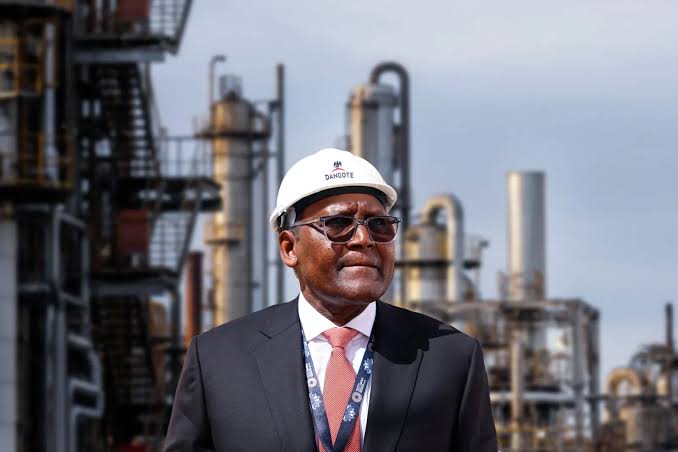
Dangote Group’s planned $16 billion oil refinery in Lamu, Kenya, has cleared a legal hurdle after a High Court judge in Malindi lifted an order that had restricted activity on the project site, ruling that the residents’ petition cited the wrong parcel of land.
Justice Jane Onyango delivered the ruling on Wednesday, 14 October, Nairametrics reported. The petitioners were allowed to amend their case, and the matter will return to court on 24 November.
What happened
The challenge was brought by 133 Kenyan residents who argued that the refinery threatened their property rights and that the developers had not shown compliance with environmental rules. They said Kenyan law requires environmental impact assessments and public consultation, particularly in Lamu, which is home to a UNESCO World Heritage site. Their lawyer told the court that about 700 more residents plan to join the case.
On 25 September, the Malindi Environment and Land Court had issued an interim order requiring all parties to keep conditions on the disputed land unchanged until the 14 October hearing. Dangote Group argued at the time that this was not a full suspension, stating that “the court has not halted the groundbreaking ceremony” while accepting that some site work could be affected.
The project went ahead with its formal construction launch on 30 September. With the order now lifted, the company has more room to move forward while the amended petition is prepared. Other interested parties may also join the case when it resumes.
Radarr earlier reported when the Kenyan court first paused work on the Lamu refinery.
Why it matters
The Lamu project is a major private investment for East Africa. The Dangote East Africa Petroleum Refinery and Petrochemicals project is designed to process 700,000 barrels of crude a day, matching the capacity of Dangote’s refinery in Lagos. Construction is expected to take about 40 months, with commissioning targeted for 2030.
For Kenya and its neighbours, the refinery promises to reduce dependence on imported fuel. That is a pressing issue as the region faces sharply higher pump prices linked to the conflict in the Middle East. Dangote has proposed that East African countries take a combined 30% stake, and Kenya and Rwanda have expressed interest.
The ruling also matters for investors in Dangote’s wider business. The group’s Lagos refinery is profitable and expanding to 1.4 million barrels a day. Dangote Petroleum Refinery and Petrochemicals reported a net profit of $4.73 billion for the nine months to 30 September, up from a loss of $117.2 million a year earlier, on revenue of about $22.5 billion. Its ongoing $1.6 billion IPO is open to investors in several African markets, including Kenya.
Political backing in Kenya appears strong. Two days before the ruling, Dangote Group said Kenyan parliamentary leaders had expressed support for the project and for the company’s IPO.
What to watch
The case is not over. The hearing on 24 November will consider the amended petition, and a larger group of residents could join. If the court finds that environmental or land procedures were not followed, the project could face fresh delays or conditions.
Investors will also watch for progress on the proposed regional equity stakes, financing arrangements and any environmental and social impact assessments made public. These will shape how quickly the Lamu refinery can move from a groundbreaking ceremony to full construction.
