Allan Gray Ltd., an investment management firm overseeing $29 billion in assets, is favouring Nigerian equities over South Korean stocks, citing their potential to diversify portfolios away from the artificial intelligence (AI)-driven rally dominating global markets.
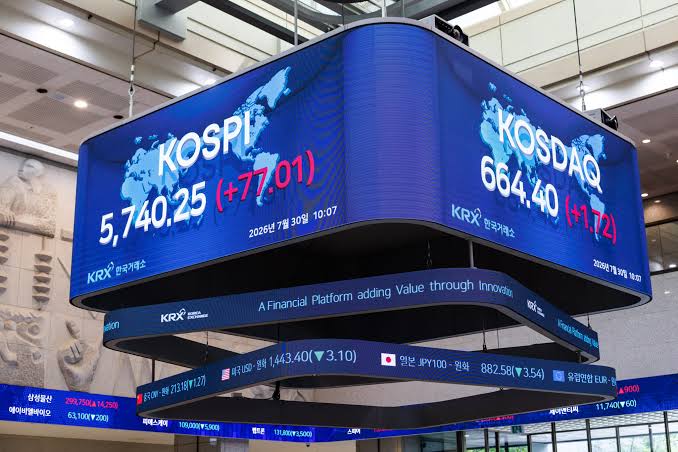
Nigeria’s benchmark stock index has gained 72 per cent in dollar terms in 2026, compared with a 54 per cent increase in South Korea’s Kospi index, putting the Nigerian market on course for its strongest annual performance since 2007.
Kamal Govan, a portfolio manager at Allan Gray who manages the firm’s $604 million Africa ex-South Africa Equity Fund, said the performance of Nigerian stocks had brought the market into closer comparison with South Korea’s benchmark index.
The fund, which has gained 28 per cent this year, has allocated nearly one-third of its holdings to Nigerian equities.
Nigerian Rally Spans Multiple Sectors
Govan said Nigeria’s stock market rally differs from South Korea’s because it has been driven by gains across several sectors rather than concentrated exposure to a single investment theme.
South Korea’s Kospi has benefited significantly from the global AI boom, with Samsung Electronics and SK Hynix accounting for nearly half of the index. Both companies have attracted investor interest because of their roles in the memory-chip industry.
By contrast, Nigerian equities have recorded gains across banking, oil and gas, telecommunications and industrial goods, according to Govan.
He argued that this broader performance reflects a wider range of underlying business and economic factors rather than dependence on one dominant market narrative.
Seplat and Sterling Financial Lead Gains
Seplat Energy Plc is the fund’s largest exposure to Nigeria’s oil and gas sector. Its shares have risen 197 per cent in dollar terms this year, placing it among the 11 strongest performers in an index of 151 stocks.
Sterling Financial Holdings has recorded an even sharper increase, with its shares climbing 1,078 per cent, making it the index’s strongest performer.
The gains highlight the strength of selected Nigerian equities, although individual stock performance varies and past returns do not guarantee future gains.
FTSE Russell Upgrade Could Attract Investors
Nigeria’s equity market received another boost after FTSE Russell restored the country to frontier-market status in September 2026.
The move reversed its earlier classification as an unclassified market, a decision linked to concerns about investors’ ability to repatriate foreign currency.
Govan said the reclassification could encourage greater foreign participation and improve market liquidity.
Increased participation by international investors could provide additional support for Nigerian equities, although the extent of any inflows will depend on factors such as currency access, market conditions and investor confidence.
Allan Gray’s preference reflects the search for investment opportunities outside heavily concentrated AI-related trades. However, Nigerian equities remain exposed to domestic economic conditions, exchange-rate movements and other market risks.
