RABAT, November 24 (Radarr Africa) – Morocco will not bring back fuel price caps or revive its compensation fund, Finance Minister Fouzi Lekjaa told lawmakers, saying the government is not ready to put an extra 60 billion dirhams into subsidies and will instead raise the corporate tax rate on eleven fuel companies from 35 per cent to 40 per cent.
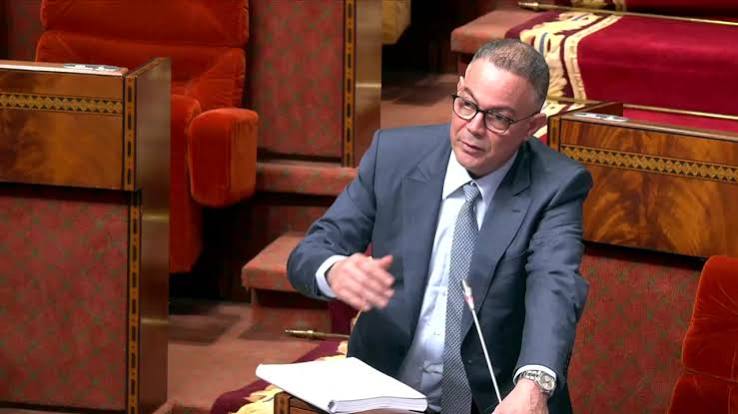
Lekjaa, the Minister of Economy, Finance and Public Performance, spoke on Monday while presenting the 2027 Finance Bill to the Finance, Planning and Economic Development Committee of the House of Councillors. He said a return to generalised subsidies would require the government to inject 60 billion dirhams (MAD 60 billion) more into the compensation fund.
The government prefers targeted support, he said, shifting resources to vulnerable households and the middle class. It has set aside 4 billion dirhams to support public passenger transport and freight so that fuel price rises do not pass into bus, taxi and truck fares, and has mobilised 21 billion dirhams to cut income tax for the middle class.
Other measures include a plan to raise direct social aid by 1,000 dirhams and a 7 billion dirham programme to double widows’ pensions. The minimum pension will rise to 1,700 dirhams from next year.
The higher tax rate will apply to eleven fuel-sector companies, each with annual net profit above 100 million dirhams. Lekjaa said the move follows the approach taken three years earlier with the banking and insurance sectors, and applies only to sectors whose profits are durable rather than the result of one or two exceptional years.
He cited a framework law adopted by Parliament that provides for a 40 per cent rate for companies operating in quasi-monopoly conditions. “Back then, nobody opposed the measure or called it sectoral,” he told the committee. Telecom operators, he added, already pay solidarity contributions and levies that fund internet and mobile access.
On suspicions that fuel importers coordinate their prices, Lekjaa said the matter belongs to the Competition Council and that the government has no jurisdiction. He invited anyone with evidence to file a complaint with the council.
Lekjaa also addressed La Samir, the refinery that is bankrupt and in judicial liquidation. He said the government has made no decision to close or reopen it and rejected using public money to rescue a private, bankrupt company, drawing a parallel with the textile sector.
The refinery’s capacity previously covered only one third of national market needs, he said, so even if it had kept running Morocco would still import two thirds of its petroleum products. Energy sovereignty, he argued, must be judged against that real capacity, and any restart would need an investor able to run the plant efficiently and buy crude at competitive prices.
The Customs and Indirect Taxes Administration claims 13 billion dirhams from La Samir under the temporary admission regime for imported raw materials. Since privatisation, Lekjaa said, the company has paid the state nothing beyond corporate income tax.
He also criticised transport operators who kept their rates unchanged despite public aid for fuel costs, and said the Ministry of Transport should enforce the approved rates. On the cost of moving fruit and vegetables, he described the pricing practices as opaque and rent-seeking, and called the transport of produce over long distances unhealthy.
The subsidy debate has run alongside persistent public concern about the cost of living in Morocco. The 2027 Finance Bill is still before Parliament, with the House of Councillors committee examining it after the House of Representatives amended the text.
