The National Agency for Food and Drug Administration and Control (NAFDAC) destroyed unsafe, falsified and non-compliant products worth ₦22.73 billion between January and August 2026, as it intensified efforts to remove potentially harmful goods from Nigeria’s markets.
Data from the agency’s Directorate of Investigation and Enforcement showed that NAFDAC recorded 5,542 enforcement activities, conducted 213 raids, documented 821 product seizure entries and closed or sealed 179 premises during the eight-month period. The agency also made 52 arrests.
The enforcement operations covered medicines, cosmetics, food, drinks, medical devices, packaged water and chemicals, reflecting the broad range of products subject to regulatory oversight.
NAFDAC, led by Director-General Mojisola Adeyeye, also recorded 474 new cases and concluded 295 cases during the period. It carried out 22 product destruction exercises and imposed administrative sanctions on operators found to have violated applicable requirements.
July records highest value of destroyed products
Enforcement activity increased as the year progressed, with July recording 1,089 activities, the highest monthly total during the period. May followed with 1,076, while August recorded 941.
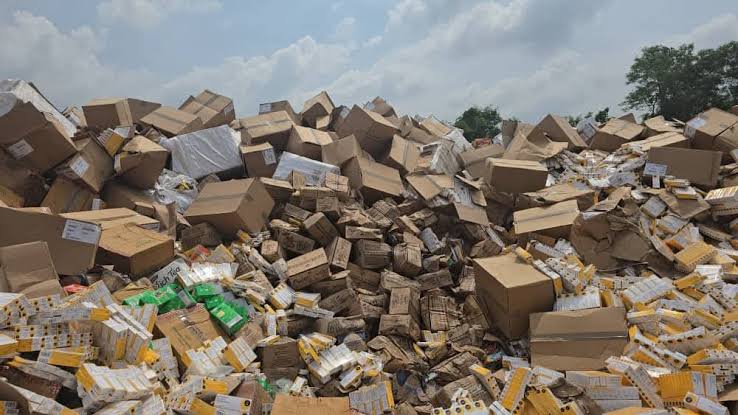
July also accounted for the largest monthly value of destroyed products. Four destruction exercises involving goods worth ₦9.03 billion brought the cumulative value to ₦22.58 billion by the end of the month.
In August, two additional destruction exercises involving products valued at ₦157.7 million raised the total to ₦22.73 billion.
The value of destroyed goods had reached ₦3.85 billion by the end of March, following destruction exercises involving products worth ₦2.56 billion that month. Five exercises in May accounted for ₦3.30 billion, while eight exercises in June involved products worth ₦6.40 billion.
The figures show that a substantial share of the total value was recorded in June and July. However, the value of products destroyed does not establish the total quantity of unsafe goods in circulation or the extent of consumer exposure.
Cosmetics and drinks dominate seizure records
Cosmetics accounted for 401 of the 821 product seizure entries recorded between January and August, making them the largest category. Drinks followed with 215 entries, while drugs accounted for 112, food products for 69 and chemicals for 22.
The figures highlight that regulatory concerns extend beyond counterfeit medicines to personal-care products, beverages and other consumer goods.
Unsafe or non-compliant products can result from issues involving registration, labelling, manufacturing standards, storage or product composition. However, the available data do not specify the exact violations associated with each seizure.
Monthly records showed variations in enforcement priorities. In January, drinks accounted for 83 recorded activities, followed by drugs with 60. In April, cosmetics accounted for 272 activities, while food products accounted for 183.
Chemicals featured prominently in May, accounting for 396 activities, compared with 219 for cosmetics.
Raids, closures and sanctions continue
NAFDAC’s operations involved more than product seizures and destruction. The agency’s activities included surveillance, investigations, administrative sanctions and the handling of suspected regulatory violations.
In February, the agency conducted 36 raids, closed or sealed 47 premises and made 11 arrests. In April, it carried out 46 raids, recorded 94 product seizure entries and closed or sealed 32 premises.
July saw 240 seizure entries, 37 premises closed or sealed and 12 arrests. In August, the agency recorded 232 seizure entries, closed or sealed 20 premises and made three arrests.
The agency concluded 69 cases in August, compared with 61 newly recorded cases. Across the eight months, 295 cases were concluded out of 474 new cases recorded, although the reported figures do not detail how many resulted in convictions, remained pending or involved repeat offenders.
These distinctions are important when assessing the impact of enforcement. Removing unsafe products from circulation is one step; identifying their sources, holding responsible operators accountable and preventing repeated violations are also necessary to improve compliance.
Businesses face continued compliance pressure
The enforcement drive places pressure on manufacturers, importers, distributors and retailers to comply with product registration, labelling, storage and quality requirements.
Businesses that fail to meet regulatory standards may face seizures, premises closures, financial losses and potential legal consequences. Retailers and distributors also risk enforcement action when they source goods through unauthorised channels or sell products that do not meet applicable requirements.
Consumers can support regulatory efforts by buying from reputable outlets, checking registration details where possible and reporting suspicious products. Public awareness, however, cannot replace the responsibility of businesses to ensure that products meet safety standards before they reach the market.
NAFDAC’s figures demonstrate the scale of its intervention, but destruction exercises alone cannot establish whether the overall prevalence of unsafe products is falling. That assessment would require additional information on market surveillance, repeat violations, prosecution outcomes and compliance levels.
Strengthening inspections, intelligence gathering, laboratory capacity and enforcement follow-through could help the agency detect violations earlier and reduce the likelihood of unsafe products reaching consumers.
The central challenge remains turning seizures and destruction exercises into sustained improvements in product quality, regulatory compliance and public health protection.
