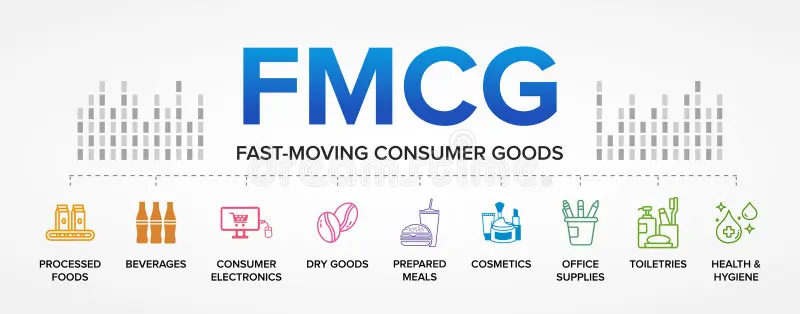
Nigeria’s leading fast-moving consumer goods (FMCG) manufacturers recorded a strong improvement in profitability during the first half of 2026, despite almost no growth in combined revenue.
The 10 largest quoted FMCG companies increased their combined profit after tax (PAT) by about 35 per cent to N601.74 billion in H1’26, compared with N445.75 billion in the same period of 2025.
However, their combined revenue rose by less than one per cent year-on-year, reaching approximately N3.53 trillion from N3.51 trillion in H1’25.
The figures suggest that manufacturers are increasingly relying on tighter cost controls, improved operating efficiency and lower financing pressures to protect their bottom lines amid a challenging business environment.
The companies analysed are Nigerian Breweries (NB) Plc, BUA Foods Plc, Nestlé Nigeria Plc, Dangote Sugar Refinery Plc, International Breweries Plc, Guinness Nigeria Plc, Unilever Nigeria Plc, Cadbury Nigeria Plc, NASCON Allied Industries Plc and Champion Breweries Plc.
Despite continued pressure from inflation, energy and logistics costs and foreign exchange volatility, several manufacturers were able to turn modest or even declining revenue into stronger profits through improved margins and cost management.
BUA Foods Leads Profit Rankings
Nigerian Breweries emerged as the largest revenue generator among the companies, posting N803.68 billion in H1’26, an 8.9 per cent increase from N738.14 billion in H1’25.
BUA Foods ranked second in revenue but remained the biggest profit generator. Its revenue declined by 16.2 per cent to N765.12 billion from N912.51 billion, yet its PAT increased by 12.4 per cent to N292.27 billion from N260.10 billion.
BUA Foods alone accounted for almost 49 per cent of the combined profit recorded by the 10 FMCG companies during the period.
Nestlé Nigeria ranked third by revenue, recording approximately N650.7 billion, up from N581.12 billion in H1’25. Its PAT grew by about 28 per cent to N64.77 billion from N50.57 billion.
Dangote Sugar recorded revenue of approximately N392 billion, down from N430.21 billion a year earlier. However, the company made a major turnaround at the bottom line, moving from a N24.27 billion loss in H1’25 to a N41.50 billion profit in H1’26.
International Breweries posted revenue of about N342 billion, broadly unchanged from N340.99 billion in H1’25. Its PAT, however, declined to N38.31 billion from approximately N41.29 billion.
Guinness Nigeria recorded around N265 billion in revenue, compared with N237 billion in H1’25, representing growth of approximately 12 per cent. The brewer also returned to profitability, recording N14.90 billion PAT after posting a marginal loss in the corresponding period of 2025.
Unilever Nigeria’s revenue climbed by more than 21 per cent to about N119 billion from N98.1 billion, while PAT increased to N15.59 billion from N14.41 billion.
Cadbury Nigeria also recorded revenue growth, rising to approximately N83 billion from N77.25 billion. The company moved from a N2.33 billion loss in H1’25 to a N3.47 billion profit.
NASCON Allied Industries generated about N81 billion in revenue, up from N78.16 billion, while PAT increased to N19.60 billion from N15.60 billion. Its net profit margin of approximately 24.2 per cent was second only to BUA Foods among the companies reviewed.
Champion Breweries recorded the fastest revenue growth in percentage terms, with turnover more than doubling to about N35 billion from N15.9 billion. PAT also increased to N2.64 billion from approximately N2.30 billion.
Profit Growth Outpaces Revenue
The overall performance highlights a notable shift in Nigeria’s listed FMCG sector.
While combined revenue grew by less than one per cent between H1’25 and H1’26, aggregate PAT jumped by about 35 per cent.
The contrast was particularly evident at BUA Foods, where revenue fell by 16 per cent but profit increased by 12 per cent. Nestlé also recorded stronger profit growth than revenue growth.
The return to profitability by Dangote Sugar, Guinness and Cadbury further boosted the sector’s overall earnings, as all three companies moved from losses in H1’25 to profits in H1’26.
The results indicate that the sector’s resilience was driven more by stronger margins and cost management than by significant growth in sales volumes.
Factors such as pricing discipline, improved operating efficiency, lower finance costs and tighter expense management appear to have played an important role in supporting profitability.
Analysts Point to Better Cost Management
Analysts said the performance of Nigeria’s listed FMCG companies reflects a growing focus on cost control and margin protection rather than strong, volume-driven revenue growth.
They noted that the gap between revenue and profit growth was influenced by lower financing costs, improved sourcing, operational efficiencies and, in some cases, more favourable input costs.
A broader sector review found that six major FMCG companies spent about 74 per cent of their revenue on identifiable operating costs during the period. Despite this significant cost burden, their weighted average gross margin improved to 39.9 per cent from 35 per cent in H1’25.
Analysts at Cordros Research cautioned that the 35 per cent increase in aggregate profit should not necessarily be viewed as evidence of a broad recovery in consumer demand.
Instead, the H1’26 results suggest that manufacturers are becoming more effective at protecting their margins in a market where consumers remain highly sensitive to prices.
With purchasing power still under pressure and manufacturers facing elevated input, energy and distribution costs, maintaining profitability may prove more important than headline revenue growth during the second half of 2026
