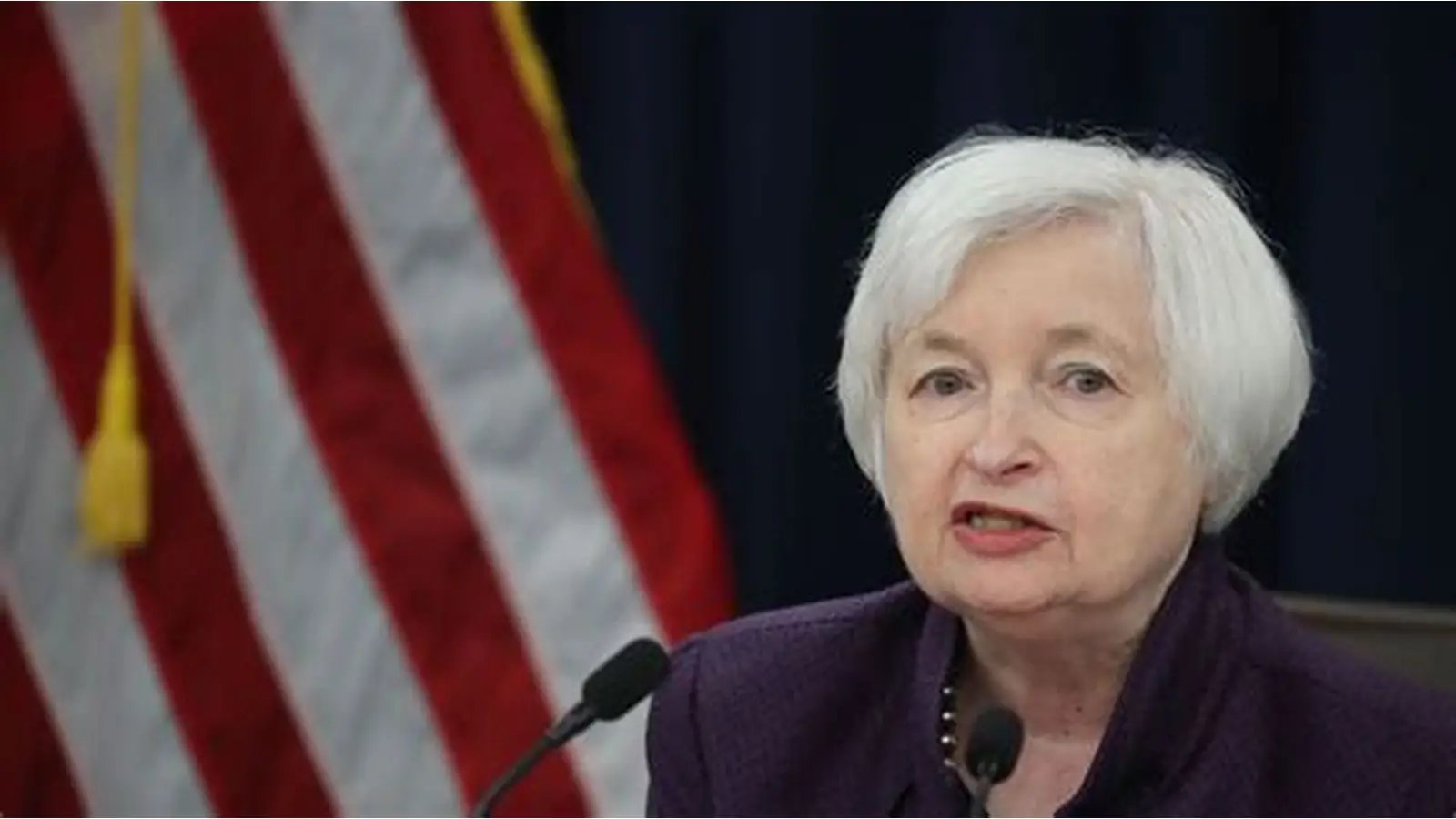
The United States has raised its benchmark interest rate for the first time since July 2023, adding fresh pressure to monetary policy decisions expected this week in Nigeria, Ghana and South Africa.
The US Federal Reserve increased its benchmark rate by 25 basis points to a range of 3.75% to 4% on Wednesday, citing persistent inflation pressures, resilient domestic spending and an uncertain global economic outlook.
The latest increase marks the first US rate hike in more than three years, while policymakers have indicated that another increase could come before the end of 2026.
The decision comes as the Central Bank of Nigeria (CBN), South African Reserve Bank (SARB) and Bank of Ghana (BoG) prepare to review their respective monetary policy rates.
Nigeria’s Monetary Policy Committee (MPC) is meeting on September 21 and 22, while SARB is expected to announce its decision on September 23. Ghana’s Monetary Policy Committee will conclude its meeting on September 24.
The US rate increase does not automatically require African central banks to follow with similar hikes. However, it could make it more difficult for them to diverge from US monetary policy because of its potential impact on exchange rates, capital flows and international borrowing costs.
“Central banks are not bound to follow the Fed. Countries with easing inflation, adequate reserves and credible monetary frameworks can still reduce rates when domestic conditions support it,” the Fintech Association of Kenya said.
“The constraint is the exchange rate. Faster easing can widen interest-rate differentials, weaken currencies and raise the local cost of imported fuel and other dollar-priced goods, potentially feeding inflation back into economies that had begun to stabilise.”
The association added that the impact would vary depending on countries’ external balances, foreign-exchange reserves and debt structures, noting that “African central banks may want cheaper money; global capital is making that choice more expensive.”
African central banks take different paths
Nigeria, Ghana and South Africa entered September with their benchmark interest rates unchanged after their July meetings, as policymakers assessed inflation, energy prices, geopolitical risks and economic growth.
Across the continent, however, monetary policy has become increasingly varied.
Central banks in countries including Morocco, Tunisia, Uganda, Kenya, Botswana, Egypt and Mozambique have maintained their rates in recent months while monitoring the effects of previous tightening and renewed volatility in global energy prices.
Meanwhile, Ethiopia, Rwanda and Tanzania have resumed raising interest rates as inflationary pressures return, while Zambia and Angola have continued cutting rates.
The latest US decision adds another factor for policymakers, although domestic inflation and economic growth remain central to their decisions.
Nigeria weighs possible rate cuts
Nigeria’s CBN kept its Monetary Policy Rate at 26.5% during its July meeting, maintaining the rate for a second consecutive meeting.
The committee said inflation was expected to continue moderating, supported by foreign-exchange stability, the delayed impact of previous monetary tightening and improved food supply. It also identified exchange-rate volatility and the prolonged conflict in the Middle East as risks to the inflation outlook.
Nigeria’s annual inflation rate eased slightly to 15.39% in August from 15.43% in July, according to the National Bureau of Statistics. This represented the lowest rate since March and the third consecutive monthly decline.
The improvement in inflation and the stronger naira have raised expectations that the CBN could begin easing monetary policy.
Bank of America expects the central bank to resume rate cuts at its September meeting as inflation slows and the naira strengthens.
“Annual inflation, which slowed to 15.4 percent in August, and a stronger naira that is up eight percent this year, have created ‘room for the Central Bank of Nigeria to begin cautiously easing monetary policy,’” said Raghav Adlakha, a Bank of America analyst to Bloomberg.
However, the latest US rate hike could make the timing and pace of any Nigerian rate cut more complicated.
Higher US interest rates can make dollar-denominated assets more attractive to investors, potentially encouraging some portfolio funds to move away from emerging markets and placing pressure on local currencies.
Ayokunle Olubunmi, head of Financial Institutions Rating at Agusto & Co., said the Fed’s decision would be monitored but was unlikely to determine the CBN’s decision.
“If you look at these markets, inflation has been coming down and their exchange rates have also been improving. More importantly, some of these currencies are becoming less dependent on portfolio investors,” he said.
Olubunmi said Nigeria had recorded a gradual decline in foreign portfolio investment, while the CBN had not rolled over all matured holdings for portfolio investors.
“The immediate concern with the Fed’s rate hike is that US assets become more attractive, which could encourage some portfolio investors to move funds back to the US and put pressure on African currencies. But these markets are relatively stronger now,” he said.
Ghana’s rate-cut path faces fresh pressure
Ghana has maintained a more pronounced easing path among the three economies.
The Bank of Ghana reduced its policy rate to 14% in March and kept it at that level in July.
Databank Research expects the central bank to cut the rate by another 150 basis points to 12.5% at its September meeting, citing continued disinflation and stronger monetary-policy transmission.
“Despite external shocks, monetary policy in 1H’26 remained on a cautious easing path, with our expectation of two rate cuts for the year [2026] still intact following the first reduction in March 2026, which lowered the policy rate to 14.0 percent,” Databank said.
The research firm said easier financial conditions had helped strengthen private-sector credit growth, which increased 41.2% year-on-year in nominal terms and 34.1% in real terms.
However, Ghana’s inflation trend has recently come under renewed pressure.
Annual inflation rose to 5% in August from 4.6% in July, while non-food inflation increased to 6.8% from 6.1%, partly due to higher oil prices.
The development could make a large rate cut more difficult as the US begins tightening monetary policy again.
South Africa faces rate decision amid inflation concerns
South Africa is dealing with a different set of economic pressures.
The South African Reserve Bank unexpectedly maintained its repo rate at 7% in July, with the decision backed by a four-to-two vote as policymakers weighed inflation risks against weak economic growth.
SARB Governor Lesetja Kganyago said at the time that “the inflation outlook has improved slightly since our last meeting, but inflation remains too high, while our growth is still weak.”
Inflation later eased to 4.3% in July from 5% in June, helped by slower transportation costs.
However, higher oil prices could reverse some of the improvement by increasing fuel and transport costs and putting pressure on the rand.
KPMG lead economist Frank Blackmore expects SARB to increase its repo rate by 25 basis points at its next meeting.
“I think we’ll see action by SARB next Wednesday that will result in an additional 25 basis point increase,” Blackmore said, warning that prolonged geopolitical tensions and disruption around the Strait of Hormuz could result in further increases before the end of the year.
Investec Chief Economist Annabel Bishop also expects a 25-basis-point increase.
“For South Africa, the outcome bolsters the chance of an interest rate hike at next week’s MPC meeting, and we continue to expect a 25 bp lift,” Bishop said.
The higher US rates could strengthen the case for tighter monetary policy in South Africa if increased US yields put additional pressure on the rand and raise the cost of imported goods.
Higher US rates could increase Eurobond costs
The impact of the US rate increase could extend beyond domestic monetary policy.
Higher US interest rates can increase international borrowing costs, potentially forcing African governments and companies to offer higher yields to attract investors.
This could make Eurobond issuance less attractive for governments already dealing with elevated debt-servicing costs.
Omobola Adu, lead economist at CSL Stockbrokers, said countries considering international debt issuance could become more cautious.
“They could hold back from issuing in the near term because the Fed’s rate hike could make dollar-denominated borrowing more expensive,” he said.
Olubunmi similarly said the decision could lead some countries to reconsider plans to access the Eurobond market.
“For Nigeria, however, the net impact may not be as significant as it appears,” he said, pointing to Nigeria’s inclusion in the JP Morgan index.
“While the rates in the US might increase the borrowing cost, inclusion in the JP Morgan index could help our yield because demand for the instruments will actually go up.”
